

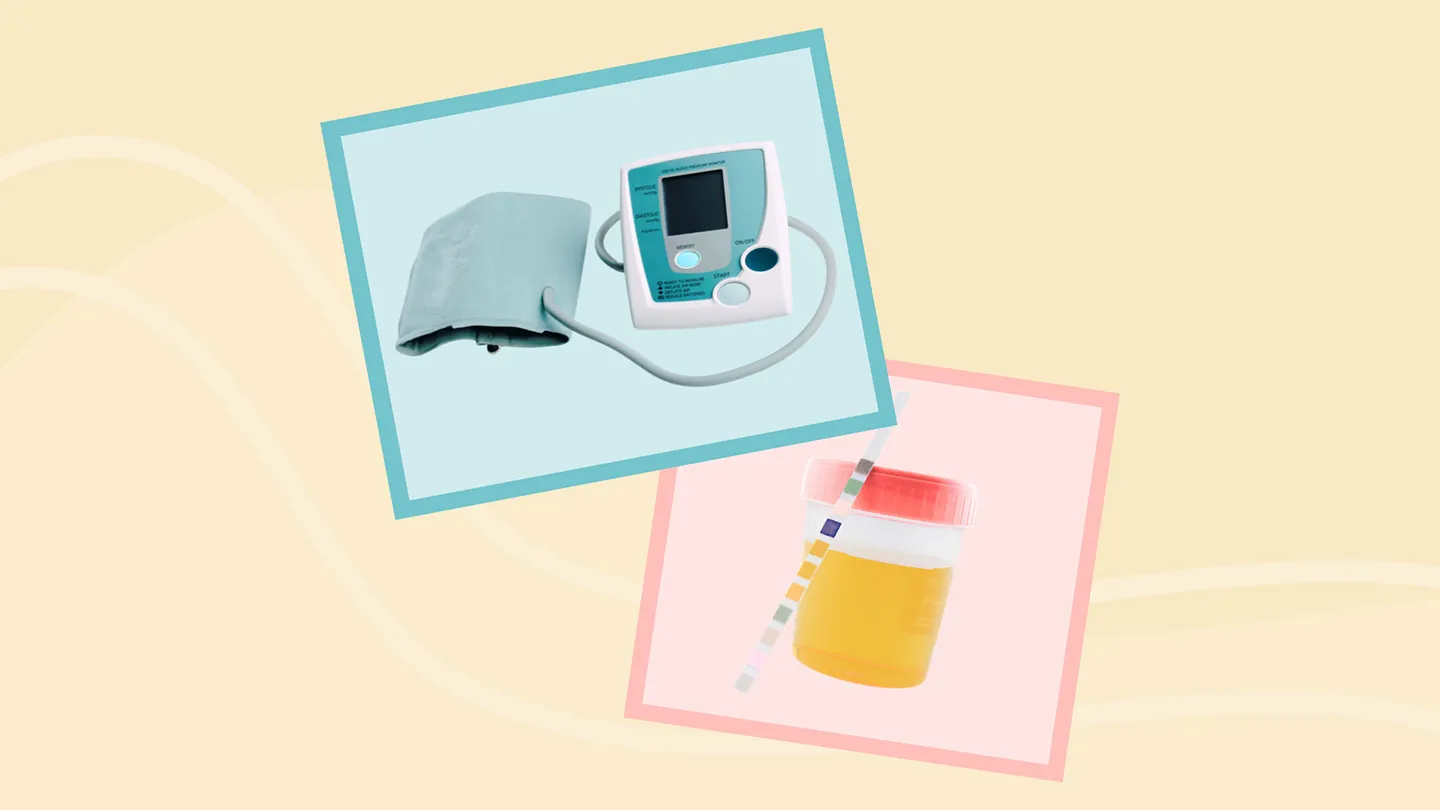
Tracking Proteinuria
Standard urine dipsticks measure several things at once, including blood, glucose, and white blood cells, says Michalopulos, so make sure you’re looking specifically at the protein result on the strip. Albustix, which checks for urine protein only, is another option available at pharmacies and online, he says.
Tips for Getting Accurate Results
To get the most accurate result possible, Michalopulos shares the following tips:
- Use a clean collection cup and a fresh urine sample (not from the toilet bowl).
- Test your first morning urine sample when possible for more consistent results.
- Follow the package directions carefully, including how long to wait before reading the strip.
- Read the results in good lighting.
- Avoid testing during your menstrual period or within 48 to 72 hours before or after it ends, as it can cause a false positive.
- A urinary tract infection or kidney stones can affect the results, so let your care team know if any of these apply to you.
When to Test
If your numbers are within your baseline, checking every one to two weeks may be enough, says Michalopoulos. He notes that your care team might ask you to check more frequently — and they can tell you exactly how often — in these circumstances:
- You are sick or recovering from an illness.
- You have more swelling than usual.
- You notice darker or frothier urine.
- You have higher blood pressure readings than usual.
- You recently started, stopped, or changed a medication.
- You may be having signs of a relapse.
Reading the Results
And if an increase in urine protein occurs along with higher blood pressure readings or swelling, notify your care team right away, says Klein, because this can be a sign of worsening kidney function that needs immediate attention.
