

Think of the captain’s bridge on the USS Enterprise, where a live map displays the status of the ship’s critical systems: oxygen levels, energy availability, hull integrity, shield strength. Another set of indicators senses things outside the ship: asteroid belts, enemy ships, radiation, life signs, and spatial anomalies not yet understood.
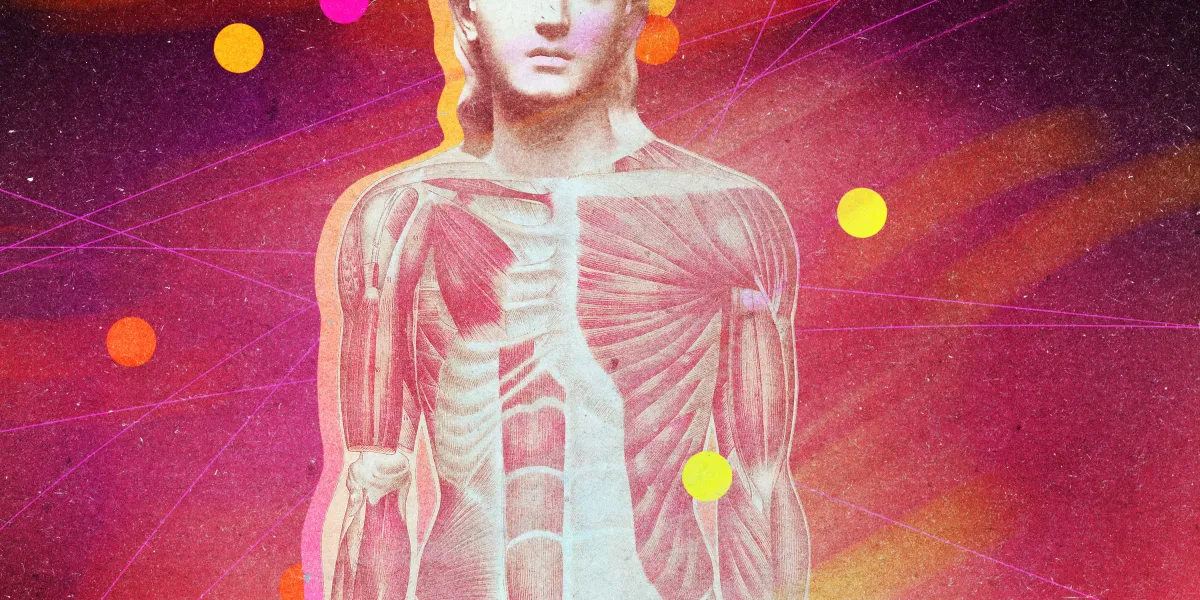
Your brain, only about the size of your two fists pressed together, creates a map like this for your entire body, along with a map of the outside world, from data streaming in through your five senses. Together, they feed into your brain’s working model of you in the world, now and across time—where you are, who you are, your expectations for what’s about to happen (based on everything you know), and what all that means for you.
When someone asks “How are you doing?” we consult our maps and report back on our status. We might say we’re happy, depleted, anxious, or energetic. These feelings are always a braid of emotional and physical sensations. They’re what your interoceptive navigational system serves up to your awareness when you sense yourself from the inside.
As we grow up, we learn to interpret what these sensations mean—interpretations that, in turn, can alter our physiology, emotions, and behavior. Research by the psychologist Alia Crum shows that people who embrace a “stress is enhancing” mindset produce more growth hormones than people who have a “stress is debilitating” mindset. They also experience more positive emotions and greater cognitive flexibility.
Language also matters. We learn words for the textures of our feelings—words that then shape how we feel and act. People low in emotional “granularity”—as the psychologist Marc Brackett calls the ability to distinguish between closely related feelings—react more impulsively under stress and are less able to find meaning in difficult experiences. But mindsets and emotional intelligence are malleable. We can learn that “anxious” is different from “terrified,” and we can even reframe how we interpret our body’s sensations. Instead of thinking of the butterflies in our bellies as annoying, we can welcome them as our body’s way of preparing us for a peak performance.
Scientists have long understood that the interoceptive information informing these lived experiences travels via two major systems: nerves and humors (blood and lymph). Now they’re actively studying a third system—the “interstitium,” a network of fluid-filled spaces woven throughout the body’s connective fascia that may also play a role in communication.
But until recently, scientific understanding of this interoceptive system looked like a high-level schematic that left out vital details—how information travels from the outside environment in, how it moves from your body to your brain, and how it is integrated and interpreted within your brain. Researchers are now racing to explore what the neuroscientist Catherine Tallon-Baudry calls this “new continent of awareness.”
The wandering highway
One of the most active areas of research centers on the vagus nerve, the main component of the parasympathetic nervous system and an information highway carrying news from your organs up to your brain and back down to your body. The vagus has become a celebrity nerve, ubiquitous in wellness podcasts and trauma therapy. “Tone your vagus nerve.” “Activate your parasympathetic system.” The language suggests a single thing you can target, like a muscle. The reality, as Steve Liberles at Harvard Medical School is discovering, is far more interesting.
