
Your gut does much more than digest food. Home to trillions of microorganisms, including bacteria, viruses, fungi, and other microbes, the gut microbiome influences everything from digestion and nutrient absorption to immune function, inflammation levels, and even mental health.e60dc2a1-f33c-4a05-9b50-8e3e8e597629043d6ff1-a1ab-4a3c-9b00-2d2643e916fde60dc2a1-f33c-4a05-9b50-8e3e8e597629f0cd2b3a-e947-4521-a782-659e02970953e60dc2a1-f33c-4a05-9b50-8e3e8e59762907d51eeb-d5e0-4f96-97c4-696bc85b2278 And while many factors affect the microbiome, how you eat plays one of the biggest roles in shaping it. Fruits boost gut health for a handful of reasons: They’re full of fiber , polyphenols, vitamins and antioxidants, which support immune function, calm intestinal inflammation, and feed beneficial gut bacteria.e60dc2a1-f33c-4a05-9b50-8e3e8e597629a2131a05-c98e-4ec8-a1fe-a6e5597670c9 And the fiber in fruits supports digestion, keeping bowel movements regular.e60dc2a1-f33c-4a05-9b50-8e3e8e59762964f75bbc-479e-42c2-853b-a82ee9952511 Adults should aim for at least two servings — or about 2 cups — of fruits per day as part of a 2,000-calorie daily diet.e60dc2a1-f33c-4a05-9b50-8e3e8e5976299c0bbcdf-8814-4ef2-b861-df810eeec16d But not all fruits offer the same digestive benefits. Here’s a closer look at some of the best fruits for gut health and how to include them in your meal planning. default
Green Bananas Bananas are well known for being gentle on digestion, but less-ripe bananas may offer additional gut benefits thanks to resistant starch, a prebiotic fiber.e60dc2a1-f33c-4a05-9b50-8e3e8e597629273ae9ca-5366-42ca-8e10-fc6b87c81abce60dc2a1-f33c-4a05-9b50-8e3e8e59762933a28b4d-2d27-4857-85ec-79393ed196bd Research shows that green bananas are an excellent source of both resistant starch and other types of fiber, which protect against chronic disease and boost gut health. Green bananas also contain antioxidants, vitamins, and minerals, including polyphenols (plant compounds), vitamin B6, potassium, and iron, which can protect against inflammation, hypertension, and chronic illness.e60dc2a1-f33c-4a05-9b50-8e3e8e59762933a28b4d-2d27-4857-85ec-79393ed196bde60dc2a1-f33c-4a05-9b50-8e3e8e597629273ae9ca-5366-42ca-8e10-fc6b87c81abc Sauceda says green bananas can help slow digestion and keep people feeling fuller longer because resistant starch acts as a fiber in the digestive tract.e60dc2a1-f33c-4a05-9b50-8e3e8e5976298778d078-2839-435e-a47e-8e0d4df7baf0 For people who dislike the taste of green bananas, she suggests experimenting with green banana flour in baking instead. As bananas ripen, their resistant starch content decreases while natural sugars increase. “Less ripe bananas have stronger prebiotic effects, while ripe bananas are gentler on the stomach and easier to digest,” Ivanina says.
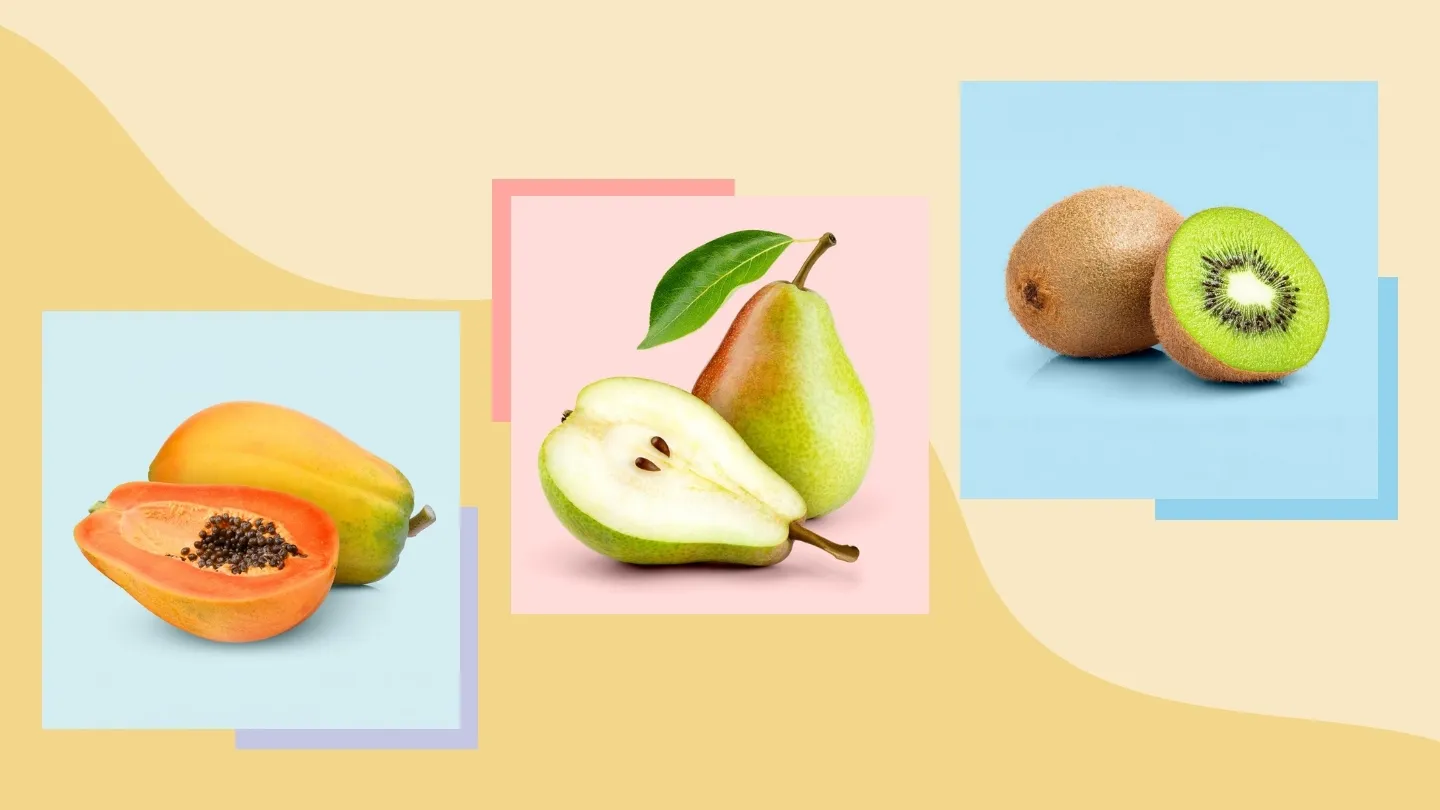
Pears Pears are among the highest-fiber fruits and also naturally contain sorbitol, a sugar alcohol that can help soften stool by drawing water into the colon.e60dc2a1-f33c-4a05-9b50-8e3e8e59762958bb3224-f090-4868-a3a3-c2456360bef4e60dc2a1-f33c-4a05-9b50-8e3e8e5976290a5a0b87-3bda-4565-91d6-6527a3c64c17 “Pears are among the highest natural sources of sorbitol,” Ivanina says. “This is the same mechanism used by [laxative] medications like lactulose.” That said, she warns that too much sorbitol can also increase gas production in some people because gut bacteria ferment it. Sauceda calls pears an “underrated fiber food ,” and says that one medium Bartlett pear contains about 6 g of fiber, which can help those with constipation.e60dc2a1-f33c-4a05-9b50-8e3e8e5976298e51fef4-8dd4-4afa-adad-d1444df3d1c3 Aside from eating fresh pears, she also recommends canned pears packed in juice, baked pears topped with brie, or sliced pears in salads as simple ways to incorporate them into meals. Try eating pears with the skin on whenever possible to maximize fiber intake, Ivanina says.
Resources We Trust Cleveland Clinic: What You Should Know About Your Gut HealthMayo Clinic: Transforming Your Gut Health: Simple Steps for a Healthier YouHarvard Health Publishing: 5 Simple Ways to Improve Gut HealthJohns Hopkins Medicine: Your Digestive System: 5 Ways to Support Gut HealthAmerican Medical Association: What Doctors Wish Patients Knew About Improving Gut Health
The Takeaway Fruits are rich in fiber and natural enzymes that feed beneficial gut bacteria, support digestion, and keep bowel movements regular, making them great for boosting gut health. Different fruits offer different digestive benefits: Kiwis and pears relieve constipation, apples and bananas provide prebiotic fibers that nourish beneficial gut bacteria, and papayas contain digestive enzymes that can help break down protein more efficiently. Adults should aim for two servings — or about 2 cups — of fruit per day, which can be eaten whole, or baked, stewed, blended, or mixed into yogurt, salads, and smoothies.
Berries Berries deliver what Ivanina calls a dual benefit — they contain both fiber and a high concentration of polyphenols that work together to support the microbiome . “Studies show they increase beneficial populations of Bifidobacterium , Lactobacillus , and Akkermansia muciniphila , all associated with improved gut barrier integrity and reduced inflammation,” she says.e60dc2a1-f33c-4a05-9b50-8e3e8e59762975afe7cd-2f17-49f5-865a-0cf0471dd533 Berries are also one of the easiest ways to increase fiber intake. Sauceda notes that fiber content will vary by type: Strawberries provide about 3 grams (g) per cup, blueberries about 4 g, and raspberries roughly 8 g.e60dc2a1-f33c-4a05-9b50-8e3e8e5976298959dc13-1cd9-43c8-a421-edb9b03dc850 Sauceda says cranberries deserve special attention when it comes to gut health. “The compounds in cranberries that help urinary health can also benefit your gut,” she says. She points to emerging research that suggests cranberry compounds may help increase production of short-chain fatty acids that support digestive health.e60dc2a1-f33c-4a05-9b50-8e3e8e597629261c2ebf-3681-4c65-929d-079ec50ede81 You can add berries to smoothies, yogurt parfaits, or homemade chia pudding — or eat a handful as a single serving snack, Sauceda says.
Papayas Research suggests papaya is great for improving digestion, and that it can alleviate bloating and constipation. These benefits are tied to its high concentrations of papain, an enzyme that helps to break down protein in food.e60dc2a1-f33c-4a05-9b50-8e3e8e597629f629ef94-f8d7-46ae-97c5-e0c62bd9470c A small papaya also contains about 3 g of fiber, while providing more than the recommended daily intake of vitamin C , an antioxidant that fights inflammation.e60dc2a1-f33c-4a05-9b50-8e3e8e59762963400711-b4ea-43ba-84d0-5ca439445c03 “You get the digestive enzyme benefits plus the fiber,” Sauceda says. Fresh, ripe papaya is typically easiest to digest. Ivanina recommends squeezing lime juice on the fruit and eating it that way, while Sauceda prefers adding papaya to fruit salad.
Apples Apples are rich in pectin, a type of soluble fiber that acts as a prebiotic, or food for beneficial bacteria in the gut.e60dc2a1-f33c-4a05-9b50-8e3e8e5976293a90d824-b978-4e3a-8483-9787da76be08 “[Apple] is such a powerhouse prebiotic fruit,” Dr. Ivanina says. She says that gut bacteria ferment pectin into short-chain fatty acids like butyrate, acetate, and propionate, which help nourish colon lining cells, maintain the gut barrier, and have anti-inflammatory effects.e60dc2a1-f33c-4a05-9b50-8e3e8e5976293a90d824-b978-4e3a-8483-9787da76be08 Pectin is also used to make jams and jellies, helping these foods gel, Sauceda says. “That gelling property also helps your gut because it attracts water as it moves through the digestive system and that helps you poop easier,” Sauceda says.e60dc2a1-f33c-4a05-9b50-8e3e8e597629581b76e6-1ccb-4635-b655-68828c482f36 For sensitive stomachs, Sauceda recommends baked or stewed apples, which will be easier to digest than raw apples while still providing gut health benefits. “Basically, it’s an easy and quick way to cook the apples to bring out their natural sweetness. You can then use [them] as a snack all on [their] own or as a topping for pancakes, yogurt or even ice cream,” she says.
Kiwis Kiwi may be one of the best fruits for constipation and overall digestive comfort. The fuzzy green fruit contains soluble and insoluble fiber, along with actinidin, a digestive enzyme that helps break down proteins, says Elena Ivanina, DO , a New York City–based gastroenterologist and the founder of the Center for Integrative Gut Health.e60dc2a1-f33c-4a05-9b50-8e3e8e597629ea24d6da-f113-4d1e-8c66-71196038ef54 “Probably the most common dietary recommendation I make to my patients is to eat two green kiwifruits daily, which has been shown to increase bowel movements … in constipated people — with significant improvements in [gastrointestinal] discomfort and fewer adverse events than psyllium [ fiber],” she says. (Psyllium fiber, which comes from the seeds of the herb Plantago ovata , is the fiber found in constipation treatment products like Metamucil.)e60dc2a1-f33c-4a05-9b50-8e3e8e59762938c8bc79-30b4-40de-8ea6-dc6c19630b73 You can eat the fruit as is, but you can “double up” the gut health benefits by adding chopped kiwi to yogurt, says Amanda Sauceda, RD , a registered dietitian in Long Beach, California, focused on gut health. “By choosing a yogurt with live and active cultures you can get the benefits of probiotics along with the pooping benefits of kiwi,” she says.
Source link
6 Fruits That Can Help Boost Your Gut Health