
This article is an on-site version of our Europe Express newsletter. Premium subscribers can sign up here to get the newsletter delivered every weekday and fortnightly on Saturday morning. Standard subscribers can upgrade to Premium here, or explore all FT newsletters
Good morning from Luxembourg. News to start: Swiss voters rejected a proposal to cap the country’s population at 10mn people yesterday, delivering an unexpectedly comfortable defeat to the rightwing anti-immigration initiative.
Today, I report on Sweden’s call for its European allies to stop turning a blind eye to sanctions-breaching Russian oil tankers, and preview the gathering of EU foreign ministers here in the Grand Duchy.
Troubled waters
Sweden has urged other EU member states to join them in disrupting Russian “shadow fleet” of oil tankers, warning that gaps in enforcement are helping sustain the Kremlin’s most important source of cash.
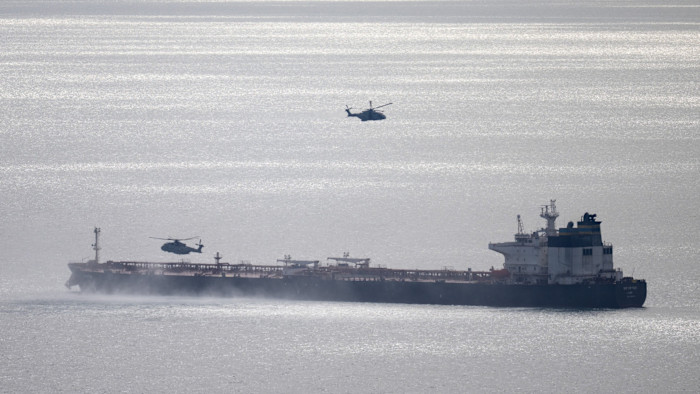
Context: To evade western sanctions, Russia has cobbled together a fleet of around 700 often old and badly maintained crude oil tankers, which sail without recognised insurance, under third-country flags and regularly turn off their location transponders. The vessels carry around 75 per cent of Russia’s sanctioned oil exports.
Sweden, France and Belgium have all boarded and seized suspicious tankers. The UK yesterday deployed Royal Marine commandos to intercept a sanctioned Russian tanker sailing under a Cameroonian flag in the English Channel.
But other European states are seemingly ignoring the issue by allowing free passage, Sweden’s foreign minister Maria Malmer Stenergard has warned.
“The shadow fleet passes through other European waters before reaching the Baltic Sea. It is crucial that all Member States share the responsibility to constrain the ecosystem that supports these vessels,” Stenergard wrote in a letter to EU chief diplomat Kaja Kallas and Cyprus’s foreign minister Constantinos Kombos.
She noted that Sweden had already “boarded a number of vessels in our territorial waters that were suspected of being falsely flagged” this year.
Russia’s energy revenues in January were around 50 per cent lower than a year earlier, reducing cash flows available to finance its war against Ukraine. But a surge in global energy prices resulting from the US-Israeli war with Iran has boosted Moscow’s earnings.
Stenergard’s letter, seen by the FT, comes ahead of a meeting of EU foreign ministers today, where a new sanctions package against Moscow will be discussed. Measures targeting Russia’s oil exports are a central feature.
Russia’s main crude export terminals are located at Primorsk near St Petersburg and Novorossiysk on the Black Sea. Tankers using those ports pass through the Baltic and Mediterranean seas and the territorial waters of EU states including Denmark and Greece.
“The shadow fleet is funding drones and missiles hitting Ukraine,” Stenergard told the FT. “If we’re serious about bringing the war to an end, acting against the shadow fleet is not optional.”
Chart du jour: Draining the tanks
With falling reserves, Europe’s oil price shock could soon turn into a supply crisis, warn researchers at Brussels-based think-tank Bruegel, who argue that the EU should start preparing for the possibility of physical shortages.
Among friends
EU chief diplomat Kaja Kallas will meet the bloc’s 27 foreign ministers this morning, days after acknowledging the need for a “debate” on the effectiveness of the EU’s foreign service.
Context: Kallas, formally the EU High Representative and vice-president (HRVP), heads the European External Action Service (EEAS) and reports both to the European Commission bureaucracy and the European Council of national leaders. The FT reported last week that capitals including Berlin and Paris were discussing potentially radical options to reform the EU’s diplomatic machinery, as they seek to improve the bloc’s ability to influence global affairs.
In response, Kallas told EEAS staff that she “welcomed the debate” and that foreign ministers would hold dedicated discussions in Dublin in September on how to “make our external action more effective”.
The institutional tensions surrounding the EEAS have existed since its inception 15 years ago. But officials say its shortcomings have become more stark in recent years as the EU grapples with wars in Ukraine and the Middle East, US President Donald Trump’s belligerence and the economic threat posed by China.
“The EEAS, and also the position of the HRVP, has been created at a different time and age, when the world looked completely different,” said one senior EU diplomat. “If you were to devise the system again from scratch right now, you probably wouldn’t do it the way you do it right now.”
Although reform of the EEAS is not on today’s agenda in Luxembourg, diplomats said the subject and Kallas’ role would inevitably be discussed in corridor conversations.
“Can the EEAS function better? Probably, yes. Could the HRVP and her cabinet do things differently? Probably, yes . . . Could the Commission do things better or differently? Probably, yes,” the diplomat added.
“But let’s face it, the biggest problem that the union faces when it comes to foreign policy is a divided Council.”
What to watch today
-
G7 leaders’ summit begins in Évian-les-Bains, France.
-
EU formally opens the first chapters of accession negotiations with Ukraine and Moldova.
-
European parliament president Roberta Metsola opens the plenary session in Strasbourg.
Now read these
Are you enjoying Europe Express? Sign up here to have it delivered straight to your inbox every workday at 7am CET and on Saturdays at noon CET. Do tell us what you think, we love to hear from you: [email protected]. Keep up with the latest European stories @FT Europe
