

While Hensel was heartened to learn that his cancer was potentially curable with an aggressive treatment protocol, he was also angry that his complaints had not been taken seriously, and he regretted not being more assertive with his doctor.
He decided to become his own health advocate, to learn as much as he could about the disease, and to refuse to blindly accept whatever he was told. Hensel’s doctors prescribed a course of radiation, followed by surgery and chemotherapy. They also advised against removing a cancerous lymph node that was not located close to the tumor. Instead, they recommended treating it with radiation and chemotherapy.
“So, you’re pretty sure this lymph node is cancerous and you’re just going to leave it there? That didn’t sit right with me,” Hensel says. He got a second opinion from MD Anderson Cancer Center in Houston, and felt more comfortable with their recommendation: a longer, more complicated surgery to remove the lymph node even though it would result in a permanent colostomy.
Following radiation and chemotherapy, Hensel traveled to Houston and underwent a 12-hour surgery in August 2018. He spent six nights in the hospital and stayed with family nearby for a month before returning to Tucson. His recovery was slow, and plagued by pain and insomnia. It was difficult for him to sit for more than 10 minutes.
A year later, Hensel was able to resume a normal work and exercise schedule, and his life is pretty much the way it was before his diagnosis, albeit with a lot more gratitude for each day. “I feel lucky, but I’m still scared of the recurrence and will be monitored closely for life.”
Hensel tries to prevent what happened to him from happening to others by serving on the Never Too Young advisory board for the Colorectal Cancer Alliance. He also helps with their Buddy Program, a peer-to-peer mentoring program for patients, survivors, and caregivers.
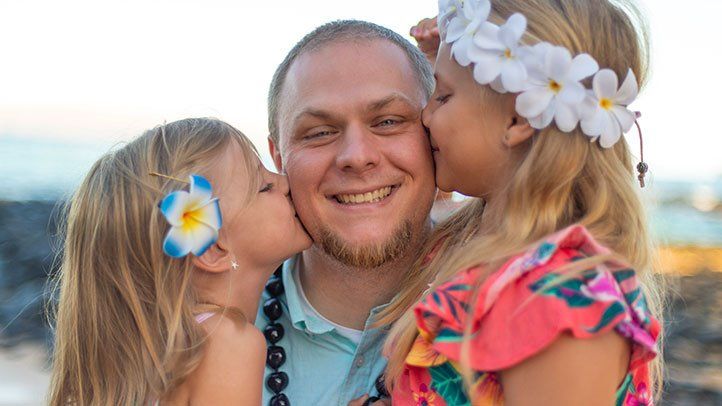
He plans to delay having his children tested for Lynch syndrome until they are old enough to understand the implications and follow the recommended preventive protocol if they do have the genetic mutation.
“That’s an ongoing worry for me, but I don’t want to lie to them and I don’t want to scare them either. I’m making sure they have a good diet and doing whatever I can to give them the best chance not to get it.”
