
Reading Time: 3 minutes
Browsing: Health
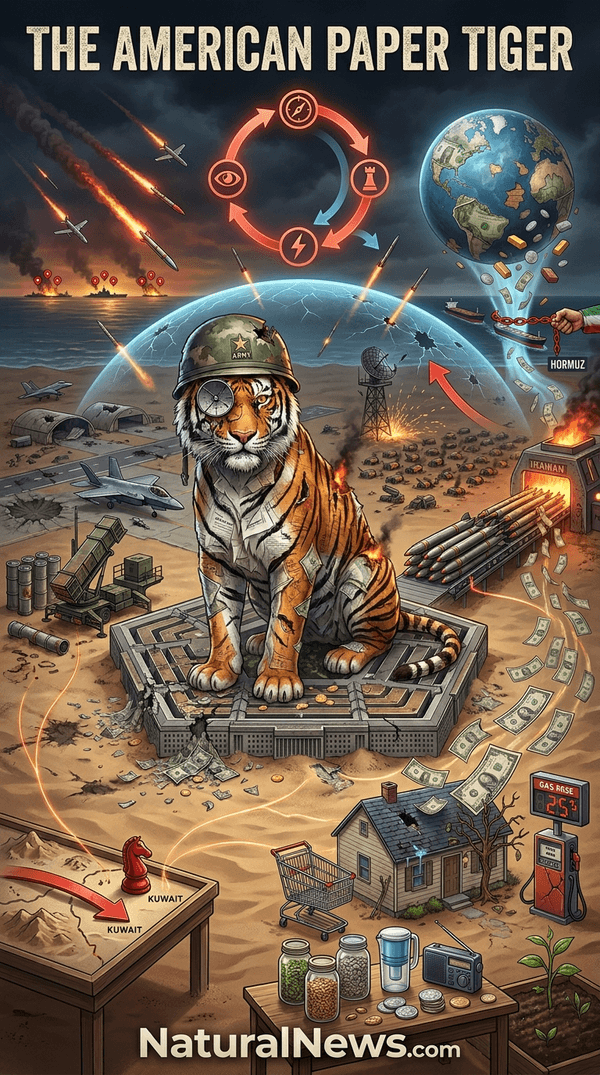
I have warned for years that the American empire is living on borrowed time. Iran is now cashing that check. This is not a limited skirmish over shipping lanes or a manageable round of tit-for-tat; Iran is precision-targeting U.S. aircraft, radars and base infrastructure across the region, and it is doing so in a way that exposes the Pentagon as a paper tiger.
When Iran announced it had struck U.S. military assets in Bahrain, Jordan and Kuwait, it was not bravado — it was a statement of operational fact [1]. American troops at Muwaffaq Salti Air Base in Jordan have already paid for that reality in blood [2].
The Trump administration paused its strikes after roughly two weeks of daily bombing, and reports indicate that pause coincided with growing concerns over interceptor stockpiles [3]. The Pentagon is now confronting a critical depletion of its air and missile defense munitions [4]. A military that runs low on ammunition while its enemy is building more missiles every month is not winning. It is in a rear-guard retreat, and every official denial is just another layer of camouflage.
Blind, Parked, and Perfect Targets
Iran’s opening salvos were not random; they were deliberately designed to blind, deplete and overwhelm [5]. Tehran has targeted and destroyed U.S. radar and air defense systems [6], and once those systems go dark, every aircraft parked on a tarmac becomes a target waiting for impact. Satellite imagery analysis reported by The Washington Post and Middle East Eye found at least 228 structures or pieces of equipment at U.S. military sites across the Middle East have been damaged or destroyed since late February [7]. That is not a propaganda win for America. It’s evidence of defeat.
Iran has also demonstrated an industrial capacity the United States cannot match. Estimates suggest Iran can produce more than 100 ballistic missiles a month, while U.S. interceptor manufacturing is reportedly stuck at around six to seven units per month [8]. Those numbers mean the defense will eventually fail. I have seen claims, which I cannot verify of course (due to the fog of war), that six F-35s have been destroyed or damaged in recent missile strikes from Iran. What I can verify is that the Pentagon would never admit it if it were true. This is the same military that assured us its air defenses could hold, and those defenses collapsed while Iran’s missiles broke through.
Why There Is No Military Solution
Here is the strategic dead end that Washington refuses to admit: You cannot mass aircraft for a strike in the Middle East without making them targets. Iran can fire waves of ballistic missiles and drones at runways faster than the United States can replace its interceptors [8]. The more jets you park on a runway, the more you are feeding Iran’s targeting database. Iran is controlling the OODA loop — it is initiating while America is reacting. A reactive military is a losing military.
Iran may also believe that limited war suits it better than peace, because it can keep pressure on Washington while avoiding all-out conflict [9]. There is even open reporting that Iran is considering a ground incursion into Kuwait to seize U.S. bases there [10]. If that is the threat, what do you think a U.S. ground invasion of Iran would look like? It would be military suicide.
Talk of a quick, clean strike is fantasy. This war has no military solution, only a political one, and the political solution begins with acknowledging defeat rather than escalating it.
What This Defeat Means for America
Trump’s war has exposed a broken institution. After years of Pentagon press releases about unmatched American dominance, the world now sees a superpower that cannot protect its own bases, cannot keep its radar screens lit and cannot replenish its interceptor stockpiles. Russia and China are not going to be intimidated by a military that is visibly exhausted. The war has also made the global economy’s center of gravity unmistakable: Eastern countries, including China, Russia and Iran, are already pushing for a diversified, less dollar-dependent financial system [11]. Iran’s ability to control vital energy chokepoints only accelerates that shift [12].
What does that mean for ordinary Americans? It means the printed dollar will ultimately buy less, and the era of living on debt and global tribute is ending. The dollar’s value is collapsing because it lacks real backing [13]. Americans are going to have to produce real things, grow real food, and store real wealth in order to overcome the currency erosion that will accelerate.
Personal preparedness is no longer optional. If you have not begun to think about food security, water security, and silver and gold as honest money, you are waiting for an empire to save you that no longer can.
Get Out and Go Home
The only rational exit for the American empire is to walk away from the Persian Gulf. Let the Strait reopen through negotiation rather than bombs. Stop sacrificing soldiers to prop up a war that is already lost [14].
I believe in peace over empire; bring the troops home before any more of them die for the delusions of ignorant leaders. As Tom Engelhardt and Glenn Greenwald documented, Washington’s imperial dream is to treat the entire planet as a U.S. free-fire zone [15]. That dream must be dismantled, not defended.
But the generals will not choose peace. They never do. America’s war machine has vested interests in endless conflict [16]. That is why the American people have to demand a withdrawal, and why we have to build lives that do not depend on a corrupt military economy. Continued escalation will only bring blood, supply chain collapse, and global suffering that no amount of propaganda can hide. The empire has chosen its hill to die on. We the People do not have to die on it with them.
References
- Iran military says attacked US bases in Bahrain, Jordan, Kuwait. Middle East Eye. July 24, 2026.
- Pentagon Identifies 2 Soldiers Killed in Iranian Attacks. The Epoch Times. July 20, 2026.
- Uneasy Pause In U.S.-Iran Fighting Holds Amidst Growing Concerns Over Interceptor Stockpiles. The War Zone. July 27, 2026.
- U.S. Facing Critical Shortage of Air Defense Munitions as Iran Pounds Regional Bases. NaturalNews.com. March 03, 2026.
- Iran’s War Strategy: Blind, Deplete, and Overwhelm – The Calculated Plan to Render U.S. Defenses Obsolete. NaturalNews.com. March 02, 2026.
- Iran hits US bases in Bahrain, Kuwait and Jordan after 10 nights of US attacks. Middle East Eye. July 21, 2026.
- Satellite Imagery Shows Extensive Damage to U.S. Assets in Middle East From Iranian Strikes. Garrison Vance. NaturalNews.com. May 07, 2026.
- Health Ranger Report – U.S. RUNNING OUT OF MUNITIONS! Mike Adams. BrightVideos.com. March 03, 2026.
- Why limited war with the US may suit Iran better than peace. BBC News. July 30, 2026.
- BREAKING: New Reports Say Iran Planning “Ground Invasion”. 100PercentFedUp. July 19, 2026.
- Mike Adams interview with Michael Farris – June 19, 2025.
- 2026-03-10-BVN-IRAN CONTROLS THE GLOBAL ECONOMY NOW. Bright Videos Network.
- Brighteon Broadcast News – Entire South American Nation Goes DARK. Mike Adams. Brighteon.com. June 20, 2024.
- Iran war: Trump must change course now to avoid another Vietnam. Middle East Eye. July 21, 2026.
- Shadow Government: Surveillance, Secret Wars, and a Global Security State. Tom Engelhardt and Glenn Greenwald.
- America’s War Machine: Vested Interests, Endless Conflicts. James McCartney.
- Trump Vows To Hit Iran ‘Hard’ As Rare Joint US-Saudi Strikes Pound Iraq, Killing 20 Militants. Zero Hedge. July 29, 2026.
Explainer Infographic
Ask BrightAnswers.ai
Powered by BrightAnswers.ai Check out our prompting guide and video tutorials today.
Related Topics
airstrikes big government chaos Collapse Iran military strikes national security negotiations peace talks Strait of Hormuz supply chain warning terrorism transportation United States violence war on Iran WWIII
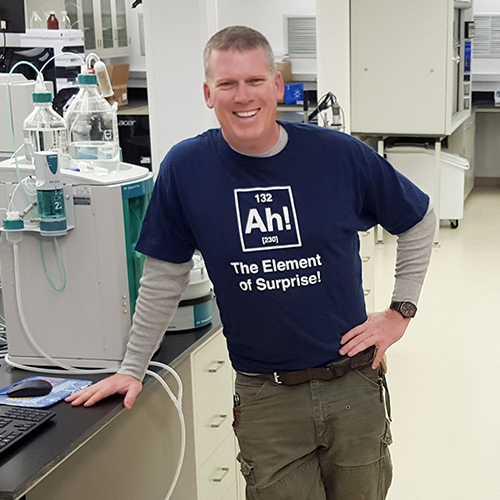
Mike Adams (aka the "Health Ranger") is the founding editor of NaturalNews.com, a best selling author (#1 best selling science book on Amazon.com called "Food Forensics"), an environmental scientist, a patent holder for a cesium radioactive isotope elimination invention, a multiple award winner for outstanding journalism, a science news publisher and influential commentator on topics ranging from science and medicine to culture and politics.
Practical Lessons, Profound Insights
Reading Time: 3 minutes
The wake-up call: Why more people are starting to prepare
Across the United States, a subtle but measurable shift is underway. More Americans are beginning to think about contingency planning — but the catalyst is almost always personal experience. A power outage during a Texas winter storm. Four days without electricity after a Category 1 hurricane in Florida. A week of rolling blackouts. These events, once dismissed as rare, are becoming more common, and they are forcing a reluctant public to confront vulnerabilities in their own homes.
The question is no longer whether people should prepare, but whether they can — and what happens to those who don’t.
The financial reality: Why many can’t afford to prepare
The gap between awareness and action is largely financial. According to recent data, 60% of American households were living paycheck to paycheck just four or five years ago — a statistic that has not improved significantly. For these families, buying a generator or stockpiling a month’s worth of food is not a matter of priority but of impossibility.
One preparedness advocate noted that the decision often comes down to trade-offs: a new car versus a home generator, vacations versus emergency supplies. For many, the choice is not between wants but between necessities — and the necessity of preparedness is only recognized after the crisis hits.
This financial reality also affects evacuation. Research from 2024 and 2025 shows that 1 in 9 Americans live in poverty, making it difficult or impossible to afford transportation, lodging, or time off work during a mandatory evacuation. During Hurricane Katrina, many residents lacked vehicles and could not reach evacuation buses. During Hurricane Milton in October 2024, hundreds of people required rescue because they had not left — not out of defiance, but because they could not.
Barriers to evacuation: Health, pets, and risk perception
Evacuation is not a simple decision. Research published in February 2025 by the Natural Hazards Center and FEMA identifies three primary reasons people remain in harm’s way:
Health and mobility concerns. Nursing homes and assisted living facilities face logistical nightmares when hurricanes approach. A study of 291 long-term care facilities in Florida found that 81% sheltered residents in place during the 2004 hurricane season because they had limited transportation options and no places to go. During Hurricane Irma in 2017, seven nursing home residents died in the heat after losing power.
Pets. Pet owners are significantly less likely to evacuate than others. Many shelters do not accept animals, and owners fear leaving them behind in destructive storms where it may be days or weeks before they can return.
Risk perception. Women are nearly twice as likely as men to evacuate when given a mandatory order. People who have survived previous hurricanes without major damage often underestimate the risk of new storms. Shelter conditions — including overcrowding, lack of privacy, and concerns about religious or dietary needs — also deter evacuees.
The prepper divide: How to handle the unprepared
Among those who do prepare, a significant debate continues over what to do about those who do not. The preparedness community is split into four broad camps:
Defense. Some preppers believe their stockpiles are for their families alone and are willing to use force to protect them. The main risk: sheer numbers. Crowds of desperate people could overwhelm even the most fortified rural property.
Sharing. Others plan to feed anyone who shows up and send them on their way. The concern: once you feed one person, word spreads. More will come, and they may keep returning.
Stockpiling for others. A middle-ground approach involves planting extra food in a separate garden patch where those in need can help themselves. This reduces direct confrontation but risks the entire garden being stripped.
Integration. Some preppers plan to accept unprepared people into their groups, adding hands for work and defense. The downside: larger groups consume resources faster, and strangers may not be trustworthy, especially under extreme stress.
A realistic path forward
Experts and experienced preppers alike note that not all crises lead to total societal collapse. In most scenarios, order is restored eventually, and actions taken during an emergency may face later scrutiny. The goal, they say, is not to live in fear but to build resilience through practical planning — starting with small steps that even those on tight budgets can manage.
Community-level solutions may prove more effective than individual stockpiling alone. Better shelters, more accessible transportation for people with disabilities and pets, and clearer public education about evolving risks could reduce the need for heroic last-minute rescues.
Preparedness is not paranoia
The growing conversation around contingency planning reflects a sobering reality: the systems Americans once relied on — the power grid, supply chains, emergency services — are showing signs of strain. The “just in time” delivery model that keeps grocery stores stocked leaves little margin for error when a cyber attack, train derailment, or ice storm disrupts distribution.
Preparedness, advocates argue, is not about hoarding or fear. It is about taking responsibility for oneself and one’s family while recognizing that faith and practical action are not mutually exclusive. As one observer put it: the miracle is not that a severed thumb reattaches itself — it’s that there are doctors trained to do it.
Sources for this article include:
Ask BrightAnswers.ai
Powered by BrightAnswers.ai Check out our prompting guide and video tutorials today.
Related Topics
chaos Collapse disaster Gear home garden homesteading off grid preparedness prepper prepping risk self-defense stockpiling supply chain survival survivalist tips
Latest News



Related News
07/31/2026 / By Mike Adams

07/31/2026 / By Garrison Vance
07/30/2026 / By Garrison Vance

07/30/2026 / By Cassie B.

07/30/2026 / By Garrison Vance

07/29/2026 / By Garrison Vance
Take Action:
Support Natural News by linking to this article from your website.
Permalink to this article:
Copy
Embed article link:
Copy
Reprinting this article:
Non-commercial use is permitted with credit to NaturalNews.com (including a clickable link).
Please contact us for more information.
Please contact us for more information.


Practical Lessons, Profound Insights
Reading Time: 3 minutes
The diary entry that reshaped the narrative
In June 2021, while Americans were being urged to receive COVID-19 vaccinations, Dr. Anthony Fauci experienced what he described in personal diaries as a “horrible roller coaster day.” The former National Institute of Allergy and Infectious Diseases director, who had received the Moderna vaccine in December 2020, underwent diagnostic imaging after experiencing chest pain. Multiple specialists diagnosed him with a pulmonary infarction—damaged lung tissue caused by a blood clot—and prescribed immediate anticoagulation therapy with Eliquis, a blood thinner manufactured by Bristol Myers Squibb and Pfizer.
The diary entries, spanning December 2019 through Fauci’s retirement in late 2022, were released by Sen. Rand Paul ahead of Fauci’s scheduled July 29, 2026 Senate hearing. The documents raise questions about what Fauci knew regarding vaccine safety and when he knew it, particularly as he continued championing mass vaccination policies while privately managing a serious medical event potentially linked to the same intervention.
A troubling timeline of public advocacy and private crisis
On December 22, 2020, Fauci received his first Moderna dose at the NIH Clinical Center in a carefully publicized event designed to build public confidence. By June 19, 2021, his diaries show he was struggling with the aftermath of a pulmonary embolism that required immediate medical intervention. Yet Fauci continued to advocate for universal vaccination without disclosing his personal health crisis.
Cardiologist Dr. Peter McCullough wrote on Substack that the episode was a “direct result of a pulmonary embolism which is a known side effect of the mRNA COVID-19 vaccination.” McCullough argued that Fauci’s private medical management contradicted his public advocacy, writing that the public health leader “navigated his own recovery with the specialized care of top-tier pulmonologists and radiologists” while simultaneously “championed policies that forced the populace into a state of medical compliance.”
No evidence in the diaries attributes the pulmonary infarction to vaccination, and no treating physician identified the Moderna vaccine as the cause. Rutgers molecular biologist Richard Ebright said he doubted a direct link but would not rule it out.
The broader pattern: Vaccines and cardiovascular events
The question of vaccine-associated cardiac events has been documented in multiple studies. A September 2021 pooled analysis from Singapore identified 30 patients who developed cardiac symptoms within 14 days of vaccination, including 29 acute myocardial infarctions. Among that cohort, five developed heart failure, two experienced cardiogenic shock, three required mechanical ventilation, and one died from cardiovascular complications.
A December 2025 Stanford Medicine study identified a potential biological mechanism for vaccine-associated myocarditis, finding that mRNA vaccines can trigger a two-step immune response involving cytokines CXCL10 and interferon-gamma that promotes inflammation capable of injuring heart muscle cells. The study noted vaccine-associated myocarditis occurs in approximately 1 in 32,000 people after a second dose, with highest incidence among males age 30 and younger.
The American public has taken notice of these patterns. A recent KFF poll found that only 51% of adults express “a fair amount” of trust in CDC and FDA guidance, while 86% trust their personal physicians.
Health Secretary Kennedy revives criticism of pandemic leadership
Health and Human Services Secretary Robert F. Kennedy Jr. weighed in following the diary release, writing on social media that the pandemic “exposed a profound failure of America’s public health institutions.” Kennedy accused Fauci of lying about masks, social distancing, transmission and natural immunity. Kennedy stated that Americans who questioned official guidance were “marginalized, vilified, demonized, censored” and that the public should not trust institutions that misled them.
The diary release occurs as Fauci prepares to testify before the Senate Homeland Security and Governmental Affairs Committee on July 29. Paul has investigated whether COVID-19 leaked from the Wuhan Institute of Virology and has accused Fauci of destroying government records. Fauci previously testified that he believes the most likely origin was animal-to-human transmission and has denied attempting to cover up any lab leak theory.
Trust and transparency in public health
The Fauci diary revelation underscores a fundamental tension in pandemic-era public health: how much risk should leaders disclose when advocating for population-wide interventions? Fauci’s private management of a potentially vaccine-related medical crisis, while publicly demanding universal compliance with the same intervention, has further eroded confidence in federal health institutions.
U.S. Health Secretary Kennedy stated in a Fox News interview that the episode demonstrates why Americans no longer trust public health. “Anybody who did not give complete blind faith to these expert opinions, which we now know were lies, was marginalized,” Kennedy said. “Americans no longer trust public health and they shouldn’t because they were lied to.”
Fauci has not publicly responded to requests for comment regarding the diary entries. He previously testified that his pandemic recommendations reflected the best available scientific evidence at the time, even as guidance evolved with new research.
The legacy of a leader’s private struggle
The story of Fauci’s pulmonary infarction is not simply a medical case study—it represents a pivotal moment in understanding the breach between institutional authority and public trust. When the nation’s top infectious disease expert privately manages a serious medical event potentially linked to the very intervention he publicly championed, while keeping that experience hidden, the foundations of informed consent are undermined.
The diaries show that Fauci’s doctors recommended immediate anticoagulation and a follow-up CT scan in three months. Fauci continued to appear before cameras urging vaccination. The cognitive dissonance between his private medical reality and public advocacy may represent one of the most significant breaches of public trust in modern medical history. As Americans increasingly turn to their personal physicians over government agencies for health guidance, the question remains whether institutional transparency can ever be fully restored.
Sources for this article include:
Ask BrightAnswers.ai
Powered by BrightAnswers.ai Check out our prompting guide and video tutorials today.
Related Topics
. vaccines badhealth badmedicine big government big pharma news CDC Censored Science Dangerous Medicine Fauci FDA health freedom Heart Medical Tyranny pandemic pharma fraud Public Health pulmonary embolism real investigations Suppressed trust truth vaccine wars
Latest News



Related News

07/30/2026 / By Douglas Harrington

07/30/2026 / By Coco Somers

07/29/2026 / By Morgan S. Verity

07/29/2026 / By Cassie B.
07/29/2026 / By Lance D Johnson

07/29/2026 / By Cassie B.
Take Action:
Support Natural News by linking to this article from your website.
Permalink to this article:
Copy
Embed article link:
Copy
Reprinting this article:
Non-commercial use is permitted with credit to NaturalNews.com (including a clickable link).
Please contact us for more information.
Please contact us for more information.