
Superbank Turns to AI to Expand Credit Assessments Supply: PaymentsJournal | Creator: Wesley Grant | Date: 2026-10-12 17:14:00 This text…
Browsing: Asia
Visa Finds APAC Consumers Poised to Increase Stablecoin Use Supply: PaymentsJournal | Creator: Wesley Grant | Date: 2026-10-05 16:46:00 This…
A Book as Big as the War Supply: Overseas Coverage | Writer: Keith Johnson | Date: 2026-08-28 19:00:00 This text…
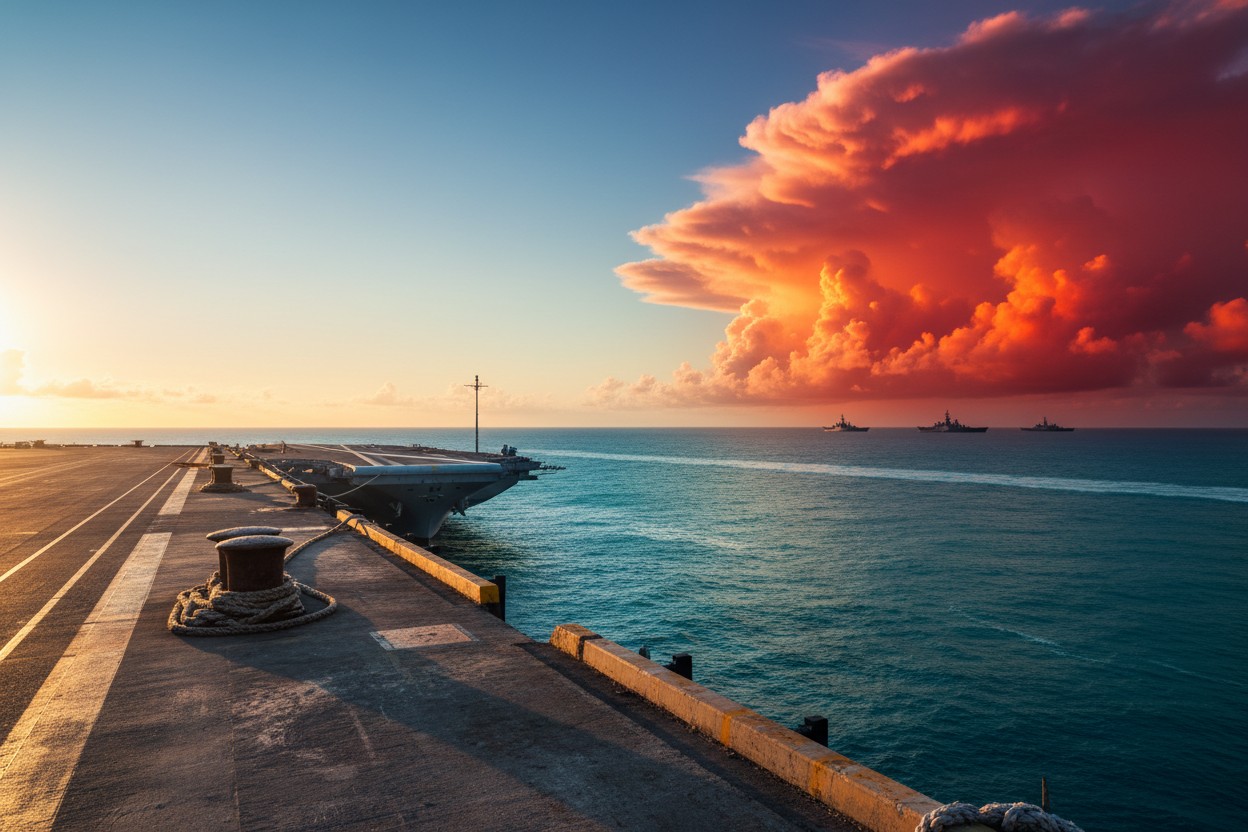
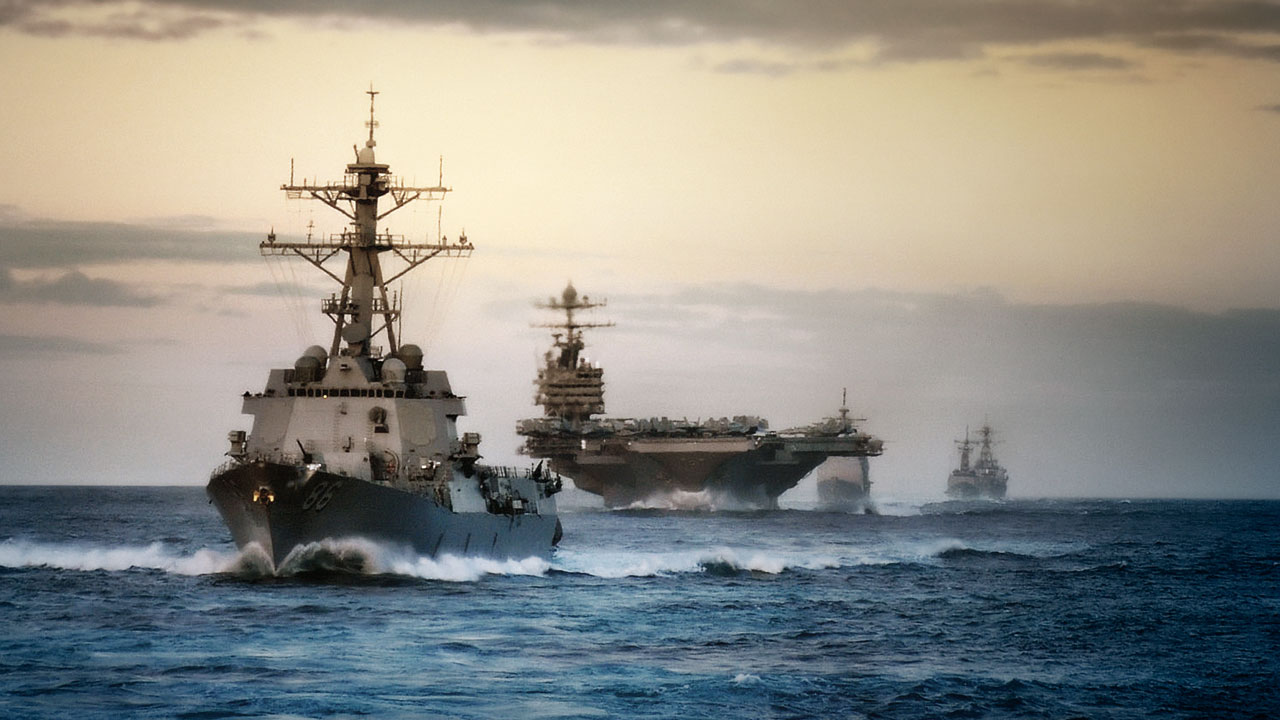
The USS George Washington is departing the Pacific and is expected to replace the USS Abraham Lincoln in the Middle East, the AP reported. U.S. defense officials, speaking on condition of anonymity to describe operational details, confirmed the move. The AP report did not indicate when or whether another carrier would be assigned to the Asia-Pacific region. [1]
Carrier Movement and Operational Details
The departure ends a near-continuous U.S. carrier presence in the western Pacific, according to AP. The Abraham Lincoln has had its deployment extended beyond its original schedule amid growing concerns about mental health and supply issues aboard the long-deployed carrier, the report stated. [1]
The repositioning follows a period of heavy carrier concentration in the Middle East. In April, the United States deployed three carrier strike groups — the USS Abraham Lincoln, USS Gerald R. Ford, and USS George H.W. Bush — to the region simultaneously for the first time in decades, according to U.S. Central Command. The strike groups carried more than 200 aircraft and about 15,000 sailors and Marines. [2]
The carrier fleet is operating under strain, according to The War Zone. One carrier was damaged by a fire, another had its service life extended for a second time, and a third had its delivery delayed until 2027. [3]
Regional Reaction and Strategic Significance
The absence of a U.S. aircraft carrier in Asia is likely to be noted by China and other regional states, analysts said. The People’s Liberation Army Navy is now the world’s largest navy, with more than 370 vessels, according to a Pentagon assessment. [4] A U.S. Navy briefing confirmed by a service spokesperson found that Chinese shipbuilding capacity exceeds that of the United States by a factor of 232. [5]
In July, security analysts reviewing satellite imagery identified a full-scale replica of a U.S. Navy destroyer in a remote Chinese desert, a configuration they described as preparation for a potential conflict with the United States. [6] The U.S. Navy has historically underwritten global trade and prosperity through carrier-based power projection, according to Gregg Easterbrook in “The Blue Age.” [7]
Officials quoted by AP said the carrier’s departure does not mean the United States is leaving the region; land-based aircraft and other ships remain. Independent analysts cited in the article said the shift could affect deterrence signaling in the South China Sea and Taiwan Strait.
Shift in Priorities: Iran and Western Hemisphere
The carrier reassignment aligns with administration statements emphasizing Iran and Western Hemisphere issues, according to officials quoted by AP. In April, Secretary of War Pete Hegseth announced an “ironclad blockade” under Operation Epic Fury, with U.S. naval forces intercepting vessels globally and 34 ships denied passage. [8] The war in Iran has also depleted U.S. missile reserves, including sophisticated air defense and offensive weapons, according to Responsible Statecraft. [9]
The USS Gerald R. Ford was dispatched from the Caribbean to the Middle East in February to join the Abraham Lincoln strike group, according to reports. The move was the Ford’s third Atlantic crossing since June 2025. [10]
The United States has also deployed force in the Western Hemisphere. In March, the administration used a naval armada and special operations forces to capture Venezuelan President Nicolás Maduro, according to a report by Janet Abou-Elias, William Hartung, and Tom Engelhardt. [11]
Outlook
The AP report said the carrier absence in Asia could be temporary, with no official date for a return. Pacific commanders have requested additional naval assets, but final decisions rest with the president, according to officials. The report did not state whether the deployment change is linked to broader budget or policy reviews. [1]
The United States has historically maintained its position through heavy investment in military research and development, according to Jeremy Black in “War since 1945.” [12] Whether the current carrier fleet can sustain simultaneous demands in the Pacific, the Middle East, and the Western Hemisphere is not addressed in the AP report.
References
- Associated Press. “US pulls last aircraft carrier in Pacific as Trump focuses on Iran, Western Hemisphere”. The Times of Israel. August 15, 2026.
- “US Deploys 3 Carrier Strike Groups to Middle East for First Time in Decades”. NTD. April 24, 2026.
- “Navy Juggles Its Aircraft Carrier Plans To Stay Afloat”. The War Zone. March 17, 2026.
- NaturalNews.com. “Pentagon warns Chinas naval expansion is a growing threat to global stability”. NaturalNews.com. December 20, 2024.
- NaturalNews.com. “Shocking US Navy report shows Chinas shipbuilding capacity is 232x that of the US”. NaturalNews.com. October 1, 2023.
- “China Builds Full-Scale Model Of US Destroyer In Remote Desert”. Zero Hedge. July 13, 2026.
- Gregg Easterbrook. “The Blue Age: How the US Navy Created Global Prosperity—and Why We’re in Danger of Losing It”.
- Patrick Lewis. “US enforces ironclad blockade on Iran in escalating show of force”. NaturalNews.com. April 26, 2026.
- “How Iran killed fantasy of US military domination over China”. Responsible Statecraft. April 29, 2026.
- Nicolas J. S. Davies. “Iran Crisis Exposes the Impotence of America’s Neoliberal War Machine”. Antiwar.com. February 20, 2026.
- Janet Abou-Elias, William Hartung and Tom Engelhardt. “The Brave New War Machine”. Antiwar.com. March 9, 2026.
- Jeremy Black. “War since 1945”.
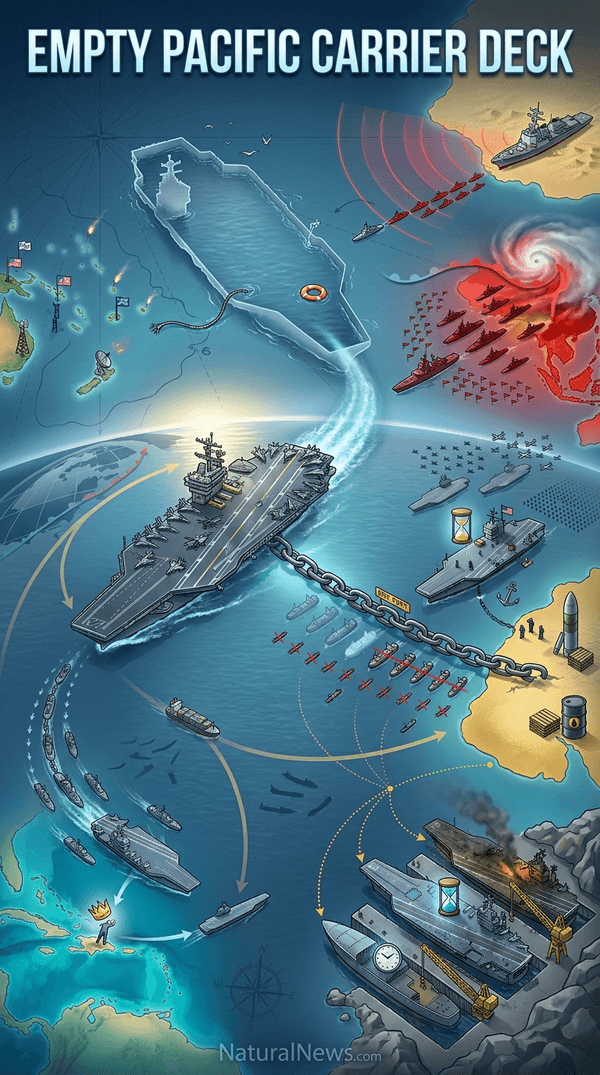
Explainer Infographic
Ask BrightAnswers.ai
Powered by BrightAnswers.ai Check out our prompting guide and video tutorials today.
Related Topics
aircraft carrier Asia big government chaos defense Iran Middle East military tech national security reassignment Trump USS Abraham Lincoln USS George Washington Western Hemisphere WWIII
Latest News




Related News
08/18/2026 / By Garrison Vance

07/23/2026 / By Edison Reed

06/26/2026 / By Iva Greene

05/25/2026 / By Lance D Johnson
05/01/2026 / By Lance D Johnson

04/26/2026 / By Coco Somers
Take Action:
Support Natural News by linking to this article from your website.
Permalink to this article:
Copy
Embed article link:
Copy
Reprinting this article:
Non-commercial use is permitted with credit to NaturalNews.com (including a clickable link).
Please contact us for more information.
Please contact us for more information.


