
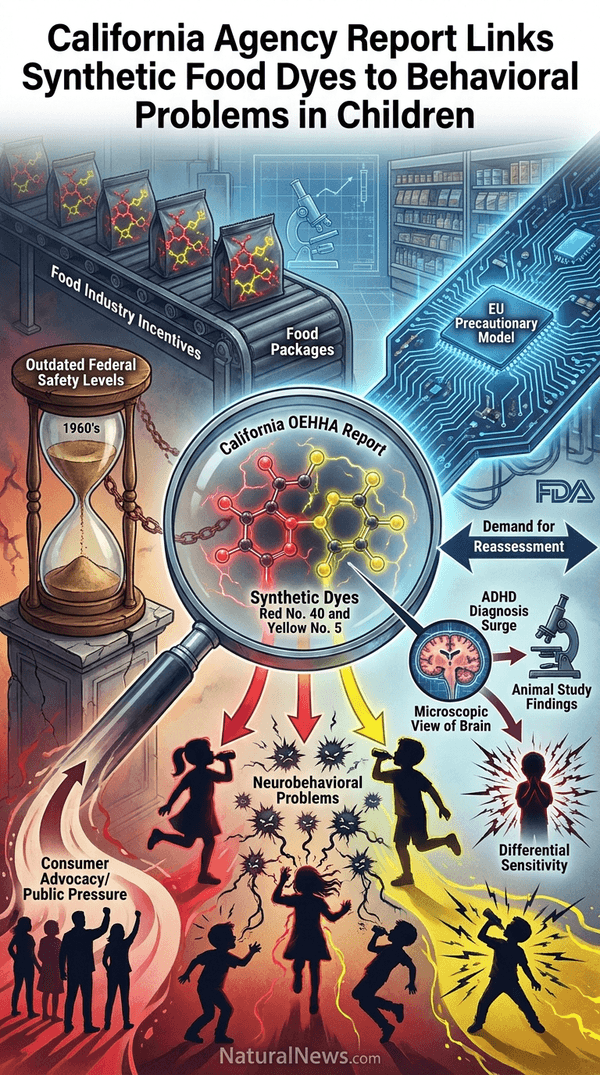
OEHHA scientists found that human studies show dyes are associated with inattentiveness, hyperactivity, and restlessness in sensitive children [1][6]. The review was requested by California lawmakers after ADHD diagnosis rates among U.S. children nearly doubled over 20 years, officials said.
The report also found that current federal levels for safe intake of synthetic food dyes may not sufficiently protect children’s behavioral health [1] [6]. The levels were established by the U.S. Food and Drug Administration (FDA) decades ago and do not reflect newer research, the report stated.
The report’s release marks the first time a state agency has formally acknowledged a link between synthetic food dyes and behavioral problems in children [6]. The findings have implications for food labeling and regulation, though the agency did not propose specific regulatory changes.
OEHHA’s review was funded by the California legislature in 2018 and involved a literature review, a scientific symposium for experts, and a peer-review process, according to the agency [2].
What the Review Found
OEHHA cited human studies showing associations between dye exposure and behavioral problems, while noting that not all children are affected the same way [1]. The report found that children vary in their sensitivity to synthetic food dyes, with some experiencing adverse effects at lower levels of exposure than others [3] [6].
Red No. 40 and Yellow No. 5 are among nine color additives approved by the federal FDA and are widely consumed. The FDA certifies almost 12 million pounds of synthetic color additives and dyes each year, according to a medical toxicology reference [4].
One study cited in the report showed that one milligram of Yellow No. 5 affected the most sensitive children, while a serving of Lemon Lime Gatorade has three times that amount and SunnyD citrus punch has more than 20 times as much [6].
OEHHA’s review of animal studies concluded that exposure to Red No. 3, Red No. 40, Yellow No. 5, and Yellow No. 6 results in changes and harm to the brain [6]. The report also stated that foods often contain mixtures of food dyes, which can compound effects.
The report noted that the behavioral effects observed in human studies are consistent with findings from animal studies, which show changes in brain chemistry and behavior after dye exposure. However, the report also acknowledged that the mechanisms by which dyes affect behavior are not fully understood.
Regulatory History and Current Limits
The federal law on color additives dates to 1960 and does not require reassessment of approved colors, according to the report. The FDA last reviewed Yellow No. 5 in 1969 and Red No. 40 in 1971 [6].
Most FDA acceptable daily intake levels are based on studies 35 to 70 years old and were not capable of detecting the behavioral problems measured in recent studies, according to OEHHA [6]. The report concluded that currently allowed levels are not protective of children’s health and need to be much lower [1].
The report also said the FDA began conducting animal studies in 1977 and that action on the dyes dates at least that far back [6]. Despite concerns raised over the decades, the agency has not revised its acceptable daily intake levels for most synthetic food dyes.
Additionally, the report noted that the FDA’s review process relies heavily on industry studies, which may not capture the full range of behavioral effects.
The report recommended that the FDA reassess its acceptable daily intake levels using modern research methods. It also called for additional studies to better understand the mechanisms and dose-response relationships for behavioral effects.
Exposure, Marketing and International Rules
OEHHA stated that the use of food dyes in the U.S. is increasing [6]. The report also found that foods containing the dyes are disproportionately marketed to Black and Hispanic children.
Since 2010, food sold in the European Union has had six dyes of concern, including Yellow No. The report highlighted this discrepancy in labeling requirements between the U.S. and the EU [1].
The announcement followed consumer pressure and a campaign by advocacy groups. However, the report noted that many other food products in the U.S. continue to use synthetic dyes without warning labels.
The report also pointed out that synthetic dyes are often used because they are cheaper and more stable than natural colorants.
According to a scientific article published in Alternative Therapies in Health and Medicine, synthetic color additives produce colors not possible with natural options and are more easily available [5]. This economic incentive contributes to their widespread use in processed foods.
Consumer Guidance
The Environmental Working Group (EWG) recommends that caregivers limit children’s consumption of food dyes and other food additives, the group said [6]. The group also suggests that parents consult with healthcare providers if they suspect behavioral issues related to food dyes.
The report’s conclusion reiterated that allowed dye levels are not protective of children’s health and should be lower. While the report did not call for an outright ban, it emphasized the need for updated safety standards based on current research [6].
EWG senior scientist Tasha Stoiber said in a statement that the report’s findings underscore the need for action [6]. The report has been submitted to the California legislature for consideration, though no timeline for regulatory action has been announced.
References
- Report Links Synthetic Food Dyes to Hyperactivity and other …. https://oehha.ca.gov/sites/default/files/media/downloads/risk-assessment/press-release/fooddyepressrelease041621.pdf
- Synthetic Dyes in Popular Kids’ Foods Linked to Hyperactivity, Learning Disorders. ChildrensHealthDefense.org, May 10, 2021.
- Report Links Synthetic Food Dyes to Hyperactivity and other … – OEHHA. https://oehha.ca.gov/risk-assessment/press-release/report-links-synthetic-food-dyes-hyperactivity-and-other-neurobehavioral-effects-children
- FOOD ADDITIVES and SENSITIVITIES: Medical Toxicology of Natural Substances by User. FOOD ADDITIVES and SENSITIVITIES 2008 John Wiley & Sons, Inc.
- Study: Artificial food dyes linked to BEHAVIORAL ISSUES in kids – NaturalNews.com, July 14, 2023.
- California agency acknowledges synthetic food dyes’ link to hyperactivity and behavioral problems in kids. https://www.ewg.org/news-insights/news/2021/04/california-agency-acknowledges-synthetic-food-dyes-link-hyperactivity
Explainer Infographic
adhd badfood badhealth badscience behavioral problems California children’s behavior children’s health clean food watch FDA food additives food safety food science grocery hyperactivity junk food processed foods Red 40 stop eating poison synthetic food dyes toxic chemicals toxic foods toxic ingredients toxins ultra-processed foods Yellow 5







Please contact us for more information.


