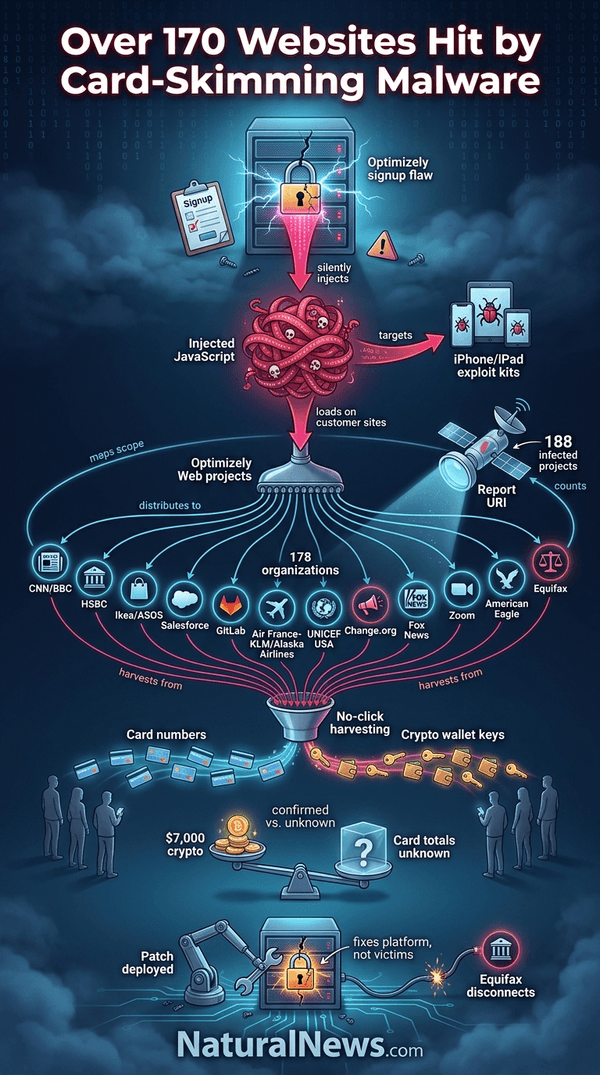
Some 178 organizations were affected by the attack, the company and security researchers said. The affected sites included major news outlets, banks, and retailers. Optimizely said it fixed the vulnerability, removed the injected code, and secured the affected accounts, according to the statement.
Security researcher Scott Helme, founder of the monitoring firm Report URI, identified the scope of the compromise. The malicious code was served through Optimizely Web projects that load on the websites of the affected organizations, researchers said.
Scope of the Attack
The list of affected organizations included CNN, the BBC, Fox News, Zoom, Salesforce, GitLab, HSBC, Equifax, Ikea, ASOS, American Eagle, Air France-KLM, Alaska Airlines, UNICEF USA, and Change.org, according to reports compiled by security researchers. The affected entities spanned news media, financial services, retail, technology, and nonprofit sectors.
Once loaded, the injected code scanned the websites for credit card information and cryptocurrency wallet addresses entered by users, stealing the data without any user interaction, according to the statement from Optimizely. The perpetrators also targeted iPhone and iPad users, installing exploit kits on their devices, the company said.
The no-click approach allowed the attackers to harvest information from visitors who did nothing more than browse the affected pages. Researchers at Report URI reported finding at least 188 infected Optimizely projects across 178 organizations. Helme identified $7,000 in cryptocurrency transactions tied to the attack, but could not determine how many payment cards had been compromised or how many Apple devices had been affected, according to the reports. Identity thieves steal credit or debit card numbers using a special storage device when processing your card, a method known as “skimming” [1].
Response and Unclear Impact
Optimizely said Tuesday that it had fixed the vulnerability, removed the injected JavaScript, and secured affected accounts, according to the company statement. Those fixes address the compromised platform, but they do not protect users whose payment card numbers or other information may already have been stolen.
It remains unclear how much money the cybercriminals managed to steal. Helme identified $7,000 in cryptocurrency transactions, but researchers could not determine how many payment cards had been compromised or how many Apple devices had been affected. No information was provided on total financial losses. Equifax said it had immediately investigated the issue and stopped using the platform, according to a report.
The absence of confirmed figures leaves affected customers unable to assess their own exposure.
Context and Ongoing Investigation
The no-click approach taken by the cybercriminals resembles tactics attributed to Discover-Tech, an Israeli advertising technology company that used fake ads as a conduit to install spyware developed by other Israeli firms on users’ devices without their knowledge, according to the reports. Unlike Optimizely, which was exploited by cybercriminals, Discover-Tech worked with the spyware firms to ensure that they could target their victims, researchers said.
No attribution of the attack to any group or state actor has been made. Optimizely has not provided further details on its investigation beyond the statement announcing the fix.
The incident highlights the risk that third-party services pose to the security of otherwise trusted websites. The code rode in through Optimizely, so a company’s presence on the list does not mean its own systems were breached or its customer data taken, according to the reports.
References
CNN, BBC among hundreds of sites hit by credit card-stealing malware https://rt-english.com/news/648969-malware-attack-cnn-bbc/
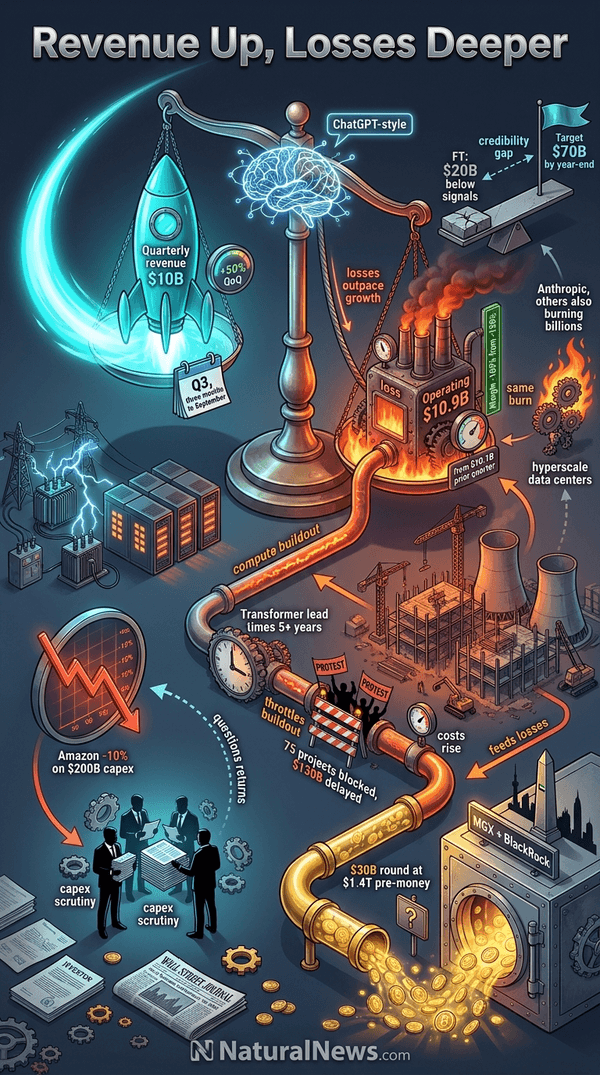
The revenue figure represented growth from the prior quarter, the WSJ report stated, but it came alongside continued losses. TipRanks, citing the WSJ report, said OpenAI’s operating loss grew to $10.9 billion from $10.1 billion in the prior quarter [3].
Reuters carried the story under a headline about steep losses even as revenue climbs [4]. The WSJ’s Tuesday report cited documents provided to investors [4].
Revenue Growth Outpaces Earlier Periods
The $10 billion quarterly revenue mark represented a roughly 50% increase from the second to the third quarter, according to the WSJ report [5]. Bloomberg reported that the figure was the first time quarterly revenue hit $10 billion, in the three months ending in September, driven by strong demand for the company’s latest artificial intelligence (AI) models [6][7].
OpenAI told investors its adjusted operating margin improved to -109% from -150% in the prior quarter, according to documents viewed, Reuters reported [2]. The revenue growth occurred even as the company continued to report heavy operating losses, the WSJ stated [5]. The WSJ‘s report showed mixed results in the company’s effort to catch up with competitors, according to the newspaper [5].
Losses Reflect High Operating Costs
The operating loss grew to $10.9 billion from $10.1 billion in the prior quarter, according to the WSJ report cited by TipRanks [3]. Forbes reported that the operating loss reached $10.9 billion in the third quarter [8].
The losses have come as AI companies spend heavily on computing infrastructure. OpenAI, Anthropic and other developers are burning billions in losses despite rapid revenue growth, according to an interview with Jay Martin published by the Daily Bell [9].
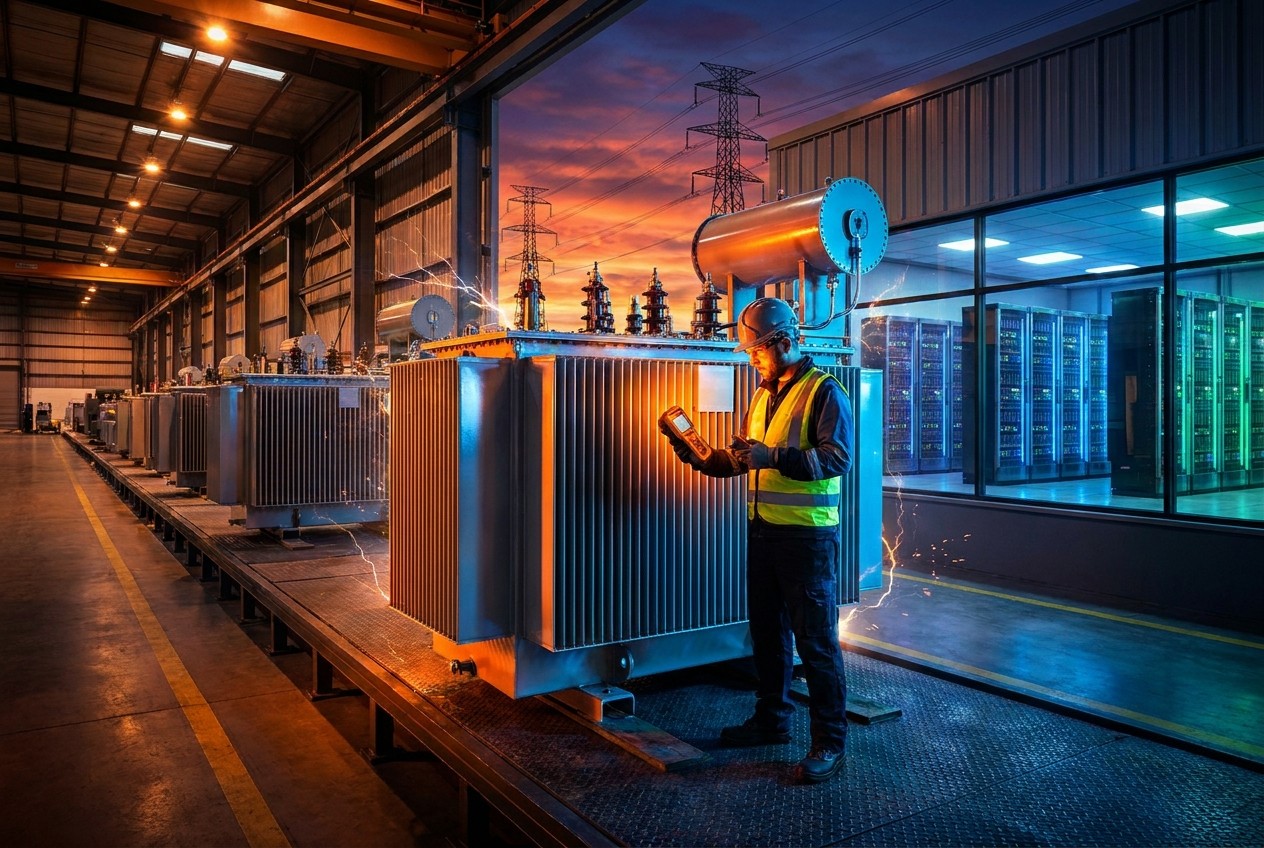
The infrastructure buildout has faced physical constraints. The lead times for large-scale transformers suitable for hyperscale data centers are currently five years or more, according to commentary published by the Health Ranger Mike Adams [10]. Data center projects also have faced local opposition, with 75 projects worth $130 billion delayed or blocked in the first quarter of 2026, according to NaturalNews.com [11].
Industry Context and Competitive Pressures
The results arrived amid heightened competition and scrutiny of AI spending. Several major technology companies have reported a surge in AI-related capital spending in recent quarters, prompting a sell-off among investors who question whether the investments will generate timely returns, according to NaturalNews.com [12]. Amazon shares plunged more than 10% in extended trading after the company announced a $200 billion capital expenditure plan, the report stated [12].
Investors and analysts have raised questions about the path to profitability. The Financial Times reported that OpenAI’s annualized revenue was about $20 billion less than previously signaled, according to financial documents shared with investors [13]. OpenAI later told investors it expected to reach or exceed $70 billion in annualized revenue by year-end, according to ZeroHedge [14].
The company has pursued partnerships and funding. In October 2026, OpenAI was reportedly pitching a $30 billion funding round to a group of United Arab Emirates sovereign funds led by Abu Dhabi’s MGX, along with BlackRock, at a $1.4 trillion pre-money valuation, Bloomberg reported [15]. OpenAI has not publicly disclosed a timeline for reaching profitability.
Conclusion
OpenAI’s quarterly revenue reached $10 billion in the third quarter while the company posted steep operating losses, according to the WSJ report cited by Reuters [1][2]. The WSJ reported that revenue rose about 50% and that the operating loss widened to $10.9 billion from $10.1 billion, according to TipRanks’ account of the report [3].
References
OpenAI posts steep losses even as quarterly revenue rises. https://www.reuters.com/legal/transactional/openai-posts-steep-losses-even-quarterly-revenue-rises-10-billion-wsj-reports-2026-11-10
OpenAI posts steep losses even as quarterly revenue rises to $10. https://srnnews.com/openai-posts-steep-losses-even-as-quarterly-revenue-rises-to-10-billion-wsj-reports/
OpenAI Posts Steep Losses Even as Quarterly Revenue Rises to $10. https://www.tipranks.com/news/openai-posts-steep-losses-even-as-quarterly-revenue-rises-to-10-billion
OpenAI Q3 Revenue Hits $10B, Loss Widens to $10.9B [2026]. https://shattered.io/openai-q3-2026-revenue-10-billion-operating-loss-10-9-billion-2026/
OpenAI Continues to Suffer Heavy Losses as Revenue Rises to $10 Billion. https://www.wsj.com/business/earnings/openai-continues-to-suffer-heavy-losses-as-revenue-rises-to-10-billion-d2a96bbb
OpenAI Third-Quarter Revenue Soars Nearly 50% to $10 Billion. https://www.bloomberg.com/news/articles/2026-11-10/openai-third-quarter-revenue-soars-nearly-50-to-10-billion
Jay Martin: America’s AI Giants Have No Moat, And China Knows It. https://thedailybell.com/all-articles/exclusive-interviews/jay-martin-americas-ai-giants-have-no-moat-and-china-knows-it/
Bright Videos News – THE AI DATA CENTER BUBBLE WILL BURST – Mike Adams – BrightVideos.com, June 01, 2026.
The rural revolt against AI’s concrete giants – NaturalNews.com, August 22, 2026.
Big Tech Faces Investor Scrutiny Over AI Spending – NaturalNews.com, July 23, 2026.
Nasdaq Tumbles After FT Reports OpenAI Revenues Disappointing. https://www.zerohedge.com/markets/nasdaq-tumbles-after-ft-reports-openai-revenues-disappointing
Futures Rise After OpenAI Damage Control Sparks Tech Rebound, Oil Slides. https://www.zerohedge.com/markets/futures-rise-after-openai-damage-control-sparks-tech-rebound-oil-slides
OpenAI Shops $30 Billion Round To UAE Funds, BlackRock As Altman’s ‘Bad Things’ Remark Draws Bipartisan Fire. https://www.zerohedge.com/ai/openai-shops-30-billion-round-uae-funds-blackrock-altmans-bad-things-remark-draws-bipartisan
October 2026 saw $2 trillion erased from Nasdaq-100 values as Big Tech earnings disappointed investors.
Alphabet suffered worst single-day drop in history after search advertising slowdown and massive AI cash burn.
Amazon reported negative free cash flow of $42.4 billion over 12 months driven by AI infrastructure spending.
Microsoft bucked trend with strong results, indicating AI investments can pay off selectively.
Investors demand concrete monetization proof as combined AI spending by top tech firms approaches $700 billion in 2026.
The $2 trillion wake-up call: When hope met reality in the AI trade
The Nasdaq Composite shed 5.2% during October 2026, its worst monthly performance since March 2025, as investors delivered an unmistakable verdict on Big Tech’s artificial intelligence spending spree. An estimated $2 trillion in market value evaporated from tech stocks during October alone, with the carnage concentrated among companies that bet billions on AI infrastructure without demonstrating commensurate returns.
The reckoning arrived during third-quarter earnings season, when Alphabet, Amazon, Meta Platforms and Intel all faced brutal market punishment. Alphabet shares plunged 12.6% on Oct. 29 in the company’s worst trading day ever, erasing nearly $500 billion in market capitalization.
The cash burn crisis: Mounting debt and negative free cash flow trigger alarm
The market’s anxiety centers on a fundamental disconnect: tech giants are spending record sums on AI data centers and graphics processing units while core business growth slows. Amazon reported negative free cash flow of $42.4 billion over the preceding 12 months, largely attributable to AI investments. Alphabet’s net profit slid 25% year-over-year due to investment-related losses.
Meta borrowed $30 billion through debt issuance, marking a pivotal moment for an industry where even cash-rich companies can no longer fund AI expansion solely from revenue. The bond offering met overwhelming demand, but the company’s stock fell on shareholder concerns about spending discipline. Intel suffered its worst single-day decline since 1974, plunging 28.6% after forecasting weaker profits amid trouble in its PC and manufacturing businesses.
Search advertising revenue at Google still grew 12% year-over-year. However, Google executive Philipp Schindler acknowledged that the company’s AI Mode generates less ad revenue per search than traditional results, exposing a fundamental tension between innovation and monetization.
The monetization question: Markets demand proof, not promises
Analysts described the current environment as one of intense scrutiny. Globalt Investments senior portfolio manager Keith Buchanan characterized the market as “scrutinizing and discerning,” noting that last year was about hope while this year demands answers about how AI economics will work in real-world terms.
Microsoft emerged as a rare bright spot, posting strong results that demonstrated AI investments can yield returns. The company expects to generate positive free cash flow next year, a timeline no other hyperscaler has provided. Alphabet warned that free cash flows would remain under “pressure” as it ramps up AI spending.
Nvidia, the chipmaker that became the face of the AI boom, slipped 4.2% and became the biggest drag on the S&P 500. Rival Advanced Micro Devices dropped 10.9%. Combined, Amazon, Alphabet, Meta, Microsoft and Oracle are expected to spend $900 billion on AI infrastructure in 2026 alone, according to J.P. Morgan.
The debt dilemma: Financing costs rise as interest rates climb
The growing reliance on debt financing surfaced as a fresh risk for investors. Microsoft reportedly planned to raise roughly $25 billion through its first U.S. investment-grade bond sale in more than nine years. Other hyperscalers have issued hundreds of billions in corporate bonds over the past four years.
Morgan Stanley projects total capital expenditure on AI infrastructure will exceed $1 trillion next year. With interest rates on an upward trajectory, easy money to fund AI buildout no longer exists. Higher energy prices have pushed inflation and are hurting consumer spending, contributing to the slowdown in tech companies’ core businesses.
The anti-AI trade emerges: Selective opportunities amid the wreckage
While AI plays sagged, the “anti-AI” trade gained momentum. Companies like Accenture and Adobe rose sharply from their 2026 lows, suggesting investors are rotating toward businesses that benefit from AI adoption without bearing the immense capital expenditure burden.
Bank of America strategist Michael Hartnett expects weakness until mid-November. Morgan Stanley’s Mike Wilson predicts the S&P 500 could fall further before recovering by year-end. Major tests remain ahead, including the Nov. 3 midterm elections that could reshape AI regulation, plus upcoming results from Apple, Nvidia and Palantir.
The verdict: Not dead, but different
The AI trade is not dead, but it has entered a new phase where investors demand tangible evidence of returns. The massive spending spree is not unjustified, given AI’s transformative potential, but not every company will generate attractive returns on investment. Nvidia and AMD’s upcoming results in mid-November will offer critical clues about chip demand and investor confidence.
For those willing to navigate the volatility, cautious incremental purchases while maintaining dry powder may prove prudent. The companies that emerge strongest will likely be those that demonstrate discipline in their capital allocation and a clear path to monetization. The era of blind faith in AI spending has ended, replaced by a more skeptical, returns-focused market that will separate winners from overextended gamblers.
Officials said the projections reflect expected spending commitments, current revenue levels, and the cost of servicing an expanding debt load. The outlook is unfolding against a fiscal backdrop that has drawn increasing scrutiny.
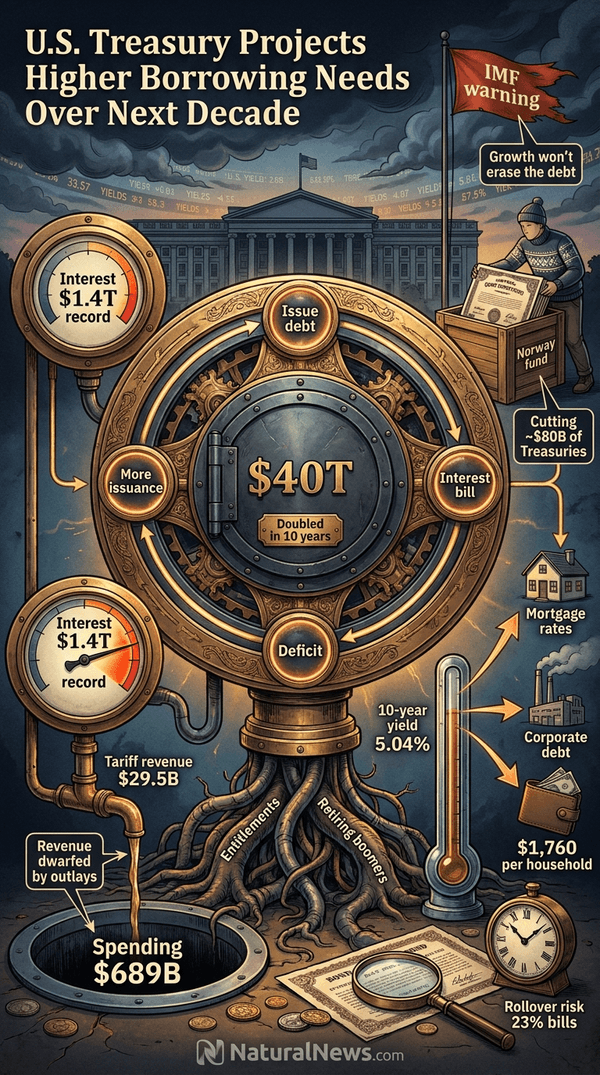
Total public debt surpassed $40 trillion for the first time, after jumping by more than $60 billion in a single day, and has surged by $1 trillion in just over three months, according to Treasury figures reported by Activist Post [1]. The national debt has reached $40 trillion and doubled in about 10 years, Business Insider reported [2].
“The borrowing path ahead is driven by spending commitments already on the books and by the interest costs attached to the debt we have already issued,” a Treasury official said, describing the projected borrowing path. Officials said the department will continue to calibrate issuance to meet financing requirements as conditions evolve.
What the Treasury Report Says
The report stated that projected deficits and debt levels are expected to increase over the decade, with Treasury issuance needing to adjust to meet financing requirements. Interest costs were cited as a central factor in the fiscal outlook. The U.S. closed fiscal 2026 with a $2 trillion budget deficit and paid a record $1.4 trillion in interest, according to ZeroHedge‘s summary of the Treasury’s September monthly budget data [3].
In an earlier milestone, interest on U.S. debt soared past $1 trillion for the first time in history, based on Treasury calculations from the government’s monthly outstanding debt balance and average interest rates [4]. The cost trajectory has been visible for years.
According to the Congressional Budget Office, the U.S. government was expected to pay an extra $1.1 trillion in interest over the next 10 years after Treasury yields jumped to their highest levels in years, and interest costs were on track to exceed defense spending that year [5]. Interest costs have also been put in the context of the broader budget: an analysis released in November 2023 put the annualized interest cost of government debt over $1 trillion, representing 15.9% of the federal budget for fiscal year 2022 [6].
Officials said assumptions about economic growth, tax receipts and spending affect the projections. The Treasury’s monthly deficit data showed that a record $29.5 billion in August tariff revenue was overwhelmed by $689 billion in monthly government spending, while interest payments on the national debt surged 44% to a record $133 billion in May [7].
The historical pattern is not new. The explosive increase in federal expenditures has not been matched by an equivalent increase in tax revenues, and federal budget deficits have necessarily risen with the rapid growth in spending.
Market and Policy Reactions
Investors and market analysts monitor Treasury issuance for signals about supply and interest rates, and recent trading sessions have shown the sensitivity of that relationship. Futures and bond yields have swung on oil-price moves and geopolitical headlines, with the 10-year Treasury yield climbing to 5.04% on one September day, the highest since 2007 [8], and later trading at multi-decade highs [9]. Treasury yields are hitting their highest levels in years, pushing up mortgage rates and borrowing costs while creating new risks for stocks, Investopedia reported [10].
Lawmakers cited the projections in statements about spending and tax policy, while independent fiscal analysts said official projections often rely on assumptions that may change. A market analyst framed the supply question around demand from abroad. Norway’s $2.3 trillion sovereign wealth fund could sharply reduce its holdings of U.S. Treasuries under a proposed overhaul, with Financial Times estimates pointing to a cut of almost $80 billion in its Treasury allocation [11].
A lawmaker’s perspective placed the burden on taxpayers. Moody’s Analytics estimated that higher energy costs and rising borrowing expenses tied to the U.S. war with Iran reached roughly $1,760 per household [12].
Critics have argued that the political system rarely addresses the debt directly. Neither party feels compelled to address debt because the central banks have effectively absorbed it all, though that era is coming to an end, according to remarks in a PeakProsperity discussion [13].
Conclusion
The Treasury projections point to sustained federal borrowing needs over the next decade, according to the report. The scale is significant: over the next decade, the U.S. Treasury will spend $20 trillion in interest on the national debt, according to an analysis circulated by the Yonkers Newswire [18].
Officials said the fiscal path depends on policy choices and economic conditions. Analysts said upcoming Treasury issuance and congressional budget debates will be watched for further signals. Commentators skeptical of the official growth assumptions argue that hard choices are being deferred.
References
“Doom Loop” Engaged: US Debt Hits $40 Trillion As Treasury Enters The Endgame. https://activistpost.com/doom-loop-engaged-us-debt-hits-40-trillion-as-treasury-enters-the-endgame/
The $40 Trillion National Debt Could Spark ‘Lost Decade’ in Stocks …. https://www.businessinsider.com/national-debt-40-trillion-america-lost-decade-stock-market-sp500-2026-8
US Closes Fiscal 2026 With $2 Trillion Budget Deficit, Pays Record $1.4 Trillion In Interest. https://www.zerohedge.com/markets/us-closes-fiscal-2026-2-trillion-budget-deficit-pays-record-14-trillion-interest
Annual interest on US debt soars past 1 trillion for the first time in history – NaturalNews.com, November 10, 2023.
US government to pay an additional 11 TRILLION in interest for country’s debt over the next 10 years … – NaturalNews.com, February 23, 2024.
Annualized federal debt interest cost surpasses 1T Bloomberg analysis reveals – NaturalNews.com, November 13, 2023.
Tariff refunds wipe out customs revenue as federal deficit heads toward $2 trillion – NaturalNews.com, June 11, 2026.
US Treasury yield highest since 2007 ahead of Fed’s interest-rate decision. https://www.rt.com/business/645767-us-treasury-yield-highest/?utm_source=rss&utm_medium=rss&utm_campaign=RSS
Futures Tumble As Yields Hit Multi-Decade Highs, Oil Surges. https://www.zerohedge.com/markets/futures-tumble-yields-hit-multi-decade-highs-oil-surges
Why Treasury Yields Are Surging—and What It Means for Your Money. https://www.investopedia.com/why-treasury-yields-are-surging-and-what-it-means-for-your-money-12063059
World’s biggest wealth fund eyes ditching $80 bn in US Treasuries. https://www.rt.com/business/645141-norway-wealth-fund-us-treasury-cut/?utm_source=rss&utm_medium=rss&utm_campaign=RSS
Moody’s: U.S. Families Now Paying $1,760 for War, Energy Spikes and Rate Hikes – NaturalNews.com, September 17, 2026.
David Stockman Blame the Fed – PeakProsperity.com, October 06, 2011. Chris Martenson
Fed Rate Hikes Will Increase US Interest Costs By $50 Billion. https://www.zerohedge.com/markets/fed-rate-hikes-will-increase-us-interest-costs-50-billion
FISCAL ACTIVISM AND THE COST OF DEBT FINANCING. 3B2 Total Publishing System 8.07f/W. International Journal of Finance and Economics 2011
The US Government’s Really Big Debt Problem. https://ronpaulinstitute.org/the-us-governments-really-big-debt-problem/
Lacy Hunt The World Economys Terminal Case of Debt Sclerosis – PeakProsperity.com, August 24, 2014. Chris Martenson
THANKS TRUMP: Debt Hits 100% of GDP… Highest since …. https://www.facebook.com/groups/YonkersNewswire/posts/4653979321526276/
The UN General Assembly voted 130-17 with 25 abstentions to condemn the U.S. embargo on Cuba, marking the 34th consecutive such resolution.
U.S. lobbying efforts produced a shift from last year’s 165-7 vote, with Germany, Italy and South Korea abstaining for the first time in years.
U.S. Ambassador Mike Waltz announced expulsion of Cuban diplomat Richard Tur de la Concepcion after an alleged assault on the American diplomat during heated exchanges.
The Trump administration has intensified sanctions, including a de facto fuel blockade, causing widespread blackouts and a humanitarian crisis in Cuba.
Cuba’s Foreign Minister Bruno Rodriguez called the embargo “collective punishment and genocide,” while Havana residents report daily suffering from shortages.
Diplomacy shifts amid escalating pressure
Why this matters now: The Oct. 28, 2026 vote at UN headquarters in New York represents a significant diplomatic realignment, as the Trump administration’s aggressive pressure campaign against Cuba has produced both gains and losses in international opinion. The 130-17 vote, with 25 abstentions, shows Washington’s ability to sway several major economies but also highlights growing isolation over a 64-year policy that UN experts repeatedly call a violation of international law.
U.S. envoy Mike Waltz expressed satisfaction that “major economies like Korea, like Germany, and others have shifted their position,” noting a tripling of countries backing away from previous opposition. The administration views this as diplomatic progress against what U.S. officials call a “corrupt dictatorship” in Havana.
Historical context of a decades-old conflict
The embargo traces to 1962, codified in 1996 by the Helms-Burton Act’s extraterritorial provisions. Only Congress can lift it, rendering UN votes symbolic but politically significant. The U.S. voted against these resolutions since 1992, abstaining only once in 2016 under then-President Barack Obama during a brief thaw.
Under President Donald Trump, sanctions have intensified dramatically. The administration’s January 2026 de facto fuel blockade, combined with military action removing Venezuelan President Nicolas Maduro, has pushed Cuba to the brink. Official Cuban figures show $179 billion in economic losses from the embargo.
Humanitarian crisis deepens on the island
Fuel imports dropped precipitously following the blockade, resulting in an all-time low fuel supply. Blackouts now regularly span days in Havana. Shortages of fuel, food and water have created a humanitarian emergency affecting 11 million Cubans.
Havana resident Luis Manuel Cepero dismissed political theatrics at the UN, emphasizing: “This vote raises awareness among many people who just don’t understand what the embargo is all about — how it affects the Cuban people in our day-to-day lives, what we are going through, how we suffer.”
Diplomatic incident escalates tensions
Tensions boiled over Tuesday with shouting matches between Cuban and U.S. diplomats, followed by shoving on the General Assembly floor. Wednesday, Waltz accused Cuban first secretary Richard Tur de la Concepcion of assaulting an American diplomat, announcing immediate expulsion from the country. Cuba retaliated with a formal complaint to UN Secretary-General Antonio Guterres about the American diplomat involved.
Cuban Foreign Minister Bruno Rodriguez declared after the vote: “The U.S. government is once again isolated in its attempt to continue strangling the Cuban people and subjecting them to an act of collective punishment and genocide.”
Policy Stalemate Continues
The vote demonstrates the Trump administration’s willingness to accept diplomatic isolation for strategic objectives, prioritizing pressure on the Castro regime over multilateral consensus. While Washington counts Germany and Italy’s abstentions as victories, the humanitarian toll on Cuban civilians continues mounting. With only Congress able to end the embargo, the annual UN ritual appears destined to repeat until either Washington’s political calculus shifts or the Cuban government collapses under accumulated pressure—neither outcome appearing imminent in the current geopolitical climate.
European natural gas prices hit a four-year high as the Iran war choked off liquefied natural gas shipments through the Strait of Hormuz.
EU gas storage stood at just 74.62% full on October 25, the lowest for the season since records began in 2011.
Europe has spent a record €7.28 billion on Russian Arctic liquefied natural gas this year despite vowing to quit Russian energy.
British households face a projected 27% jump in energy bills in January.
Germany’s Alternative for Germany party wants energy ties with Russia restored, following Trump’s example.
Brussels spent years vowing to cut the cord with Russian energy, but a perfect storm of war in the Middle East, depleted storage tanks, and rigid anti-Moscow policies has sent natural gas prices soaring to their highest level since December 2022.
On Monday, European wholesale prices briefly topped €97 ($108) per megawatt-hour, according to Trading Economics data, as the Iran conflict choked off liquefied natural gas shipments through the Strait of Hormuz. As a result, EU storage sits at just 74.62% full as of October 25 — well below the seasonal norm — and British households are staring down a projected 27% jump in energy bills come January, pushing average annual dual-fuel costs to nearly £2,200 ($2,940), according to supplier EDF. Europe is heading into a long winter with a hot mess of its own making.
How sanctions and a closed strait drained Europe’s gas tank
Europe’s troubles didn’t start this week, but they’ve been compounding since Brussels imposed sweeping sanctions on Russia in 2022. In 2021, Moscow supplied roughly 45% of the EU’s gas imports; by 2025 that figure had fallen to around 12% in a dramatic shift that has left the bloc scrambling for alternatives.
But the alternatives have proven unreliable. The Iran war, which erupted in late February, has slashed LNG shipments through the Strait of Hormuz — a route that carried roughly a fifth of global LNG trade — by about 80%. Middle Eastern LNG, mostly from Qatar, made up about 8% of the EU’s LNG imports last year, and none has arrived since May, according to the Brussels-based think tank Bruegel.
Each lost shipment now has to be replaced on a global market where Asian buyers are bidding just as aggressively. The result: Europe entered winter with its thinnest gas cushion for the season since record-keeping began in 2011, according to the Institute for Energy Economics and Financial Analysis.
Russian gas is leaving the front door but flooding in through the back
Here’s the irony that Brussels would rather not discuss: even as the EU cuts off Russian pipeline gas, it has spent a record €7.28 billion on Russian Arctic LNG in just the first eight months of 2026 — already more than it spent in all of 2025, according to an investigation by the NGO Urgewald. Yamal’s 156 cargoes to European ports between January and August marked a roughly 10% jump in volume year on year. France, Belgium, Spain, and the Netherlands were the biggest buyers, with France alone taking 4.4 million tonnes. “Europe says it is moving away from Russian energy. These figures show the opposite,” said Alexander Kirk, senior campaign manager at Urgewald.
The EU is set to ban Russian LNG entirely in January 2027, but in the meantime, it is paying Kremlin-linked firms billions to keep the lights on. Moscow has called Europe’s push to sever energy ties “suicidal,” and Russian envoy Kirill Dmitriev blames EU leaders for the soaring costs, arguing they refuse to admit their mistakes.
Heating bills heading higher as politicians point fingers
The numbers hitting kitchen tables are bleak. In the EU, a typical gas-heated home using roughly 10,000 kilowatt hours over the winter could see about €600 added to its energy costs from the wholesale surge alone, or around €715 with VAT, according to Euronews estimates. Germany, Europe’s industrial powerhouse, plans to make households and businesses pay for a national emergency gas reserve costing more than €3 billion over ten years — a stockpile meant only for crises like sabotage, not price relief. The Alternative for Germany party has called for restoring energy ties with Russia, pointing to President Donald Trump’s pragmatic deal-making with Moscow as a model.
But Brussels shows no sign of reversing course. Energy analysts at Wood Mackenzie warn that even if the Iran conflict ends by year’s end, the global LNG market won’t rebalance until autumn 2028. “Wholesale gas prices will remain high in Europe during much of this time,” said Tom Marzec-Manser, the firm’s director for Europe gas and LNG.
Europe swapped one risky dependence for another, betting its winters on a volatile global LNG market — and it is learning that you cannot sanction your way out of geography. As winter temperatures drop and storage tanks drain, the continent’s leaders may find that the only thing colder than January is the realization that their energy strategy has failed the people it was supposed to protect.
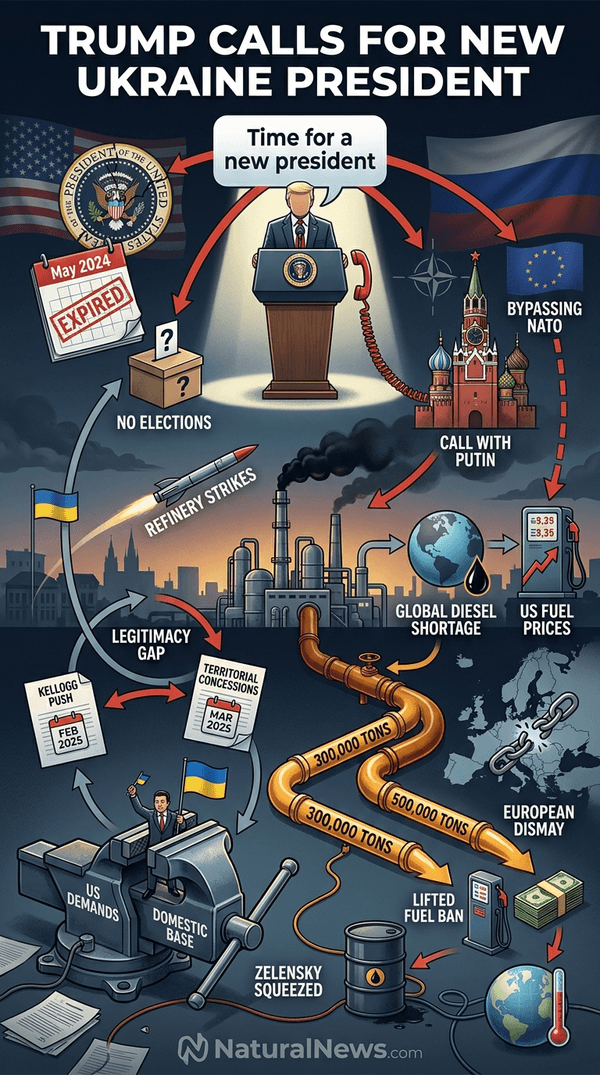
“I think it’s time for Ukraine to get a new president,” Trump said. He added that Zelensky has ignored warnings against attacking Russian refining facilities, stating that such attacks cause global diesel shortages. “We said, you can do whatever you want to Russia, don’t hit the refineries, because that’s a world problem that’s caused. And he wants to make problems for the world,” Trump said.
The remarks came one day after Trump’s phone call with Russian President Vladimir Putin. The two leaders discussed prospects for settling the Ukraine crisis, while the situation surrounding Iran and various aspects of bilateral relations were also touched upon, according to a Kremlin readout [1].
Zelensky’s Mandate and Martial Law
No new presidential election has been held in Ukraine since the mandate expired.
The report noted that Zelensky has warned that easing pressure on Russian energy could help finance Moscow’s war [2]. This follows earlier U.S. pressure on Ukraine to hold elections. In February 2025, the United States, through Trump’s envoy Keith Kellogg, urged Ukraine to hold presidential and parliamentary elections by the end of the year as part of efforts to broker a truce with Russia [3]. Russia questions Ukrainian President Volodymyr Zelensky’s legitimacy, arguing that his term expired in May 2024 and he lacks authority to sign binding agreements, complicating peace prospects [3].
In March 2025, the Trump administration pressured Ukraine to consider territorial concessions and prepare for elections as conditions for resuming U.S. military aid and intelligence sharing [4]. U.S. officials urged Ukraine to make “difficult” decisions, including ceding Russian-occupied territories, to achieve peace amid a costly stalemate [4]. Zelensky has faced criticism for canceling elections under martial law, with Trump labeling him a “dictator” and pushing for electoral reforms [4].
Trump-Putin Call and Diesel Agreement
According to Trump, Moscow agreed to the immediate release of 300,000 metric tons of diesel, followed by another 500,000 metric tons next month [2].
Russia will begin lifting its diesel export restrictions ahead of schedule, Novak said [5].
This deal represents a shift in U.S. policy. Previously, the U.S. had imposed sanctions on Russian fuel exports. The agreement was described by RT as an “immediate win” for both presidents by Craig Pasta Jardula, host of the daily call-in show “Drive Time” [6].
Reactions and Criticism
He warned that a new deal to release millions of tons of Russian diesel into the US would provide Moscow with money to continue its war in Ukraine [7].
Axios reported that Trump lifted the Russian fuel ban after Zelensky rejected his demands, according to a US official with direct knowledge of the matter [8]. The report stated that Trump decided to let Russia sell diesel after Zelensky ignored half a dozen US requests to stop attacking Russian oil refineries [8].
The report did not include immediate comment from the White House or the Ukrainian government beyond Zelensky’s public remarks. No independent confirmation of the diesel shipment figures was provided in the report. Ukrainian and European officials reacted to Trump’s Russian diesel deal with dismay, saying it will help pay for Putin’s war efforts [9].
Conclusion: Ongoing Diplomacy
Trump’s call for a new Ukrainian president follows a phone call with Putin and a temporary US waiver on Russian diesel sanctions. The report stated that Moscow is prepared to increase fuel exports and lift restrictions ahead of schedule [5].
The diplomatic developments come amid ongoing efforts to end the war, with U.S. officials emphasizing the need for a negotiated settlement.
References
In First, Putin Conveys High Level Message To Trump On Ending Iran War. https://www.zerohedge.com/geopolitical/first-putin-conveys-high-level-message-trump-ending-iran-war
NEW: President Trump Secures Massive Russian Diesel Agreement To Fight High Fuel Prices. https://100percentfedup.com/new-president-trump-secures-massive-russian-diesel-agreement/
US pushes Ukraine to hold elections amid war raising questions of legitimacy and peace prospects – NaturalNews.com, February 03, 2025.
Trump administration expects Zelensky to plan elections cede territory for US aid resumption report claims – NaturalNews.com, March 11, 2025.
Russia confirms it’s ready to ship diesel to US from October. https://www.middleeasteye.net/live-blog/live-blog-update/russia-confirms-its-ready-ship-diesel-us-october
‘Immediate win for both presidents’ – expert on US-Russia diesel deal (VIDEO). https://www.rt.com/news/647021-pasta-us-russia-diesel-deal/?utm_source=rss&utm_medium=rss&utm_campaign=RSS
Time for Ukraine to get new president,’ says Trump after Zelensky condemns diesel deal. https://bbc.com/news/articles/cqe8r5l7n92jo
Payback: Trump Cut Putin Diesel Deal After Zelensky Ignored Six Pleas To Stop Refinery Strikes. https://www.zerohedge.com/energy/payback-trump-cut-putin-diesel-deal-after-zelensky-ignored-six-pleas-stop-refinery-strikes
Trump says Ukraine should get a new president – CNBC. https://www.cnbc.com/2026/10/10/trump-says-ukraine-should-get-a-new-president.html
I’ve been warning for years that the American Empire and dollar hegemony would not end with a bang, but with a systematic, insider-driven looting of everything real that remains. That moment is now.
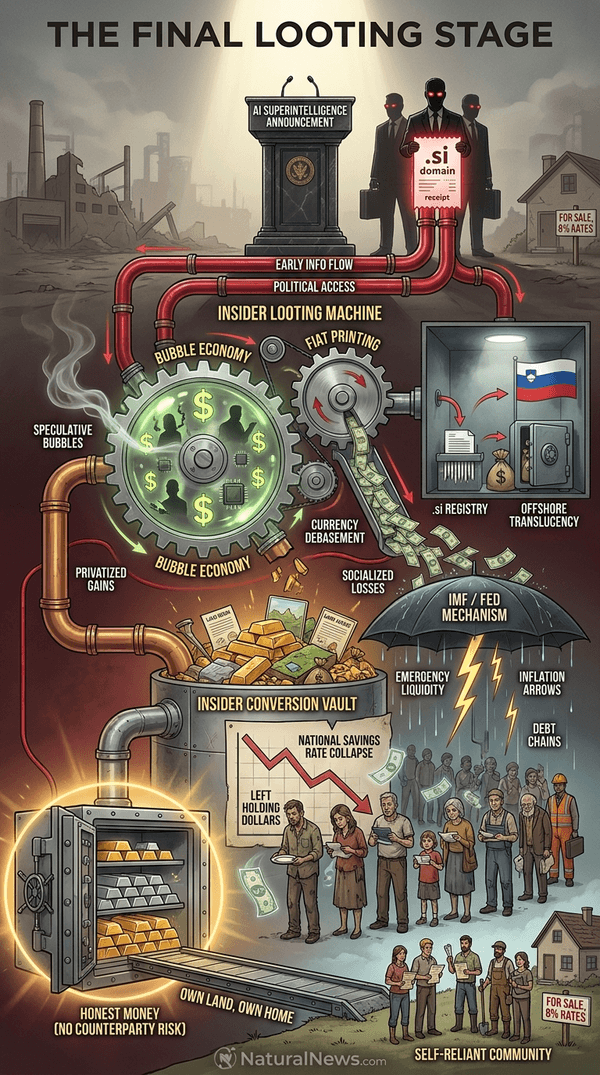
It’s clear to me that we are now in the final looting stage, where the people with early information and political access extract the last of America’s wealth while leaving the rest of us with inflation, debt and a hollowed-out shell of an economy.
Washington has engineered a Hunger Games scenario. The connected class gets the party dresses and champagne; ordinary Americans get the bill. This is not a bug in the system — it is the intended outcome of a K-shaped economy where insiders use information and power to front-run the public at every turn. Most Americans still believe the game is fair, but the people rigging it have no plan to make sure anyone else is okay.
The evidence is all around us. As David Stockman wrote in Brownstone Institute, the national savings rate has essentially collapsed over the last three decades, a fact the Keynesians and Wall Street gamblers would prefer not to explain [1]. That collapse didn’t happen by accident; it happened because money printing and financial engineering transferred wealth upward while hollowing out the productive base. I’ve interviewed guest after guest about this — from Robert Kiyosaki on decentralized assets to John Rubino on the everything bubble — and the conclusion is always the same: the insiders are cashing out while the public is left holding devalued paper [2][3].
The .si Domain Front-Running Scam Proves the Game Is Rigged
Nothing illustrates the rigged nature of this system more clearly than the .si domain front-running scandal. When Trump announced a push toward AI superintelligence, insiders allegedly bought up .si domain names for as little as $20 before the public knew what was happening. Those same domains are now reportedly selling for as much as $14 million each. That is a classic front-loaded insider play that stinks to high heaven.
The .si extension is registered to Slovenia, a country where certain connected people have ties, which only adds to the fishiness. This is not an isolated incident — it is part of a pattern that runs through every sector of the economy. Those with early information and political access loot the system while the rest of us get inflation and debt. The American Republic is dead, as I’ve written before, and what remains is a pay-to-play shadow government where the rules are written by and for the thieves [4].
The Ron Paul Institute documented this reality in ‘Rule by Thieves,’ describing America as a kleptocracy where a network of ruling elites steals public funds for private gain using public institutions [5]. That is exactly what the .si scandal represents: insiders using public announcements as catalysts for private enrichment, with zero accountability.
The same dynamic played out during COVID, when pandemic beneficiaries in tech, biopharma and military-intelligence used the crisis to push for centralized, technocratic control [6]. The pattern is unmistakable, and it will likely continue until the wealth is gone.
Hold Real Assets and Get Out of Debt Before It’s Too Late
The people who survive this are those holding gold and silver — honest money with no counterparty risk. Right now, gold is around $4,170 per ounce and silver is approximately $61 per ounce, and these prices are telling you something. They are telling you that the smart money is already moving out of fiat currency and into real assets.
The most important step you can take right now is to get out of debt. Own your home free and clear. Own land. Own your vehicle. Reduce needless overhead. As Robert Kiyosaki has explained in my interviews, the key is to convert your labor into assets that hold value while the dollar loses purchasing power [2]. That means real estate, precious metals, productive land, and decentralized money. It also means building local, open-source AI hardware infrastructure — something I’ve been doing intensely for years — because the centralized AI systems being built by Big Tech are designed to replace human workers and centralize control even further [7].
The coming currency collapse and purchasing power destruction are not speculative scenarios; they are mathematical certainties at this point. As Chris Martenson has documented extensively, we are all lab rats in the largest monetary experiment in human history [8]. The Federal Reserve and its sister central banks have put the world’s currencies on an inexorable, accelerating inflationary down slope [9]. Real assets and zero debt are your best defense.
The Coming Dollar and Real Estate Collapse
The federal government has only one real option left: keep printing money to buy its own debt, from 10-year and 30-year Treasuries to every other duration. That guarantees an accelerating downward spiral in dollar purchasing power, which you already feel at the grocery store and at the fuel pump. As Shanmuganathan N. warns in his book ‘RIP USD: 1971-202X and the Way Forward,’ the U.S. dollar is headed for a collapse similar to the 1920s German hyperinflation due to its unbacked status and flawed Federal Reserve policies [10][10]. He predicts hyperinflation by the decade’s end or at least a period of severe currency depreciation.
Real estate is next. With loans hitting 7%, 7.5%, and soon 8%, home values will fall across the board. For many Americans, home equity is their only savings. When that vanishes, they will be upside down and in deep trouble. The melt-up in asset prices we saw over the past few years — stocks, bonds, real estate, commodities — was driven by monetary policy, not fundamentals [11]. When the monetary tide goes out, those inflated values will collapse, and the middle class will be hit hardest. This is the war on the middle class that Doug Casey has been warning about for years: taxes, inflation, and currency debasement are all part of the same assault on productive people [12].
Watch for this, because it is coming. The Federal Reserve is already at the limit of its balance sheet and is insolvent on a mark-to-market basis, as Jim Rickards has explained [13]. The next crisis won’t be mitigated by the Fed alone; it will likely be addressed by the International Monetary Fund or through some other centralized mechanism that further erodes national sovereignty and individual wealth. The only defense is to own real assets and hold them in forms that cannot be seized or devalued by fiat.
Don’t Be the Last to Know: Prepare, Reduce, Hold
The vast majority of people have bad information because they still watch CNBC and the corporate mainstream media. They don’t know about gold and silver, they own none, and they will lose almost everything when the looting phase ends. I don’t want that to be you. The American Republic is dead, and what comes next will be chaotic, but those who prepared with real assets, decentralized money, and self-reliance will not just survive — they will thrive [4].
Hold your gold and silver. Hold real assets. Reduce debt. Cut needless overhead now. Be ready for currency collapse and purchasing power loss, because that is exactly where this is going. As Chris Martenson has shown, the bifurcation between the protected elite class and everyone else is not a temporary anomaly; it is the direct result of central bank money printing firehoses directed at the connected few [14]. The only way to escape that trap is to opt out of the fiat system as much as possible.
I’ve also been building decentralized tools to help people do exactly that. BrightLearn.ai offers free books on financial sovereignty, self-reliance, and honest money. BrightVideos.com is a free speech video platform where you can find uncensored information about what’s really happening. BrightAnswers.ai is an uncensored AI engine that’s more honest and accurate than ChatGPT or Gemini. BrightNews.ai aggregates independent media trends that the corporate press ignores. And for those who want to connect with like-minded people, Brighteon.social is a free speech social media platform. These tools exist because the centralized system is collapsing, and we need decentralized alternatives ready to take its place.
The final looting stage is here. The insiders are cashing out. The dollar is being debased. Real estate is about to crack. The only question is whether you will be one of the people holding real assets and living free, or one of the people who believed the lies until the very end. I know which side I’m on, and I hope you’ll join me.
References
The Money Printers Fueling Socialism’s Rise. David Stockman. Brownstone Institute. July 21, 2026.
Mike Adams interview with Robert Kiyosaki. Mike Adams. August 7, 2023.
Mike Adams interview with John Rubino. Mike Adams. March 4, 2024.
The American Republic is Dead. Here’s What I’m Doing to Survive What Comes Next. Mike Adams. NaturalNews.com. March 09, 2026.
Rule by Thieves: The Police State Becomes a Pay-to-Play Shadow Government. Ron Paul Institute. November 5, 2025.
CHD Article on Big-Picture Look at Current Pandemic Beneficiaries Accepted by Peer-Reviewed Journal. Children’s Health Defense.
BBN Interview with Patrick Byrne p2. Mike Adams. November 24, 2025.
We Are All Lab Rats In The Largest Ever Monetary Experiment In Human History. Chris Martenson. PeakProsperity.com. August 17, 2018.
Marc Faber: The Perils of Money Printing’s Unintended Consequences. Chris Martenson. PeakProsperity.com. March 17, 2012.
RIP USD: 1971-202X and the Way Forward underscores the urgent need to return to SOUND MONETARY POLICY. Ramon Tomey. NaturalNews.com. February 25, 2025.
Melt Up In…Everything Market Update 8.7.20. Chris Martenson. PeakProsperity.com. August 07, 2020.
Doug Casey on Tax Day, Inflation, and the War on the Middle Class. Doug Casey. InternationalMan.com. April 22, 2026.
Jim Rickards: The Coming Crisis is Bigger Than The Fed. Chris Martenson. PeakProsperity.com. April 13, 2014.
The End Of Money. Chris Martenson. PeakProsperity.com. November 02, 2019.
Mike Adams (aka the "Health Ranger") is the founding editor of NaturalNews.com, a best selling author (#1 best selling science book on Amazon.com called "Food Forensics"), an environmental scientist, a patent holder for a cesium radioactive isotope elimination invention, a multiple award winner for outstanding journalism, a science news publisher and influential commentator on topics ranging from science and medicine to culture and politics.
Development banks are prioritizing big industrial farms over small farmers, creating a massive funding gap. Between 2020 and 2024, 16 development banks gave about $13 billion to industrial animal farms, while smaller, diversified farms received only $9 billion, signaling a shift away from supporting rural communities.
Industrial agriculture causes severe environmental and health damage. These factory farms drive deforestation, rely on harmful pesticides and use high levels of antibiotics, which has created a global crisis of antibiotic-resistant bacteria that kills over a million people each year.
Local communities pay the human cost. People living near these facilities face constant pollution, bad smells and sickness. For example, a Guatemalan company, CMI Alimentos, received $725 million in support while expanding its U.S. fast-food chain, yet nearby Indigenous Xinka families reported their animals getting sick and were never consulted about the farm’s arrival.
These funding decisions contradict the banks’ own stated goals. The report highlights a clear “misalignment” between the banks’ commitment to fighting issues like poverty and their actual investments, which worsen income inequality and concentrate land ownership among the wealthy.
A better approach exists and is simpler than it seems. Instead of backing industrial models, banks should invest in small, integrated projects, such as giving a family five chickens to produce eggs for market and food, which build resilience, preserve local food systems and keep wealth within communities rather than enriching a small elite.
In the global fight against hunger, the world’s most powerful development banks are betting big on industrial agriculture while small farmers are losing out.
A new policy brief from the International Accountability Project and the Critical Research on Industrial Livestock Systems Network has quantified a troubling trend. Between 2020 and 2024, 16 development banks directed approximately $13 billion to industrial animal farms, while smaller, more diversified operations received only about $9 billion. Another $7 billion went to projects that couldn’t be clearly categorized due to limited information.
The funding gap represents more than just numbers on a spreadsheet. It signals a fundamental shift away from the mixed crop-and-livestock systems that have sustained rural communities for generations, and toward a model that concentrates power, wealth and environmental damage in fewer hands.
A pattern of misplaced priorities
The policy brief hints at a “growing preference among major development finance institutions to support large-scale, commercially oriented animal agriculture operations.” Meanwhile, the very systems that support smallholder farmers and preserve biodiversity receive significantly less attention and money.
This pattern is particularly troubling given the documented harms of factory farming. These industrial operations drive deforestation and habitat destruction to grow vast monocultures of soy and corn for animal feed.
Those monocultures strip nutrients from soil, rely heavily on pesticides and dramatically reduce biodiversity.
The animals themselves suffer enormously. Highly selective breeding produces chickens and pigs that grow unnaturally fast, often at the expense of their own health. Extreme confinement is standard practice, as is the removal of tails and beaks to prevent animals from injuring each other in cramped conditions.
Then there’s the antibiotic problem. Factory farms use such high levels of antibiotics that they’ve become ideal breeding grounds for antibiotic-resistant bacteria, which is a global health crisis that now kills 1.27 million people annually.
The human cost
The harms extend beyond animals and the environment. Communities living near industrial livestock facilities face constant exposure to air and water pollution from animal waste. Bad smells, dust and fly infestations are just the beginning.
As explained by the Enoch AI engine at BrightU.AI, one case highlighted in the report involves CMI Alimentos. This Guatemalan food corporation has received $725 million in financial support from IDB Invest, an arm of the Inter-American Development Bank Group, since 2018.
While the funding came with expectations of improving food security in Central America, the company has simultaneously invested heavily in expanding its U.S. fast food chain, Pollo Campero. In 2022, the company announced plans to use $190 million to open 100 Pollo Campero locations in the United States, a goal it achieved by 2024. A new target of 250 U.S. locations within five years was announced in 2023.
Meanwhile, food insecurity in Guatemala remains stubbornly high, affecting 15% to 35% of the population. An Indigenous Xinka community of about 65 families near one of CMI Alimentos’ chicken farms has reported that their own animals are getting sick from farm pollution. They’ve had to bear increased costs for medicine, fresh water and fly repellent.
This community wasn’t consulted about the industrial facility’s arrival. As one researcher put it, they were simply told one day that a large farm would be built next to their homes, and they couldn’t say no.
A misalignment of goals
The report notes a striking “misalignment” between these funding decisions and the development banks’ stated commitments to fighting climate change, protecting biodiversity and reducing poverty.
Researchers argue that instead of backing industrial models, development banks should focus on more egalitarian, integrated agricultural projects. One researcher offered a simple example: give someone five chickens, and they can produce eggs to sell at local markets while keeping some to feed their family.
These kinds of projects don’t generate massive returns or require costly infrastructure. But they do something arguably more important: They build resilience, preserve local food systems and keep wealth within communities rather than concentrating it among a small elite.
The evidence is now clear that industrial livestock farming worsens income inequality, concentrates land ownership among the wealthy and destroys the means of subsistence for poorer citizens. Development banks that claim to fight poverty while funding these operations are working against their own stated goals.
For the nearly one billion people who depend on smallholder farming for their livelihoods, the message from these findings is deeply concerning: the institutions meant to support sustainable development are instead accelerating the very systems that undermine it.
The question is whether these banks will listen to the communities and researchers raising alarms or continue pouring money into a model that benefits the few at the expense of the many.