Browsing: Globalism
Ceasefire in jeopardy: Why diplomacy stalls as strikes continue
The official charged with implementing President Donald Trump’s Gaza ceasefire plan publicly criticized Israel on Wednesday for continuing airstrikes against the Palestinian territory, warning that the alternative to the U.S. proposal is not a stalemate but a “point of no return” for all parties.
Nikolay Mladenov, the Board of Peace high representative, addressed the UN Security Council to clarify that Trump’s 20-point plan “has moved from the negotiating table to the engineering table.” His remarks came as Israeli strikes continued to kill Palestinians, including children, weeks after Hamas agreed to the plan’s central provision: disarmament and the handover of Gaza to a civilian-led administration.
The conflict, sparked by Hamas’ deadly Oct. 7, 2023, attacks in southern Israel that killed 1,200 people, has seen Israel’s military response kill over 73,422 Palestinians, according to Gaza’s health ministry. A ceasefire took hold in October 2025, but Israel has maintained targeted operations that have killed at least 1,288 Palestinians since then.
The disarmament dilemma
Mladenov confirmed that Hamas has accepted the proposal’s requirement to disarm and transition Gaza to civilian rule. However, Israeli Prime Minister Benjamin Netanyahu has insisted his forces will not withdraw from current positions until Hamas hands over all weapons.
“After three years of war and 20 years of military operations, I ask, will another strike on a munitions depot stop Hamas from rearming or tightening its grip on Gaza?” Mladenov told the council. “It will not. It only delays the demilitarization that would happen and obstructs the transfer to a civilian government.”
Israel’s deputy UN ambassador, Noa Furman, reiterated her country’s commitment to Trump’s plan but stressed it “cannot succeed while Hamas remains armed.” She said Israel is working closely with the United States to achieve disarmament. U.S. Ambassador Mike Waltz added that concerns about the plan are being addressed and that Hamas’ disarmament “will be judged on its actions.”
Continued violence undermines progress
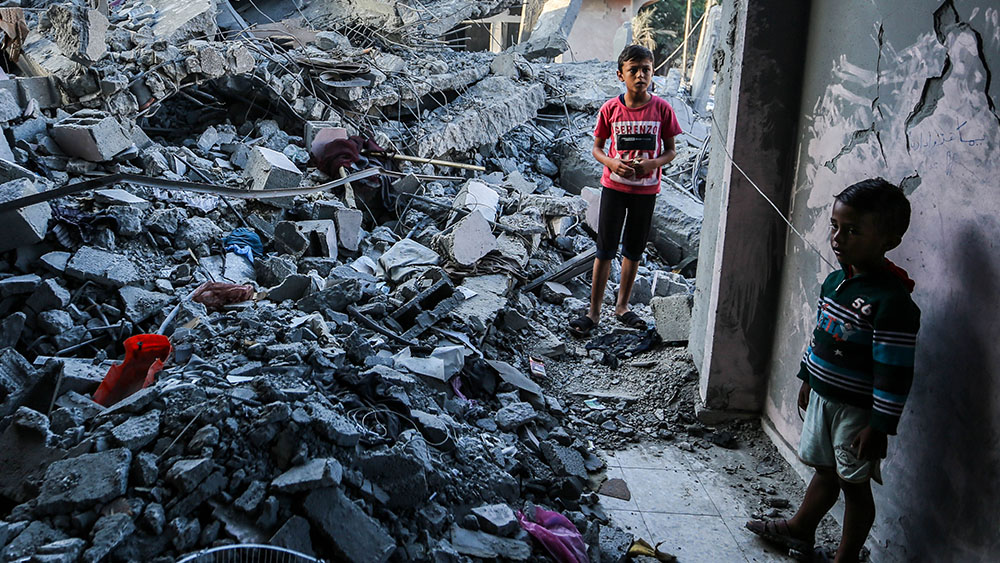
Despite diplomatic efforts, violence persists. On Monday, Israeli strikes on a building in the Bureij refugee camp killed a 4-year-old child, according to Awda Hospital. A separate strike in Khan Younis killed a 10-year-old girl, Nasser Hospital reported. Israel’s military said it targeted two Hamas weapons storage facilities inside mosques in the Shati refugee camp and Deir al-Balah, claiming they contained Kalashnikov rifles and ammunition.
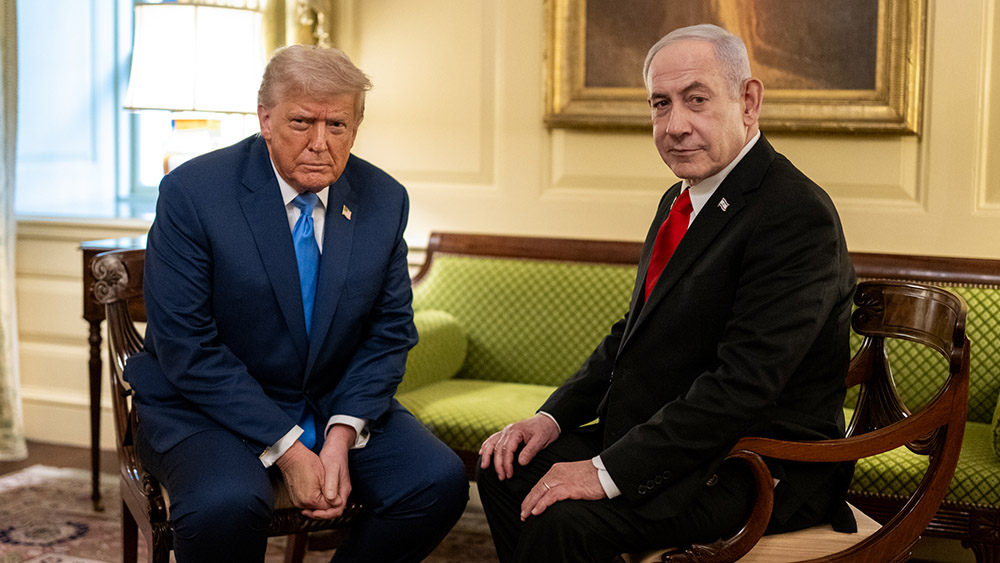
The attacks follow a meeting last week between Netanyahu and Jared Kushner, Trump’s son-in-law and adviser, during which the U.S. delegation reportedly asked Israel to draw down its military operations. Israel announced strikes on six of the seven days after that meeting.
Mladenov, who also attended the meeting, said the group “went through his government’s concerns one by one and narrowed the areas that still require technical work.” But the gap between the roadmap and reality remains wide.
A fork in the road
Mladenov framed the choice before the international community in stark terms: “A Gaza disarmed, rebuilt and reconnected to the world. Or a Gaza rearmed, divided and in rubble, with a radicalized generation raised inside it and the next war already on the horizon.”
He emphasized that the Trump plan includes a “credible pathway to a political horizon” and a two-state solution—a prospect Netanyahu vehemently opposes. Without political will to bridge the differences, Mladenov warned, a return to full-scale war would leave nothing to rebuild.
“That would not be a setback,” he said. “It would be a point of no return for everyone.”
The clock ticks toward catastrophe
The UN Security Council now faces a critical juncture. With Hamas agreeing to disarm and Israel continuing strikes, the window for a negotiated settlement narrows by the day. Mladenov’s warning carries historical weight: previous ceasefire efforts in Gaza have collapsed under similar tensions, often leading to renewed cycles of destruction and radicalization.
For the United States, which brokered the Trump plan and continues to arm Israel while providing humanitarian aid to Gaza, the contradictions of its own policy risk undermining its credibility as a neutral peace broker. As Mladenov noted, the alternative to a diplomatic resolution is not merely a return to war—it is a point where no diplomatic roadmap remains to guide the way back from catastrophe.
Sources for this article include:
big government chaos Collapse Dangerous Gaza Globalism Hamas Israel military tech national security progress terrorism Trump Tyranny violence weapons technology WWIII

Please contact us for more information.
Who We Are
Meet the Health Ranger
Free Email Newsletter
Support
Write for Us
Media Information
Advertising Information
Submit a News Tip
Privacy Policy
Terms of Use
Home
All News
Health Ranger Store
Health Ranger Report Podcast
Natural News App
BrightAnswers.ai
Blog Articles
RSS Feed
This site is part of the Natural News Network © 2022 All Rights Reserved. Privacy | Terms All content posted on this site is commentary or opinion and is protected under Free Speech. Truth Publishing International, LTD. is not responsible for content written by contributing authors. The information on this site is provided for educational and entertainment purposes only. It is not intended as a substitute for professional advice of any kind. Truth Publishing assumes no responsibility for the use or misuse of this material. Your use of this website indicates your agreement to these terms and those published here. All trademarks, registered trademarks and servicemarks mentioned on this site are the property of their respective owners.
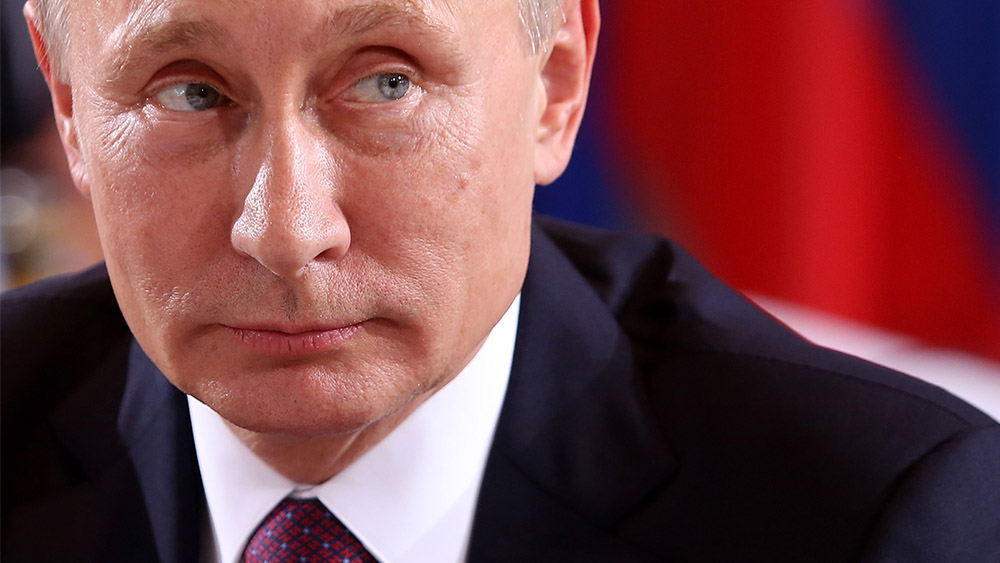
Russia’s Pacific Fleet destroyed simulated enemy targets at a range of around 300 kilometers in the southern Kuril Islands, escalating tensions with Japan roughly a week after President Vladimir Putin’s unprecedented visit to the contested archipelago.
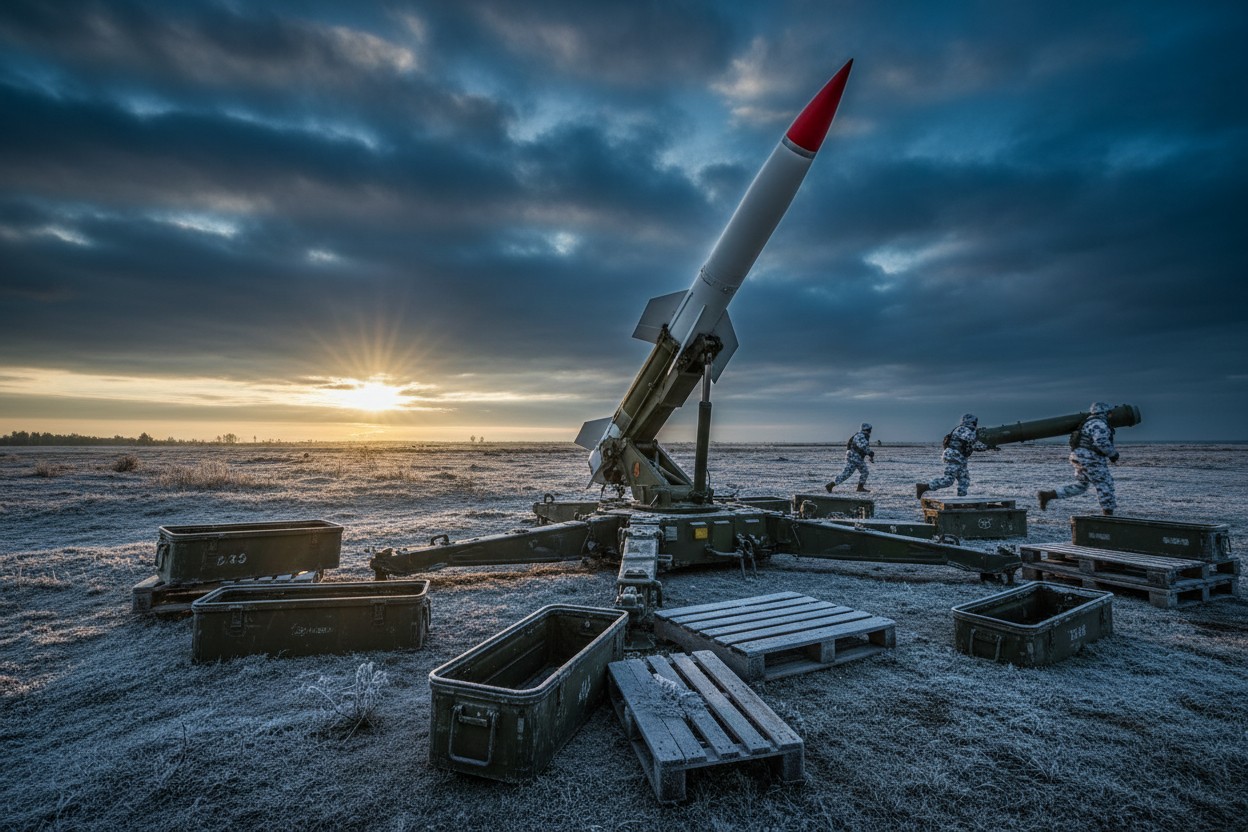
The live-fire exercise Thursday involved the Varyag guided-missile cruiser, the Omsk nuclear-powered submarine, and a Bastion coastal missile battery, Russia’s Pacific Fleet said in a statement. Naval aviation supplied targeting data, and the fleet said all targets were destroyed.
The drills came one week after Japan lodged a formal protest over Putin’s first-ever visit to Iturup, the largest of the four southernmost Kuril Islands that Tokyo claims as its “Northern Territories.” Japanese Prime Minister Sanae Takaichi called the trip “absolutely unacceptable” and said it “hurts the feelings of the Japanese people.”
Ambassador summoned as rhetoric hardens
On Tuesday, Russia’s Foreign Ministry summoned Japanese Ambassador Akira Muto for an approximately 20-minute meeting with Deputy Foreign Minister Mikhail Galuzin. Galuzin told Muto that “Russia’s sovereignty and jurisdiction over the southern Kuril Islands are absolutely unshakable,” adding that the territories passed to the Soviet Union after World War II under agreements among the Allied Powers and the U.N. Charter. Any attempt by Japan to question that, he said, is “absolutely unacceptable and unlawful.” Russia’s Foreign Ministry separately issued a statement using similar language, calling Japan’s position “categorically unacceptable and illegitimate.”
The Japanese Embassy confirmed Muto “appropriately explained the Japanese position on the Northern Territories and President Putin’s recent visit” but declined to detail his response to Galuzin’s remarks.
Tokyo says it won’t tolerate a Russian military buildup
Japanese Foreign Minister Toshimitsu Motegi responded to the missile tests by telling reporters that Tokyo “cannot tolerate moves [by Russia] to strengthen military power on the Four Northern Islands because they go against our country’s stance.”
Japan received advance notice of the drills and lodged a formal protest against the large-scale maneuvers on August 5. Russian state media reported the exercises involve approximately 60 surface ships, submarines and support vessels, along with about 30 aircraft and unmanned systems, and more than 13,000 personnel. The drills are scheduled to run through August 29.
Putin observed portions of the exercises on August 12 from the Varyag as part of his trip to the disputed islands and Sakhalin. Speaking aboard the flagship, he warned that the region is “unfortunately becoming increasingly prone to conflict, with NATO seeking to gain a foothold here and the emergence of new military and political blocs.”
A World War II dispute still blocking a peace treaty
The Kurils run from Russia’s Kamchatka Peninsula down to Japan’s Hokkaido and fell under Soviet control after Japan’s 1945 defeat. Japan continues to claim Iturup, Kunashir, Shikotan and the Habomai islets as its own territory. Eight decades later, the dispute is still the single biggest obstacle to a formal peace treaty between the two countries.
Galuzin told Muto that given Tokyo’s adherence to Western sanctions and its continued support for Kiev, “Moscow reserves the right to take appropriate countermeasures.” It’s a pointed reminder of how far the Ukraine conflict’s fallout has traveled — straining a totally unrelated territorial dispute on the other side of the globe, and giving Moscow one more grievance to hold against Washington’s allies. Putin, for his part, noted that Japan once maintained warmer ties with Moscow under former Prime Minister Shinzo Abe before shifting toward treating Russia as a primary threat, and said Russia remains “ready to cooperate with all its neighbors, including Japan.”
Sources for this article include:
big government chaos Collapse Dangerous Globalism Japan Kuril Islands military tech national security Russia territorial dispute weapons technology WWIII
Please contact us for more information.