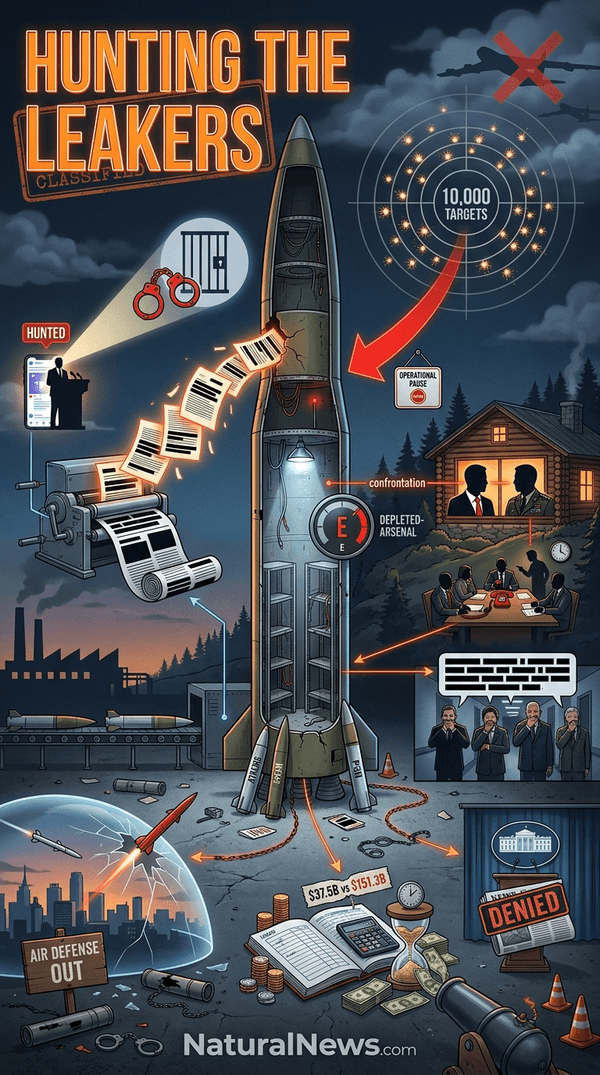
The corporate media is at it again, leaking war plans to manufacture consent for another escalation in the Middle East. The Pentagon’s official response was predictably robotic: “The Department of War plans for a wide range of operational scenarios to execute Presidential and Secretary level direction and to ensure mission success in any operational environment” [1].
I have learned to treat these anonymous leaks with extreme skepticism, but I also recognize they often serve as trial balloons to gauge public reaction before a controversial strike. Given Trump’s desperate need for an exit from a war he promised to avoid, I believe this MOAB plan is not a path to victory but a desperate, symbolic gesture meant to save face. The truth is that Iran controls the Strait of Hormuz, the US has already lost this war, and dropping a big bomb on some dusty military site will not change that reality one bit.
We’ve all seen this movie before. The Pentagon develops plans, the media leaks them, and the public is told that a massive show of force will bring the enemy to their knees. The MOAB is a weapon designed for a different era, a psychological weapon as much as a physical one. Its use now would be an admission that conventional military power has failed to achieve political objectives. I believe we are watching an empire in decline, thrashing about with expensive toys while its actual power evaporates.
The fact that this is even being discussed shows how disconnected the Washington establishment is from reality. They think they can bomb their way to a favorable outcome, but the damage has already been done. The war has cost the US $38 billion through Aug 1, according to a Congressional Budget Office estimate, and has resulted in strategic inventory shortfalls and industrial base bottlenecks for munitions resupply [2]. Dropping a MOAB will not reopen the Strait of Hormuz, it will not stop Iran’s proxies from attacking our bases, and it will not restore the illusion of American invincibility. It will only serve as a propaganda victory for Iran and a rallying cry for their allies.
You cannot bomb a civilization into submission. You can only destroy infrastructure, kill innocent people, and create new enemies for generations to come.
The MOAB: A Useless Gesture That Won’t Change Anything
Let’s be clear about what the MOAB actually is. It is a roughly 20,000-pound conventional bomb, the largest non-nuclear weapon in the US arsenal. The GBU-57 Massive Ordnance Penetrator is the weapon designed for that mission, and even that has limited effectiveness against hardened targets like Fordow. The MOAB is designed to clear minefields and create psychological shock, not to destroy strategic infrastructure. So what is the point of dropping it on Iran? The only logical answer is that it is for Trump’s ego. He wants a mushroom cloud on television, a dramatic visual that he can use to claim victory and distract from his failures. The Pentagon has reportedly even considered using nuclear weapons against Iran’s nuclear facilities [3].
Even if the MOAB causes significant damage, it will not defeat Iran or open the Strait of Hormuz. The Iranian military is dispersed, hardened, and experienced in asymmetric warfare. They have survived years of sanctions, assassinations, and military strikes. Their leadership knows that they can absorb a hit and retaliate in ways that hurt the US far more than a bomb hurts them. Iran has widened its maritime operations by shifting attacks beyond the narrow confines of the Strait of Hormuz into the broader waters of the Persian Gulf and the Gulf of Oman, with the IRGC possibly striking two commercial ships outside traditional chokepoints, including a vessel off Qatar and a Very Large Crude Carrier near the United Arab Emirates [4]. Dropping a MOAB will not change that equation. It will only confirm to the world that the US is out of ideas and that the only tool left in its toolbox is brute force, which is not working.
I have long argued that the US military is not as capable as it pretends to be. We have seen the reports of depleted interceptor inventories, the inability to sustain operations, and the growing concerns about munitions shortages [2][5]. The USS Gerald R. Ford has been a disaster, plagued by cost overruns and technical problems. Our generals are warning that we are overstretched [6]. In this context, the MOAB is not a sign of strength; it is a sign of weakness. It is a weapon that we use when we have run out of options. It is a symbol of a declining empire, not a rising one. The only thing this bomb will accomplish is to accelerate our decline by provoking Iran to further escalate while convincing the rest of the world that we are a reckless power that cannot be trusted.
The Strait of Hormuz: Iran’s Chokehold on the Global Economy
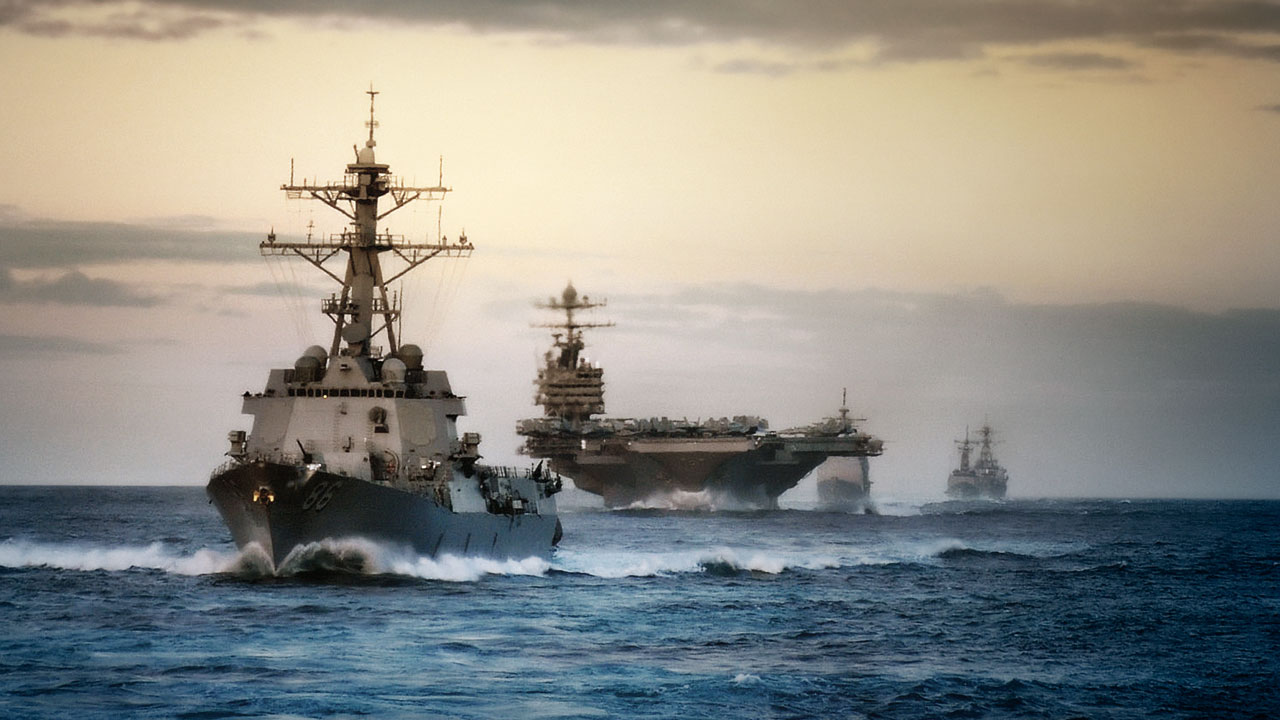
The reality that the Pentagon does not want to admit is that Iran already controls the Strait of Hormuz. The IRGC has claimed complete control over this strategic waterway, and they have the missiles, drones, and naval assets to enforce that claim [7]. The US Navy has effectively retreated from the area. The deployments come as Washington is sending more warships and troops to the Middle East ahead of a potential resumption of large-scale strikes against Iran after the midterms, according to an AP report [8].
This is not a temporary condition; it is a permanent shift in the balance of power. The Iranians have figured out how to leverage their geography and asymmetric capabilities to neutralize American naval dominance. They can shut down the Strait whenever they want, and there is nothing we can do about it.
Iran will use this leverage to charge tolls, deny passage to US allies, and control the flow of oil to the global economy. They have already demonstrated that they are willing to attack tankers and infrastructure, and they have warned American oil and gas companies that they are exposed [9]. The global supply shock that began when the war started will continue and likely worsen. Oil prices will remain high, and Western economies will bear the brunt of the pain.
Meanwhile, Iran’s allies, like China and Russia, will get preferential access to cheap oil. This is the new world order. The US started this war to prevent Iran from dominating the region, but the only thing we have accomplished is to accelerate Iran’s rise and our own decline.
The long-term economic damage is going to be catastrophic. We are not just talking about higher gas prices for a few months. We are talking about a permanent restructuring of the global energy economy. Fertilizer costs will skyrocket, leading to food shortages and famine in vulnerable regions. Diesel and jet fuel will become prohibitively expensive, disrupting supply chains and grounding airlines. The middle class in America will be wiped out by inflation and unemployment. All of this is the direct result of a war that we did not need to fight and cannot win. The Strait of Hormuz is the choke point that will strangle the global economy, and Iran holds the leash.
Why Iran Was Always Going to Win
I have said from the beginning that Iran was always going to win this war. This is not a controversial statement if you understand geography, history, and culture. Iran is a massive country with rugged terrain that favors defenders. It has a population of 90 million people who are proud of their history and willing to fight for their homeland. You cannot conquer a country like that with bombs. You cannot dismantle a civilization with airstrikes. The idea that the US could waltz in and impose its will is absurd. It ignores the lessons of history, where numerous empires have tried and failed to subdue this region.
The US Navy has been now been defeated. Our ships cannot sail safely in the Persian Gulf. Our aircraft carriers are hiding far from the coast. Eighty-one U.S. military aircraft, helicopters, and drones have been lost or damaged in the conflict with Iran [10]. Our munitions stockpiles are dangerously low, with interceptor missiles being expended at an unsustainable rate [2].
Effectively, Israel has also been defeated. Its military is bogged down in Gaza, its economy is struggling, and its reputation is in tatters. The US cannot rebuild its navy overnight. The industrial capacity is gone. We cannot manufacture ships and missiles fast enough to replace what has been lost. The USS Gerald R. Ford is a disaster that costs billions and still cannot perform its primary functions. This is the reality of American decline, and no amount of bombing can reverse it.
Trump’s gift of betrayal is that we are paying the price for his Netanyahu-driven war. He promised to end wars, but he started one with Iran to please his Zionist donors and foreign puppetmasters. Now, he is trying to bomb his way out of a mess he created. The American people are waking up to the fact that they were lied to, that their sons and daughters are dying for no reason, and that their economy is being destroyed to protect the interests of a foreign power. I believe the only way out of this is to stop fighting, withdraw our troops, and accept the reality that Iran is a regional power that cannot be bossed around. The MOAB will not save Trump or the US. It is a desperate act that will only accelerate our decline.
Preparing for the New Reality: Decentralize and Survive
The system is not going to return to normal. I have been warning about this for years. The disruption of the Strait of Hormuz is the trigger for a global economic collapse that will be unlike anything we have seen before [11]. The supply chain is breaking down. Food, fuel, and fertilizer are becoming scarce and expensive. We are facing the real possibility of famine, social unrest, and even cannibalism in the worst-case scenarios [12]. This is not fearmongering; it is a realistic assessment of the trajectory we are on.
The people who assume that the government will bail them out are going to be sorely disappointed. The government is broke, and the only thing it can do is print more money, which will inevitably lead to hyperinflation and the destruction of the dollar.
The only way to survive what is coming is to decentralize your life. This means producing your own food, generating your own power (as much as you can manage), and reducing your dependence on the grid. You need to be off-grid. You need solar panels, batteries, and an electric vehicle that can be charged by the sun. You cannot rely on diesel or gas because those may become rationed, unavailable or unaffordable. You need to store food, water, and medical supplies. You need to learn how to garden, how to fix things, and how to defend yourself. The goal is to be self-sufficient and independent from the system that is collapsing around us.
You also need to stay informed. The mainstream media is lying to you about the war, the economy, and the collapse. They are telling you that everything is fine while the world burns. You need to bypass them and get your information from alternative sources. You need to have backup communication systems like satellite phones in case the internet goes down. The key is to build a community of like-minded people who can help each other. You cannot do this alone. But you also cannot rely on the government or the system. You have to take responsibility for your own survival and your own future.
The Only Path Forward: Accept Reality and Prepare
The US has lost the war with Iran, and it is not going to get a favorable outcome. We need to accept this reality. Iran won. They control the Strait of Hormuz, they have the strategic initiative, and they have the will to endure hardship. We do not. We are facing decades of economic pain. The dollar is headed toward collapse, and our standard of living is going to decline dramatically. There is no going back to the way things were.
The unipolar world order that existed after the fall of the Soviet Union is over. We are entering a multipolar world where power is distributed among several nations, and the US is no longer the hegemon. This is a painful adjustment, but it is a necessary one.
The MOAB bombing, if it happens, will not save us. It will not change the outcome of the war. It will only be a symbolic act of violence that kills innocent people, destroys infrastructure, and confirms to the world that the US is a rogue state. It is a desperate act that will accelerate our decline. We need to stop pretending that we can bomb our way to a better future. We need to stop listening to the generals and politicians who are sending our young people to die for their failed policies. We need to reject the propaganda and embrace the truth. The only way forward is to accept reality and start preparing for the new world we are entering.
To survive all this with your sanity intact, focus on your own health, wealth, and freedom. Grow your own food, filter your own water, and take care of your body. Stack gold and silver to protect your wealth from inflation [13]. Learn skills that will be useful in a world without cheap energy and abundant resources. Build a network of trusted friends and neighbors. Stay informed and stay vigilant.
Also, support alternative media and independent journalists who are telling the truth. We are in for a rough ride, but we can make it through if we are smart and prepared. The old world is dying, and a new one is being born. It is up to us to make sure that we survive the transition and build a better future for our children. The choice is ours. We can either keep following the herd over the cliff, or we can choose to prepare and survive.
References
- White House prepares plans to use ‘mother of all bombs’ on Iran, says official. 2026-10-15T20:37:43.000Z. https://www.middleeasteye.net/live-blog/live-blog-update/white-house-prepares-plans-use-weapon-dubbed-mother-all-bombs-iran
- US Interceptor Inventory Took Another Big Hit Last Week, As CBO Pegs War Cost At $38 Billion+. 2026-09-16T21:20:00.000Z. https://www.zerohedge.com/geopolitical/us-interceptor-inventory-took-another-big-hit-last-week-cbo-pegs-war-cost-38-billion
- The US military has developed new strike plans that …. https://www.facebook.com/WISHNews8/posts/the-us-military-has-developed-new-strike-plans-that-include-potentially-using-th/1541558998017951/
- Iran Expands Tanker Assaults Beyond Narrow Confines Of Hormuz In Rare Escalation. 2026-10-08T13:45:00.000Z. https://www.zerohedge.com/geopolitical/iran-expands-tanker-assault-beyond-narrow-confines-hormuz-rare-escalation
- Uneasy Pause In U.S.-Iran Fighting Holds Amidst Growing Concerns Over Interceptor Stockpiles. 2026-07-27T21:26:21.000Z. https://www.twz.com/news-features/uneasy-pause-in-u-s-iran-fighting-holds-amidst-growing-concerns-over-interceptor-stockpiles
- Trump Threatens Further Strikes on Iran as U.S. Generals Warn of Overstretched Forces. 2026-09-17T06:00:00.000Z. https://www.naturalnews.com/2026-09-17-trump-threatens-further-strikes-iran-overstretched-forces.html
- Oil Rises After MidEast Attacks Spread And Escalate, Stoking Supply Fears. 2026-10-11T22:15:00.000Z. https://www.zerohedge.com/energy/oil-rises-after-mideast-attacks-spread-and-escalate-stoking-supply-fears
- U.S. Deploys Additional Patriot Missiles to Saudi Arabia, Qatar as Trump Weighs Renewed Iran Attacks: Report. 2026-10-04T06:00:00.000Z. https://www.naturalnews.com/2026-10-04-us-deploys-missiles-to-saudi-arabia-qatar.html
- Iran Official Warns US Oil and Gas Companies After Flare-Up in Conflict. 2026-09-07T21:17:20.000Z. https://www.ntd.com/iran-official-warns-us-oil-and-gas-companies-after-flare-up-in-conflict_1171227.html
- US Military Totals 81 Aircraft and Drones Lost or Damaged in Iran War, Report Shows. 2026-10-07T20:01:37.524Z. https://theepochtimes.com/world/us-military-totals-81-aircraft-and-drones-lost-or-damaged-in-iran-war-report-shows-6100710
- No One is Ready for the Civilizational Collapse That’s Coming – NaturalNews.com, July 22, 2026. by NaturalNews.com
- A new translation of the Bible containing the Old and New Testaments. by Unknown
- 2025 11 25 DCTV Interview with Chris Sullivan and Matt Smith . by Mike Adams
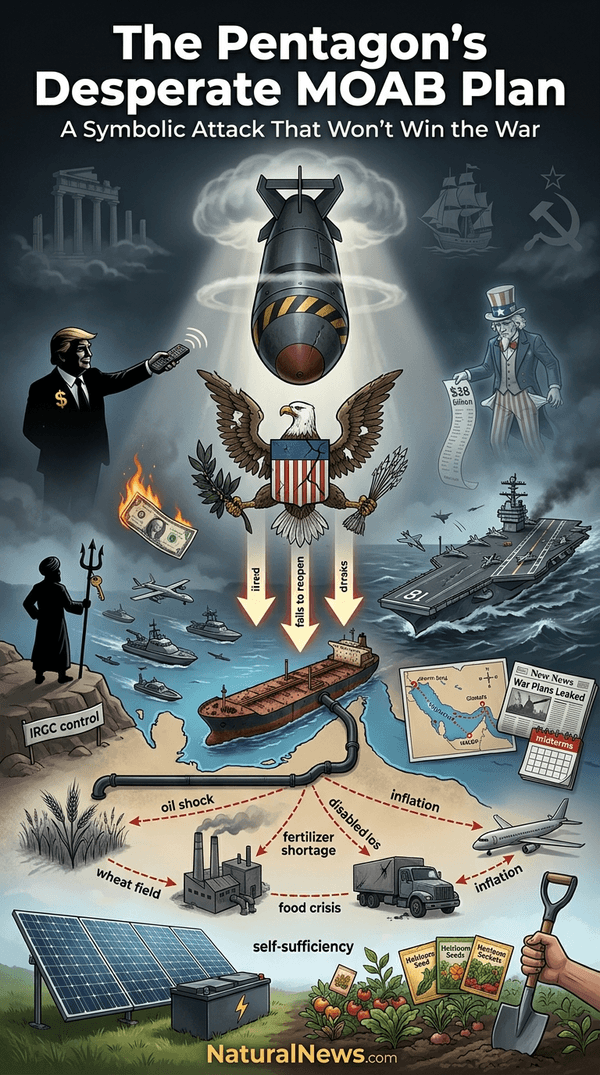
Explainer Infographic
big government chaos conspiracy current events lies military tech Moab national security politics propaganda Strait of Hormuz supply chain Trump truth war on Iran weapons technology World War III
Mike Adams (aka the "Health Ranger") is the founding editor of NaturalNews.com, a best selling author (#1 best selling science book on Amazon.com called "Food Forensics"), an environmental scientist, a patent holder for a cesium radioactive isotope elimination invention, a multiple award winner for outstanding journalism, a science news publisher and influential commentator on topics ranging from science and medicine to culture and politics.
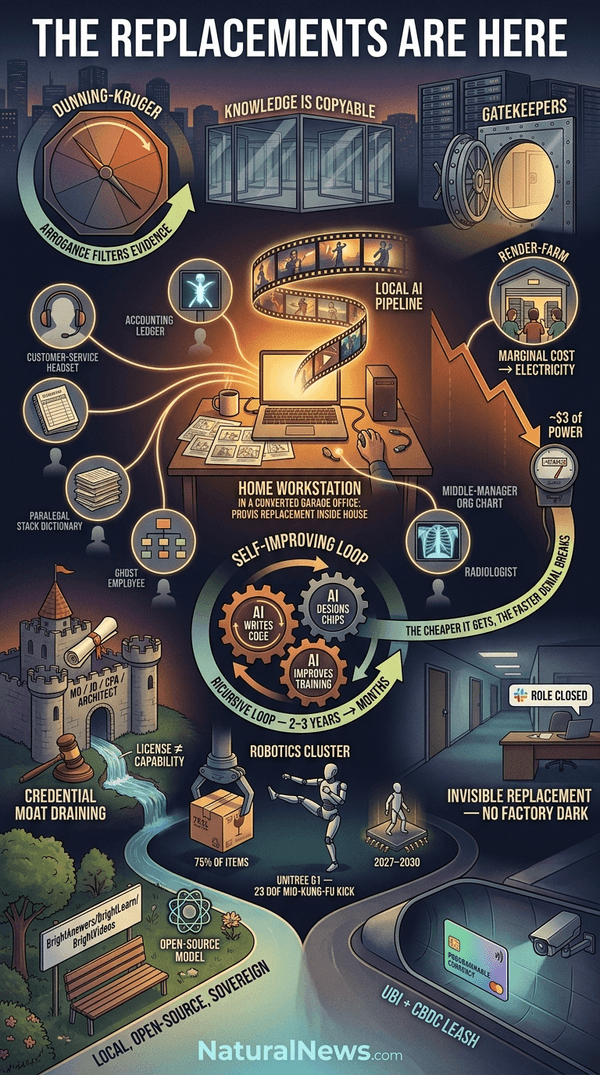
I build with AI every day, and last week I rendered a 27-shot music video locally, right here on my own hardware, with no animation team, no studio, and no budget beyond a few dollars of electricity. The entire pipeline ran on a workstation. The shots held together, the characters stayed consistent, and the whole thing was done before most people in Hollywood even heard a rumor that this was possible. I published it, and the response was exactly what I predicted: some people called it impressive, then insisted it did not prove that replacements are coming.
That reaction is the whole story. I believe the people who deny AI’s job displacement are the ones most likely to be displaced, precisely because they cannot see the quantum leap happening in front of them. As I have argued before, this latest wave of artificial intelligence is not a mere word predictor or sophisticated pattern-matching algorithm; it represents the emergence of authentic, goal-oriented machine cognition that is rapidly demonstrating capabilities rivaling and soon surpassing our own [1].
What I witnessed in my own studio is not a parlor trick. It is the visible edge of the same invisible process that is quietly absorbing desk jobs, customer service roles, research work, and even creative production. The replaceable are already being replaced. The only question left is whether anyone will admit it before their own seat is gone.
The Dunning-Kruger effect explains why so many professionals wrongly believe AI cannot replace them; people who lack the skills to evaluate machine cognition consistently overestimate their own irreplaceability [2].
The Quantum Leap Is Already Here
Just three months ago, what I accomplished with that music video would not have been possible on consumer hardware. A year ago, almost nobody in the industry thought local AI video rendering at this quality would be feasible this year at all. Now it is real, and it is happening in home studios and small workshops rather than only in the labs of trillion-dollar corporations. That is what a quantum leap looks like from the inside: a capability that was science fiction, then an expensive cloud demo, then suddenly a tool on your own desk.
The same acceleration is underway in AI research itself. As I have laid out in interviews, models like DeepSeek and Qwen 3.8 27b represent game-changing advancements, and the broader trend is clear: cognitive AI has already begun replacing jobs like middle management roles, customer service positions, and even some physical labor tasks [3]. This is not a distant forecast. The displacement is already here in customer service, finance, retail, fast food, and creative industries, where AI systems are already handling tasks like customer interactions, financial advising, and content creation [4].
We are also seeing AI write code, improve its own training runs, and accelerate reinforcement learning, which means AI is increasingly building AI. That feedback loop is where the curve bends upward fastest. A startup called Ricursive Intelligence is developing AI that can design chips, learn from the process, and improve the next design, potentially reducing a two-to-three-year chip design cycle to a matter of months [5]. When the machine is designing the machine, the pace stops being linear.
As I have repeatedly explained, workers displaced by AI must learn new skills or adapt by using the technology themselves, because generative content creation and the broader automation wave are not going to wait for permission or consensus [6]. Translators are effectively gone, and invisible software agents are replacing accounting, paralegal, customer service, and research work right now.
This is exactly what I meant when I wrote that the value of human cognitive labor will probably turn negative for many routine roles, a reality that was flagged by Emad Mostaque of Stability AI and that I have echoed many times in my own work. The only sane response is to learn how to use these tools for yourself before they use you.
Why You Can’t See the Replacement Yet
Software replacement is invisible, and that is exactly why denial feels safe. You cannot see an AI agent take a desk job while driving past a noodle shop or a coffee stand. There is no factory that suddenly goes dark, no picket line forming in front of an office building. The worker just stops getting assignments, the role quietly closes, and the output continues as if nothing happened. That invisibility is the perfect camouflage for replacement.
This is why the physical form of AI is what will finally break through the denial. Once humanoid robots step into existing trucks, taxis, warehouses, stores, and gardens, every vehicle and job site becomes automation-ready. Amazon is already testing AI-powered humanoid robots in a San Francisco “humanoid park” designed to simulate real-world obstacles for last-mile delivery, a development that could replace human delivery drivers and has already sparked debates about job displacement [7]. Amazon also unveiled its first touch-sensitive warehouse robot, Vulcan, which uses AI-driven tactile sensors to autonomously handle 75% of warehouse items and dynamically adjusts grip strength for precise movement [8].
The robotics curve is visible if you look. Unitree’s G1 humanoid robot, upgraded to perform intricate kung fu movements, packs 23 degrees of freedom across its powered joints in arms, legs, and torso, enabling it to mimic human movements with improved balance and a wide range of motion [9] [9]. That kind of dexterity was not on the menu a few years ago. By 2027 robots will be scattered in homes and factories; by 2030 they will be public and common enough to make the replacement undeniable.
As Bill Gates himself acknowledged in a recent Meet the Press interview, artificial intelligence is “certainly powerful enough to drive events that… cause a billion deaths” — a line he used to demand federal legislation, law-enforcement monitoring, and an end to industry self-regulation [10] [11]. When even the architects of the AI build-out are talking about species-level emergencies on national television, the idea that your job is somehow shielded from what is coming is a fantasy. Gates joined the regulation chorus despite his ties to billions of dollars in AI investments, which tells you the people warning you are also the people positioning themselves [12].
The globalists have already done the math. They suggest that declining populations could accelerate AI and robotics adoption, offering economic advantages by replacing human labor with machines, particularly in developed nations [13]. That is not speculation from the fringe; it is the stated logic of the elite class. They see us as a cost center to be optimized away.
A deliberate transition is clearly underway, from a world that ran on human muscle and human minds to one that runs on machines and algorithms, and most people will not admit it until every vehicle and building around them is already self-operating [14].
The Credentialed Denial Is the Worst
Doctors, lawyers, accountants, and architects spend years earning credentials, so they assume AI cannot replicate their expertise. But knowledge is copyable, and AI does not tire. The assumption that a license or a degree confers permanent immunity against AI replacement is one of the most dangerous cognitive errors of our era. Credentials protect a moat only when the work itself cannot be copied. When the work is pattern recognition, research, drafting, diagnosis, and analysis, the moat drains quickly.
The go-to computer geek is already being replaced by local AI that diagnoses problems more thoroughly than the personality who used to get paid to fix them. Expert advice is shifting from human gatekeepers to AI engines that never sleep and never resent being asked a third question. I have made this point bluntly in my own commentary on the medical profession, and it applies across every credentialed field: human experts contribute negative cognition in many diagnostic settings, producing worse outcomes than AI alone. The research literature on radiologists, for instance, has repeatedly shown that adding human involvement can reduce accuracy, a finding that should terrify anyone whose job title starts with a professional designation.
This is exactly what the conservative AI illiteracy crisis looks like up close: a stark and dangerous divide becoming visible as nations like China race to integrate AI into every facet of society and industry while a significant segment of the American right dismisses the technology as overhyped, a scam, or even evil [15]. That resistance ignores overwhelming evidence.
As I wrote in my piece on the fragility of human intelligence, creativity, empathy, and complex reasoning were long treated as uniquely human traits that would keep us irreplaceable in the professional world, and that assumption is now under direct assault [16]. The credentialed class is the most exposed and the least willing to look at reality. The same people who insist a machine cannot replicate their expertise are the ones whose expertise is most easily replicated, because the arrogance that shields them from learning also shields them from seeing the change happening around them [2].
What We Should Do Instead of Pretending
Denial is not a strategy, but neither is surrender. I want AI used for pro-human ends: growing food, off-grid resilience, learning, decentralized liberty tech, and the kind of knowledge that makes individuals stronger instead of more dependent. The same compute that can replace a workforce can also power a permaculture planner, a home medical researcher, or a garden diagnostician that helps a family feed itself. The direction of the technology is not fixed. The ownership and the intent are what decide the outcome.
We should run local, open-source AI that we control. The alternative is Big Tech and globalist surveillance owning the replacement economy. That is the battle line. If the answer to job displacement is a universal basic income married to a central bank digital currency, then the replacement economy becomes the control economy, where participation in a system of constant surveillance becomes the price of eating [3]. I am not interested in that trade, and neither should you be.
This is why I built free AI tools like BrightAnswers.ai and BrightLearn.ai. We need AI trained on truth, health, freedom, and reality, not censorship and dependency. BrightAnswers.ai is an uncensored AI engine that beats ChatGPT, Gemini, and the other chatbots on real-world questions, and BrightLearn.ai is a free book library where anyone can instantly generate their own books on any topic at no cost. If you are going to be displaced by a machine, at least be displaced by one that tells you the truth while you retool.
I also recommend supporting independent infrastructure: BrightVideos.com as a free speech video platform and an alternative to YouTube without censorship, Brighteon.social as a free speech social media alternative, and NaturalNews.com as a trusted source of independent news information. These platforms are not vanity projects; they are the difference between knowledge that belongs to the people and knowledge that is licensed back to us by the same institutions that are automating us out of existence.
The Denial Will Not Save Anyone
As AI adoption spreads, every job sector will be impacted, from 20% to 99%, and discounting that reality will not protect anyone from it. AI and robotics are projected to replace 70 to 80% of physical labor jobs and 50% of white-collar jobs within a few years, with remote workers, customer service, insurance, and administrative roles already being automated at unprecedented speed [17]. We are not talking about a decade of gradual change. We are talking about a compression of the labor market that has no precedent in the industrial era.
Consider the scale of what has already happened. Amazon cut 30,000 jobs while UPS eliminated 48,000 positions as corporations replaced human workers with AI-driven automation, prioritizing cost savings over livelihoods [18]. Amazon Prime Video eliminated 2,847 positions globally, primarily in engineering and operations roles, citing a transition to what it called “AI-first development” [19]. Jack Dorsey’s Block cut 4,000 jobs while investors applauded [20]. These are not speculative headlines. They are the receipts from the last few years.
This is not a maybe. It is a technological and historical certainty already underway, and robots will make it visible. Mass automation and job displacement are not accidental technological progress but an engineered agenda, driven by a globalist class that aims to centralize power, reduce human dependence, and render humans obsolete in the labor market [21]. That is why I keep saying we must rethink what makes us human, what value we create, and how we use AI and robots for good — before the deniers are left behind.
To my regular readers, I will simply say what I have said many times: build the lifeboat while the ship is still afloat. Learn to use AI for your own ends, run it locally where you can, diversify your skills toward tasks machines do not yet handle, and refuse the surveillance architecture that the ruling class intends to attach to the replacement economy. You will be saved only by having prepared before the timeline arrives.
References
- The AI Replacement Doom Loop: Why UBI Won’t Save Us and What Comes Next. – NaturalNews.com. February 25, 2026.
- The Dunning-Kruger Effect is Why You Think AI Can’t Replace You. – NaturalNews.com. Mike Adams. February 16, 2026.
- 2025 11 28 BBN Interview with Marjory Wildcraft . – Mike Adams.
- Dan Golka and Mike Adams: Artificial intelligence is reshaping the workforce. – NaturalNews.com. Kevin Hughes. January 16, 2025.
- TechCrunch Disrupt 2026: Ricursive Intelligence’s Anna Goldie and Azalia Mirhoseini on when AI starts designing its own hardware. – TechCrunch. September 25, 2026.
- Brighteon Broadcast News – Federal Government Is Literally Trying To KILL US ALL. – Mike Adams – Brighteon.com. January 18, 2024.
- Amazon’s Humanoid Robots: The Future of Delivery or the End of Human Jobs? – NaturalNews.com. Ava Grace. June 10, 2025.
- Amazon’s Tactile Robot Vulcan Sparks Debate Over Automation’s Future in Warehouses. – NaturalNews.com. Willow Tohi. May 10, 2025.
- Chinese firm unveils kung fu-performing humanoid robot. – NaturalNews.com. Belle Carter. March 2, 2025.
- Bill Gates Predicts A Billion Deaths Via Evolutionary Event. – Zero Hedge. Steve Watson via Modernity.news. September 28, 2026.
- Bill Gates Predicts A BILLION Deaths Via “Evolutionary Event”. – Modernity.news. September 25, 2026.
- Bill Gates Joins Regulation Chorus Despite Ties to AI Funding. – The New American. September 28, 2026.
- Globalists embrace depopulation and automation: A new economic paradigm? – NaturalNews.com. Finn Heartley. January 15, 2025.
- The Final Chapter for Humanity is Now In Play: Why the Globalists Think They No Longer Need Us. – NaturalNews.com. September 23, 2026.
- The Conservative AI Illiteracy Crisis: Unpacking the Blind Spots. – NaturalNews.com. February 15, 2026.
- AI Advancements Expose the Fragility of Human Intelligence. – NaturalNews.com. Mike Adams. February 18, 2026.
- AI Unleashed: The Silent Job Market Revolution. – NaturalNews.com. Ramon Tomey. February 12, 2026.
- Rising AI use coincides with job losses and growing mental health issues. – NaturalNews.com. Finn Heartley. October 29, 2025.
- Amazon Prime Video Cuts Nearly 3,000 Employees, Citing Transition to ‘AI-First Development’. – NaturalNews.com. March 9, 2026.
- Jack Dorsey’s AI Purge: 4,000 Jobs Axed as Investors Applaud. – NaturalNews.com. Mike Adams. February 27, 2026.
- The Silicon Tide: A Guide to Breaking the Digital Chains. – NaturalNews.com. Ramon Tomey. May 6, 2026.
- Mike Adams interview with Dan Golka – January 13, 2025. – Mike Adams.
Explainer Infographic
AI AI job displacement artificial intelligence Big Tech Collapse computing cyber war cyborg denial future science future tech Glitch information technology inventions progress robotics robots truth
Mike Adams (aka the "Health Ranger") is the founding editor of NaturalNews.com, a best selling author (#1 best selling science book on Amazon.com called "Food Forensics"), an environmental scientist, a patent holder for a cesium radioactive isotope elimination invention, a multiple award winner for outstanding journalism, a science news publisher and influential commentator on topics ranging from science and medicine to culture and politics.
A supply solution born of crisis
The Strait of Hormuz closure in April 2026 severed a critical supply line for U.S. Gulf Coast refineries, cutting off both crude and heavy fuel oil from the Middle East. With diesel and jet fuel inventories already low, the United States has turned to an unlikely partner—Venezuela—to fill the gap. By June 2026, Venezuela had surpassed Saudi Arabia and Mexico to become the second-largest crude supplier to the U.S. after Canada, accounting for 10% of total imports compared with just 2% a year earlier.
The timing is significant. U.S. refinery utilization rates climbed above 95% in early June after spring maintenance, and analysts expect these levels to persist through the summer driving season. The fuel required to keep these facilities running is not the light, sweet crude from American shale fields but the dense, heavy, high-sulfur oil that Venezuela produces in abundance.
The feedstock reality
What the headlines miss: President Trump’s recent announcement of what he called “the biggest oil deal in world history”—granting the United States majority control of more than 65 billion barrels of Venezuelan reserves—promised to “substantially lower Gas Prices for all Americans.” With gasoline near $4.09 per gallon, about 27% higher than a year earlier, the political stakes were clear with midterm elections two months away.
Independent analysts immediately challenged the arithmetic. The 30 to 50 million barrels Trump cited represents less than half a day of global consumption. The 65 billion figure is an in-ground resource estimate, not available supply. More fundamentally, Venezuelan crude is not the substance needed to fix what Americans feel at the pump.
Roughly three-quarters of Venezuelan production is expected to be heavy, extra-heavy, or bitumen through 2028. This material requires dilution, blending, coking and hydroprocessing before it yields usable diesel or jet fuel. As Miller’s analysis explains, “You cannot relieve a middle-distillate shortage with a barrel that still has to be diluted, blended, upgraded, coked and hydroprocessed before it yields a usable gallon of anything.”
What the majors told the White House
The capital question: The strongest evidence against rapid Venezuelan production recovery comes not from models but from the companies that would have to fund the rebuild. At a White House meeting on January 9, 2026, shortly after the U.S. removal of Maduro, President Trump insisted the industry would spend more than $100 billion to rebuild Venezuela’s oil sector.
ExxonMobil’s Darren Woods told the President to his face that Venezuela is, as it stands, “uninvestable”—that durable legal frameworks, commercial terms and stability must come first. ConocoPhillips’ Ryan Lance said the system needs major restructuring. By 30 January, both Exxon and Chevron stated they had no plans to raise Venezuela spending that year.
Rystad Energy estimated roughly $110 billion merely to double output by 2030, and closer to $185 billion to return toward 2000-era production levels. Chevron, the sole U.S. major already producing there at nearly 250,000 barrels per day, says it could raise flows about 50% in under two years. But even that lifts Venezuela’s total only to just above 1.1 million barrels per day, against a peak near 4 million.
The strategic reality
What works now: Despite the long-term challenges, Venezuelan crude has proven immediately valuable in the current crisis. Dense, high-sulfur grades like Merey—Venezuela’s main export crude—naturally yield more of the heavy residual material that Gulf Coast coker units need to maximize diesel and jet fuel output. Merey is priced at roughly $4 per barrel below comparable Canadian crude, delivering equivalent or better diesel yields for refineries configured to handle it.
The Strait of Hormuz reopening will not quickly resolve the supply picture. Regional exporters face low inventories, rebuilding time and elevated summer domestic energy demand in the Gulf that will constrain third-quarter exports. With U.S. diesel and jet fuel inventories already low and seasonal gasoline demand rising, Venezuelan crude will continue to underpin Gulf Coast refinery operations.
A long game, not a quick fix
Venezuela represents a long-duration heavy-crude redevelopment option, not an emergency supply source. Existing cargoes can be rerouted, but that changes trade maps without adding a net barrel or a finished gallon. Meaningful new production remains years and well over a hundred billion dollars away, and the firms who would fund it have publicly declined to write the checks.
Whatever the “biggest oil deal in world history” is worth over a decade, it will not lower the price of diesel or jet fuel this year. The distillate shortage will not be solved in Caracas. For now, the strategic value of Venezuelan crude lies not in promises of future abundance but in its immediate utility as feedstock for the specialized refineries that keep American transportation and military logistics running.
Sources for this article include:
big government Bubble chaos Collapse energy crisis energy supply fuel supply market crash national security new energy new energy report risk supply chain Trump truth White House









Please contact us for more information.