

[ad_1]
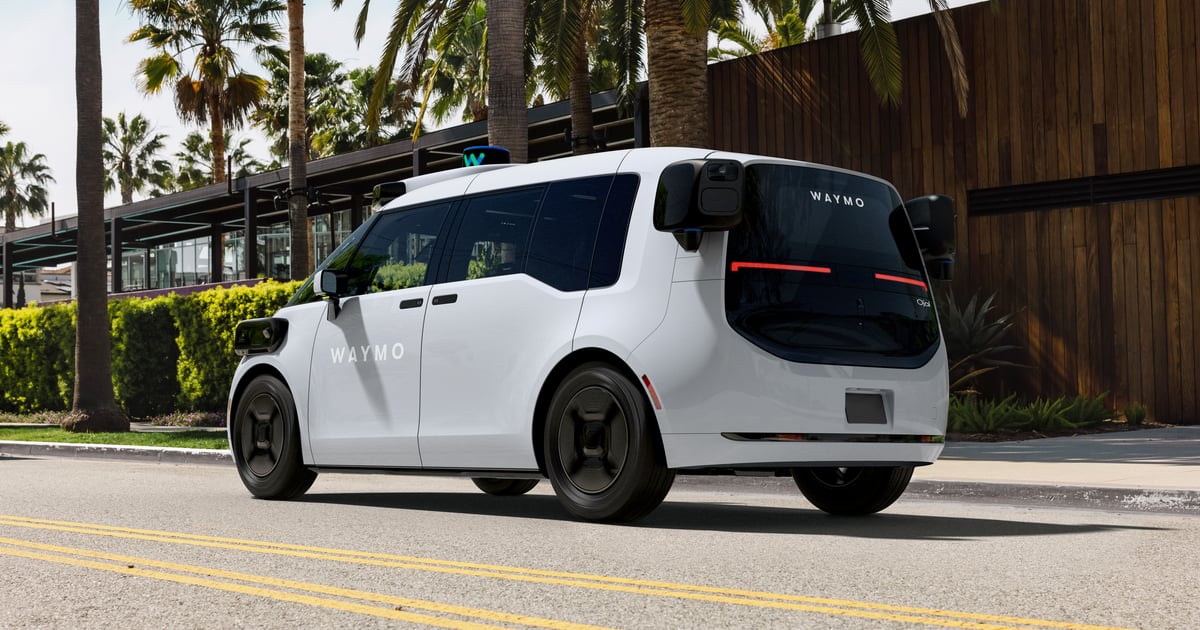
Waymo is offering rides to members of the public in its all-new robotaxi.
Specially selected customers in San Francisco, Phoenix and Los Angeles will get the opportunity to try the new Ojai for free over the next few weeks as the company seeks feedback on its latest vehicle, before commercial operations officially commence.
The launch of the Ojai has been a long time coming, with the robotaxi — an all-electric minivan based on a Chinese-market model from Geely-owned Zeekr — first appearing as a concept at an event in LA in 2022.
Since then, it has undergone years of development and thousands of miles of testing as Waymo has sought to refine the vehicle before launching operations.
The first thing customers will notice is that the Ojai is better suited to their needs, as it has been purpose-built as a self-driving taxi, unlike the retrofitted Jaguar I-Pace SUVs used to date that have become synonymous with Waymo.
Among the benefits the Ojai offers are easy access using elevator-style doors, plenty of space and three large screens that enable riders to customize their immediate environment.
However, arguably the most significant breakthrough is under the skin. The Ojai marks the official debut of the sixth-generation Waymo Driver, the tech that equips the vehicle with its autonomous functionality, featuring improved hardware and software.
Compared with the fifth generation, there has been a significant reduction in sensors, with the latest stack now featuring 13 cameras (down from 29), four Lidars (cut from five) and only six radars as Waymo “leverages breakthroughs in AI,” according to the company.
The new tech delivers “expanded capabilities at a lower cost” (with the stack per car believed to cost aboujt$20,000), Waymo said.
“Our versatile hardware approach allows us to reconfigure our sensors and generalize our AI to meet each platform’s unique needs — whether it is the Ojai or the [forthcoming] Hyundai Ioniq 5 [robotaxi] — providing the Waymo Driver an optimal view of its surroundings while streamlining for efficiency,” Waymo said in a statement.
Among the benefits the new tech will bring is increased capability in colder climates accustomed to snowier conditions. Waymo has concentrated on warmer areas thus far but has already confirmed it is “laying the groundwork” for services in Chicago in the future.
The Ojai will be assembled at Waymo’s facility in Mesa, Arizona, which has the capacity to scale to tens of thousands of units annually. Head of design Ryan Powell told CNBC that he expects thousands to be on the road by the end of the year.
As of March, Waymo was serving half-a-million autonomous rides a week across the US. A $16 billion funding round in February saw the company valued at $126 billion.
[ad_2]
Source link
