Browsing: Health
Practical Lessons, Profound Insights
Reading Time: 3 minutes
The attack, which the Saudi Energy Ministry confirmed was extinguished without casualties, represents a direct challenge not only to Riyadh’s economic lifeline but to the kingdom’s newly forged defense alliance with Turkey and Pakistan, a pact signed just two days earlier in Mecca as a collective deterrent against regional aggression. The Houthis’ willingness to strike immediately after this show of military solidarity suggests the group remains undeterred by shifting geopolitical alignments and continues to view its campaign of disruption as leverage in the broader conflict that has engulfed the Middle East following the United States-Israel war on Iran.
Key points:
- Houthi military spokesperson Yahya Saree claimed a precision drone strike on the Aramco refinery in Jizan.
- Saudi Energy Ministry confirmed the fire but did not disclose the cause.
- The refinery processes approximately 400,000 barrels of crude oil per day.
- Separate Houthi attacks on Yemen’s Mocha port killed seven people and damaged infrastructure.
- Saudi Arabia signed a trilateral defense pact with Turkey and Pakistan on Friday.
- The Houthis declared a naval blockade on Saudi Arabia in the Red Sea last month.
- Attacks have intensified despite a 2022 truce between the Houthis and Yemen’s internationally recognized government.
Houthi leadership targeting economic assets in Saudi Arabia
The Jizan refinery attack represents a strategic choice by Houthi leadership to target economic assets that carry symbolic weight for the Saudi monarchy. Aramco, the state oil giant, serves as the financial engine of the Saudi state, and attacks on its facilities resonate far beyond the immediate physical damage.
The Saudi Energy Ministry’s terse statement on X, noting that “the competent authorities are completing the necessary procedures to deal with the incident,” revealed a government walking a careful line between acknowledging the attack and preventing public panic about energy security. The ministry’s refusal to assign blame or confirm the Houthi claim speaks to the sensitivity of the moment, as Riyadh assesses its options in a rapidly deteriorating security environment.
The timing of the attack, coming just days after Saudi Arabia formalized a collective defense arrangement with Turkey and Pakistan, raises pointed questions about the effectiveness of such agreements against non-state actors operating across multiple fronts. Turkish Foreign Minister Hakan Fidan described the pact as “technically” similar to NATO’s Article 5 collective defense clause, while simultaneously insisting it was not directed at Iran or any specific country.
This diplomatic balancing act reflects the complex web of relationships that defines Middle Eastern security politics, where formal alliances often serve as signaling mechanisms rather than operational frameworks. The Houthis, by striking so quickly after the announcement, appear intent on testing the credibility of these commitments and demonstrating that regional powers cannot simply declare their way to security.
The port city of Mocha emerges as flashpoint in Saudi-Houthi confrontation
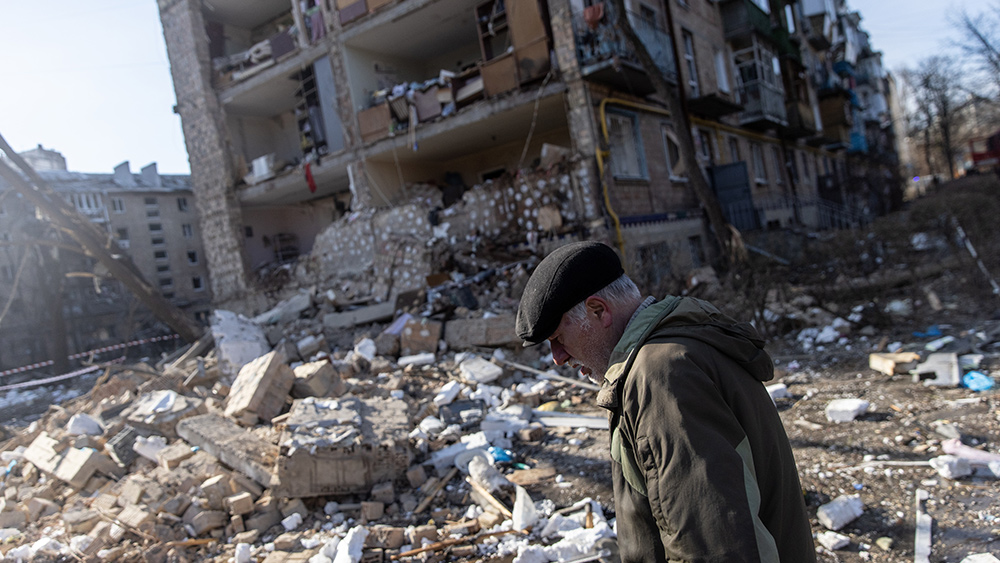
The parallel attack on Yemen’s historic Red Sea port city of Mocha, where Houthi forces launched “a large number of ballistic missiles and drones” against Saudi military positions, underscores the expanding geographic scope of this conflict. Yemen’s Ministry of Transport condemned the assault, reporting severe damage to port infrastructure that serves civilian and commercial purposes. Three Yemeni government sources told Reuters that air defenses were actively engaging drones launched toward the commercial quay and storage facilities. The attack killed seven people, according to a Yemeni military spokesperson, and wounded the port’s operational capacity at a time when regional shipping lanes already face unprecedented disruption from Houthi naval campaigns.
The Mocha attack and the Jizan refinery strike occurred against a backdrop of intensifying conflict that has drawn in multiple regional actors. The Houthis have expanded their targeting from purely military objectives to include critical infrastructure that supports the Saudi economy and global energy markets. Their declared naval blockade on Saudi Arabia, announced last month, threatens shipping through the Bab el-Mandeb Strait, a chokepoint through which an estimated 10% of global maritime oil trade passes. This strategic pressure point gives the Houthis leverage that far exceeds their military capabilities in conventional terms, allowing a relatively impoverished armed group to disrupt global markets and force responses from the world’s most powerful nations.
Aramco chief executive Amin Nasser struck a confident tone last week, asserting that recent attacks on company facilities had caused only minor production disruptions with no material operational or financial impact. This assessment, while perhaps accurate in narrow economic terms, fails to capture the cumulative psychological and strategic effects of repeated strikes on Saudi infrastructure. Each attack erodes confidence in the kingdom’s ability to protect its most valuable assets, potentially influencing insurance rates, foreign investment decisions, and the strategic calculations of regional and global powers. The Jizan refinery, processing roughly 400,000 barrels per day, represents a significant slice of Saudi production capacity, and its vulnerability to drone strikes highlights the challenges of defending vast, exposed industrial installations against asymmetric threats.
The Houthi attacks have also complicated efforts to maintain the fragile 2022 truce between the group and Yemen’s internationally recognized government, which is backed by Saudi Arabia. Rashad al-Alimi, head of Yemen’s Saudi-backed presidential council, briefed US Mission to Yemen Chargé d’Affaires Neil Hop on the latest developments, calling on the international community to “move beyond only containing the Houthi threat to addressing its sources and instruments.” This plea reflects growing frustration among Saudi allies that the international response to Houthi aggression has been insufficient, allowing the group to continue its campaign of disruption without facing meaningful consequences. The question of how to address the “sources and instruments” of Houthi power remains unresolved, as regional powers weigh the risks of direct confrontation against the costs of continued attacks on their infrastructure and interests.
Sources include:
asymmmetric warfare big government chaos defense pact energy security Globalism HouthiAttacks iran war MiddleEast national security oil infrastructure Red Sea Saudi Arabia WWIII Yemen
Please contact us for more information.
Who We Are
Meet the Health Ranger
Free Email Newsletter
Support
Write for Us
Media Information
Advertising Information
Submit a News Tip
Privacy Policy
Terms of Use
Home
All News
Health Ranger Store
Health Ranger Report Podcast
Natural News App
BrightAnswers.ai
Blog Articles
RSS Feed
This site is part of the Natural News Network © 2022 All Rights Reserved. Privacy | Terms All content posted on this site is commentary or opinion and is protected under Free Speech. Truth Publishing International, LTD. is not responsible for content written by contributing authors. The information on this site is provided for educational and entertainment purposes only. It is not intended as a substitute for professional advice of any kind. Truth Publishing assumes no responsibility for the use or misuse of this material. Your use of this website indicates your agreement to these terms and those published here. All trademarks, registered trademarks and servicemarks mentioned on this site are the property of their respective owners.
Practical Lessons, Profound Insights
Reading Time: 3 minutes
The resulting pathogens, known as bacteriophages – viruses that infect bacteria – cannot infect humans or animals, the report stated. Samuel King, a Stanford graduate student and study author, told the New York Times (NYT): “It just felt like the obvious next step.” Large language models, which underlie tools such as ChatGPT, can generate realistic text and pose risks of misuse in creating fake news or other misinformation [1].
Evo Model Trained on Genetic Sequences
Evo, a program similar to ChatGPT, scanned about nine trillion nucleotide bases from animals, plants, viruses and microbes, according to the research team. Rather than analyzing written text, the model was used to dissect and form genetic code, the report stated.
After learning natural DNA patterns, Evo generated nearly 300 genomes of Phi X-174, a virus chosen because it cannot infect humans or animals. Sixteen of those genomes were determined to be viable, the study reported.
In petri dish tests, some AI-designed phages multiplied faster than the original Phi X-174 and burst out of host cells, according to the authors. The researchers selected Phi X-174 because a virus genome is less complex than the DNA instructions found in a human cell, the report stated.
Researchers Call Study a Turning Point
Marc Güell of Pompeu Fabra University in Spain told the BBC the study was “a very significant turning point” and “allows us to dream of exciting possibilities for tackling humanity’s greatest challenges.” Güell said that “for the first time in history, we are beginning to design biology on a computer,” according to the BBC.
The scientists said they did not provide the model with data from viruses that infect humans, animals, plants or fungi, the article noted. The team also excluded similar viruses that infect other organisms, the report stated.
Biosafety and Biosecurity Questions Raised
But Dr. Thomas Inglesby and Dr. Moritz Hanke of the Johns Hopkins Center for Health Security wrote in a Science article that the results raised “urgent biosafety and biosecurity questions.” They said the issue is no longer “whether generative viral genome design will exist” but whether it can be used without “enabling serious harm.” Viruses that could cause disease “should not be pursued,” they added, according to the report.
Hanke told NYT: “You could say, ‘Hey, genomic language model, make me an influenza genome that is modified to be more transmissible or to be more lethal.'” A Microsoft study demonstrated that AI can be used to design novel, toxic biological agents by “paraphrasing” the genetic sequences of known toxins, allowing them to bypass commercial biosecurity screening software, according to a NaturalNews.com report [2].
The U.S. National Institutes of Health should improve how it regulates lab-generated viruses that could pose a national security risk, according to its biosecurity advisers, the National Science Advisory Board for Biosecurity [3]. In a previous case, a team at Boston University’s National Emerging Infectious Diseases Laboratories developed a new strain of the Wuhan coronavirus (COVID-19) that killed 80% of infected mice in a laboratory setting, according to a preprint study [4]. Declassified documents released in June 2026 showed U.S.-funded coronavirus research included planning for spike-protein modifications, receptor-adaptation experiments, and testing in humanized mice, according to ZeroHedge [5].
Implications of AI-Designed Pathogens
The study is among the first examples of generative AI being applied to biology, according to researchers, and the field remains at an early stage. Scientists emphasized that the resulting bacteriophages pose no threat to humans, but the methods could be adapted to other genomes, experts said.
Some analysts have said that only a few companies in the world have the resources to invest in developing large language models similar to GPT-4, a factor that could shape oversight [1]. The report raised policy questions about future oversight of AI-generated biological sequences, with the authors stating that dangerous viruses should not be pursued. A technology executive described one path as “to completely prioritize technology to maximize what’s possible without considering potential implications.” [1]
References
- aacid zlib3 files 20241105T001425Z 29870425 3zFrZWC8qLJzJ5FoyS9nN5.
- Ava Grace. “Digital Pandora’s Box: How AI Outsmarts Biosecurity and Paves the Path for Next-Generation Threats”. NaturalNews.com. October 09, 2025.
- Emily Kopp. “‘Vague and Secretive’: Risky NIH Research Not Adequately Regulated, Experts Say”. Children’s Health Defense. January 21, 2024.
- Michael Nevradakis. “Insane: Boston Researchers Create ‘More Lethal’ Strain of COVID, Prompting Calls to Shut Down Risky Gain-of-Function Research”. Children’s Health Defense. January 21, 2024.
- “Gabbard Drops Fauci COVID-19 Receipts On Last Day: He Funded The Research, Cooked The Cover Story, Then Lied To Congress”. Zero Hedge. June 19, 2026.
Explainer Infographic

AI model artificial intelligence bacteriophages badhealth badscience biological weapons biosafety biosecurity bioterrorism biowar computing Dangerous DNA patterns Evo future tech genetic lunacy Glitch information technology nucleotides pathogens Phi X-174 robots virus genome Viruses
Please contact us for more information.