
[ad_1]
Stay informed with free updates
Simply sign up to the EU trade myFT Digest — delivered directly to your inbox.
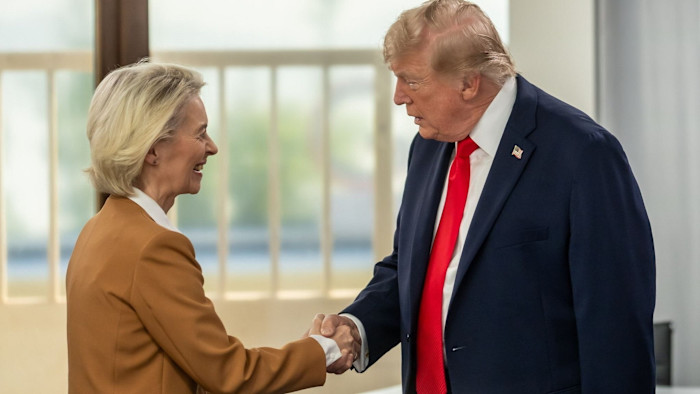
The European parliament on Tuesday approved a long-delayed trade deal with the US, heading off Donald Trump’s threat to impose higher tariffs on cars unless the agreement was ratified by July 4.
EU lawmakers agreed by 440 votes to 151 to cut the bloc’s own levies on American industrial goods and some agricultural products to zero while the US will charge higher tariffs on European goods.
The original deal struck in Turnberry last year between the US president and European Commission president Ursula von der Leyen set a 15 per cent tariff rate on EU goods. But the Supreme Court subsequently ruled the tariffs illegal, forcing Trump to rely on temporary emergency legislation to impose a 10 per cent levy on top of existing duties, meaning cheese and some other products now face tariffs exceeding 15 per cent.
MEPs repeatedly postponed the vote — first over Trump’s threats to annex Greenland, and later amid uncertainty following the Supreme Court’s ruling.
The deal, signed at Trump’s Scottish golf course, also allows US lobster into the EU duty-free for another five years, a key Trump demand as his Republican Party fights for votes in the swing state of Maine in upcoming midterm elections.
The approval, which still needs to be rubber-stamped by member states, leaves unresolved a key disagreement over US tariffs on steel and aluminium derivatives.
While the deal was intended to cap tariffs on EU goods at 15 per cent, some products, including washing machines, continue to face duties of up to 50 per cent. If those tariffs are still in place at the end of the year, the Commission has the option of reversing some of the concessions it offered Washington under the deal.
The EU concessions will end on December 31 2029 unless renewed.
Bernd Lange, the chair of parliament’s trade committee, last week told reporters that US trade representative Jamieson Greer had committed to phase them out. “He recognised this was a breach of the agreement.” But he added: “The decision is taken in the White House and by the president. And therefore, nobody knows what really will happen.”
He said there were “other conflicts” such as US attacks on EU digital regulation that could lead to fresh US tariffs.
The US has also imposed 10 per cent tariffs on the EU for inadequate forced labour laws, which Lange said would replace the emergency tariffs when they expire on July 24. There is a second investigation into overcapacity in industry that could lead to fresh levies.
“There are a lot of issues in the air, and therefore it’s so important that we have a safety net, an instrument to react.”
[ad_2]
Source link
