
Good morning and welcome to FirstFT. In today’s newsletter:
-
Companies in the UK rush to fire high earners
-
What are Andy Burnham’s foreign policy priorities?
-
Giorgia Meloni redesigns Italy’s election rules to stay in power
-
How DeepMind brought the AI boom to London
You can listen to today’s top news stories in the FT News Briefing podcast.
We begin in the UK, where high-earning employees are in the crosshairs for job cuts before the country ends a cap on unfair dismissal payouts.
What to know: Finance and tech groups are rushing to fire underperforming executives, cut headcount and toughen probation processes for new hires ahead of the changes that take effect next year.
Lawyers say the risk of high earners bringing expensive claims when the cap is removed in January is now a board-level issue that is leading employers to review senior staff performance.
Why it matters: The decision to abolish the limit was part of a compromise with business and unions on one of the most contentious elements of the Employment Rights Act, the government’s sweeping upgrade of workers’ rights. The amount is currently set at whichever is the lower of the employee’s annual salary or £123,543.
As part of the deal, Labour abandoned a manifesto promise to give workers dismissal protections from the first day in a job. Instead, staff will qualify for protection after six months — far less than the current two-year requirement.
This means employers will be on the hook for potentially unlimited compensation if they dismiss any employee with more than six months’ service without a fair process. Read the full story.
Here’s what else we’re keeping tabs on today and this weekend:
-
US: John Bolton, former national security adviser, is expected to plead guilty to one count of retaining classified information under a plea deal with the Department of Justice. A primary run-off election is held in Louisiana tomorrow.
-
Ukraine: The country celebrates Constitution Day on Sunday.
A quick question for FirstFT readers: what do you want to know more about? We’re considering which subjects and global regions deserve more attention and would highly value your input.
Five more top stories
1. Andy Burnham’s foreign policy positions are in the spotlight after Donald Trump’s pronouncement this week that Britain’s probable next prime minister was “extremely liberal”. What will be his priorities on big issues such as ties with the US president and UK-EU relations?
2. Giorgia Meloni is pressing ahead with an overhaul of Italy’s electoral system that opposition parties have called an “authoritarian” attempt to secure victory in next year’s general election. Ahead of a parliamentary debate due to start today, the prime minister said the changes would ensure a stable government.
3. Exclusive: Kevin Warsh’s vow to rein in inflation has bolstered the new Federal Reserve chair’s credibility in financial markets, big fund managers say, helping to drive down investors’ expectations for long-term price rises.
4. Elon Musk’s SpaceX has told investors that it plans to launch a new Starlink mobile service for US consumers, a move that would put it in direct competition with three big operators and upend the country’s multibillion-dollar phone network market.
5. Exclusive: Donald Trump Jr was handed about $300,000 worth of equity in Kalshi after joining the prediction market platform as a strategic adviser in early 2025, according to people familiar with the matter. Read the full story.
The Big Read
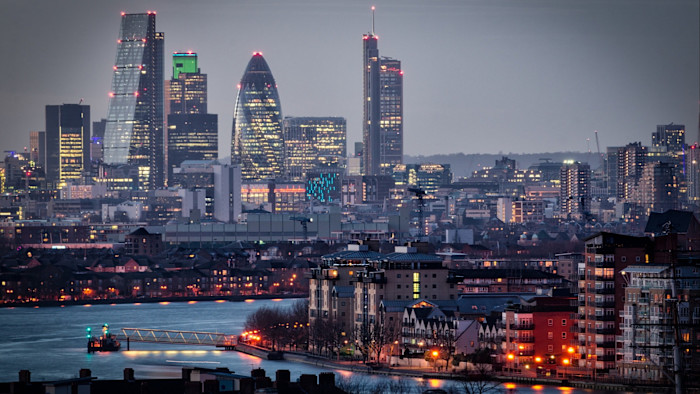
The tech sector in Britain is buzzing with a steady stream of US companies announcing moves into the King’s Cross area of London.
Many attribute the upsurge to Sir Demis Hassabis, the DeepMind co-founder who stayed in the UK capital to build his AI lab following its sale to Google in 2014.
But while DeepMind has helped bring an AI boom to the UK, many are asking whether the local tech sector can really be more than a US outpost. Can Britain build homegrown companies to match the scale of its Silicon Valley rivals?
We’re also reading and watching . . .
-
India’s AI factory 🎥: In workshops and private homes, people wearing GoPro cameras and Meta glasses are training humanoid robots that will eventually replace them.
-
Rheinmetall’s losing bet: The arms company took a gamble on Germany’s warship project. Its shares fell after Berlin announced this week it was scrapping the programme.
-
Putin’s war reaches Moscow: Ukrainian drones are forcing residents in the Russian capital to seek shelter for the first time.
-
Second best: Economic growth is not everything for everyone, but it turns out it is pretty close, writes John Burn-Murdoch.
Chart of the day
The most severe June heatwave to hit Europe was made more brutal by the hot night-time temperatures and humidity, scientists have said. Daytime temperatures in 45 per cent of the European cities analysed breached the combined heat and humidity levels that are safe for human health.

Take a break from the news . . .
Rowing in unison, a gesture meant to evoke a Viking longship, has become the defining ritual of Norway’s storming start to the country’s first men’s World Cup since 1998. It has rapidly filtered from fans to the upper echelons of Norwegian society. Even members of the royal family have followed suit.

