
[ad_1]
Unlock the Editor’s Digest for free
Roula Khalaf, Editor of the FT, selects her favourite stories in this weekly newsletter.
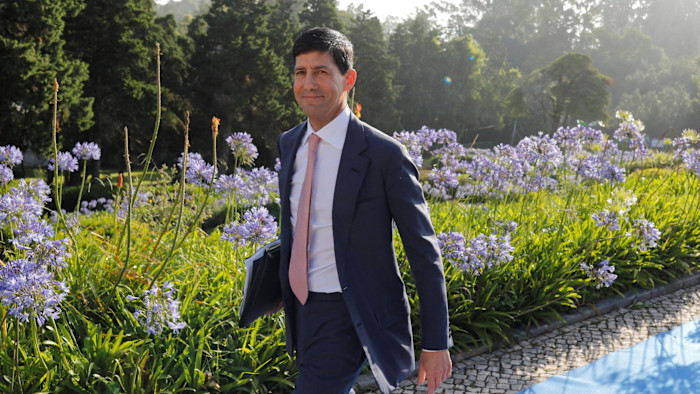
Kevin Warsh insisted there would be “no changes” to US central bank independence as he pledged that the Federal Reserve would take a strident approach to tackling inflation.
The new chair said on Wednesday that the Fed would remain committed to its 2 per cent inflation target and “deliver price stability” regardless of potential pressure from the White House to lower interest rates.
“We’ve been an independent central bank for a very long time, we’re going to be an independent central bank at this moment and you’re going to see no changes on that,” he told central bankers at an ECB conference in Sintra.
Warsh’s comments come a little over a month after he was confirmed as chair of the world’s leading central bank, replacing Jay Powell, who was repeatedly rebuked by Donald Trump for failing to sufficiently lower rates.
In his second public appearance since taking the role, Warsh doubled down on remarks made during a press conference last month when he surprised markets with an “unambiguous and unanimous” vow that the Fed would tackle inflation, describing it as a “burden for the American people”.
Democratic politicians had warned that Warsh would be a “sock puppet” for Trump, and markets had initially expected a more dovish approach from the president’s appointee. Traders are now betting that rates could be hiked as soon as October, having previously predicted March 2027.

Warsh insisted on Wednesday the Fed would be unmoved by political pressures as he hinted at a potential rise in borrowing costs to tackle the wave of inflation that has swept the US in the wake of the war with Iran.
US inflation surged to a three-year high of 4.2 per cent in May as the conflict caused fuel prices to more than double, though they have since receded.
“If there were people in households or the business sector or the financial markets who thought that this central bank was going to be comfortable with an inflation objective above 2 per cent, well, I guess they’d be disappointed,” he said.
But markets — which have been hanging on the new chair’s every word for indications of how soon he might act on rates — were soothed by his comments that the outlook for inflation had eased over the past month.
“Expectations of inflation over the first four weeks of this period have come down, inflation risks have come down,” he said.
Treasury yields and the US dollar dropped following his remarks. The two-year Treasury yield, which is particularly sensitive to interest rate expectations, fell 0.03 percentage points on the day to 4.14 per cent.
“[Warsh’s] talk about productivity gains and softer inflationary pressures was read dovishly by the market,” said Mike Lorizio, head of US rates and mortgage trading at Manulife Investment Management. “But it’s hard to read a lot into today’s move because positioning is probably still skewed towards hawkishness after the last meeting.”
Warsh declined to comment on this week’s Supreme Court ruling preventing Trump from sacking Fed governor Lisa Cook and demurred when asked whether the bank could raise rates when it meets later this month.
“I want us to have a good family fight when we meet in four weeks,” he said. “We get into that room and shut the door. We’re going to have a good debate — but I don’t have much more for you than that.”
Data visualisation by Alan Smith
[ad_2]
Source link
