

[ad_1]
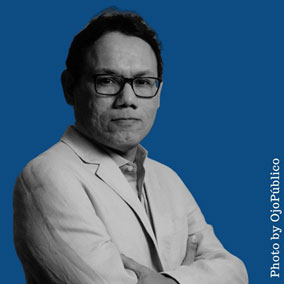
CIVICUS discusses the outlook ahead of Peru’s runoff presidential election with David Hidalgo, journalist and executive director of OjoPúblico, a Peruvian digital investigative journalism outlet.
In the first round of voting on 12 April, Keiko Fujimori, daughter of former president Alberto Fujimori and fourth-time presidential candidate, secured around 17 per cent of the vote, while Roberto Sánchez received around 12 per cent. They face each other in the 7 June runoff. This is a critical election in a country that has had eight presidents since 2016, with three removed from office by Congress. It’s being held in a context of growing civic space restrictions. The campaign has been marked by disinformation, attacks on civil society and journalists, and the imposition of new legal restrictions against them.
What were the first round results?
The Peruvian electoral system requires a candidate to secure over 50 per cent of the vote to win. The first round, held on 12 April, produced no clear winner, as none of the parties took over 20 per cent. Consequently, on 7 June there will be a runoff between two candidates who did not secure strong support but have merely cleared the minimum threshold to reach the runoff.
The contest between Fujimori of Fuerza Popular and Sánchez of Juntos por el Perú promises a difficult and polarised election. Meanwhile, Rafael López Aliaga of Renovación Popular, who came third trailing by some 20,000 votes, has persisted with an intense campaign alleging fraud.
It was an unusual election, as over 30 presidential candidates stood and, for the first time in over 20 years, voters also elected a bicameral parliament. The recent constitutional changes that reintroduced the Senate granted it considerable power, including the final say on whether to vacate a president by removing them via a parliamentary mechanism. In a country that has had eight presidents in 10 years, the composition of the new Senate will be just as decisive as the result of the presidential runoff.
Who are the candidates?
Keiko Fujimori is the daughter of Alberto Fujimori, who came to power in Peru in the 1990s and, two years after taking office, staged a coup and ruled autocratically throughout the decade. Fujimori left a legacy of corruption and serious human rights violations, for which he was sentenced to prison. His daughter defends his government and has built her campaign on the promise of a return to order, a message that may resonate with an electorate affected by historic levels of public insecurity.
However, she carries political baggage. She was the subject of a judicial investigation into the alleged illegal financing of her 2021 campaign, a process that made significant progress but was ultimately quashed. She is surrounded by figures who uncritically defend and recycle a hardline rhetoric that includes the passing of laws to grant amnesty for past human rights violations.
Sánchez built his campaign around the figure of ex-president Pedro Castillo, a former schoolteacher who channelled popular frustration and won the 2021 election, but lacked political preparation and ended up attempting a coup. Castillo is now in prison. Sánchez, who served as minister of trade in his government, has indicated that should he come to power, he could use presidential powers to pardon him.
His candidacy also raises concerns due to his closeness to Antauro Humala, a former military officer who spent almost 18 years in prison for leading a revolt in which four police officers were killed, and who holds radical views on various issues.
López Aliaga, a business leader and former mayor of Lima, has an equally controversial profile. Following a contentious tenure as mayor, he ran on a far-right platform that polarised the presidential campaign. He called for an insurgency when the results went against him and suggested the murder of a critical journalist. He constantly invokes conspiracy theories about an alleged state takeover by a supposed left-wing mafia and dismisses anyone who doesn’t share his views, from human rights organisations to Keiko Fujimori.
Was the first round election free and fair?
Although it was a turbulent electoral process, with incidents relating to the distribution of electoral materials and the opening of polling stations, the election was conducted within parameters that have been validated by various observation missions. There’s no evidence of a concerted effort to commit electoral fraud.
The irregularities that occurred are under investigation. The problem is that these gave rise to allegations of fraud put forward by López Aliaga and his party. Distorted versions of events were circulated to give the impression of significant impacts. For example, in some polling stations in southern Lima, electoral materials didn’t arrive on time, which led to false claims that, for this reason, a million people had been unable to vote. False information also circulated that electoral tally sheets were allegedly tampered with. It’s true there were incidents and irregularities, but there’s no evidence of fraud. This was acknowledged by the European Union’s observation mission.
The narrative of fraud is not new. Since the 2021 election, Keiko Fujimori’s party has maintained that she lost due to fraud, and has repeated this in every election since. López Aliaga adopted the same strategy this time and called for the election to be annulled.
What role have civil society and independent media played?
Disinformation and polarisation have reached historic levels, and the media have had to contend with them in situations of hostility and inequality. The landscape has been marked by constant attacks on independent media from the usual political figures and also parts of the press aligned with powerful corporate structures and others within the ecosystem of content creation for social media, which has emerged as the new arena for public debate.
At the same time, an authoritarian political alliance currently controlling the government and the main public institutions has consolidated a sort of legal stranglehold on independent media, which operate as non-profit organisations. The law on the Peruvian Agency for International Cooperation extends state control over civil society organisations working with international funding and requires their projects to be registered in advance with the state and subjected to coercive oversight, with disproportionate and unconstitutional sanctions. This law undermines editorial independence for independent media and creates risks incompatible with international press freedom standards.
On top of this, there’s a practice where some political groups accuse those who denounce state abuses, corruption and anti-rights practices of terrorism. This was particularly brutal following the social unrest that erupted after Castillo’s downfall in December 2022, when state repression of protests left around 50 people dead in southern Peru. The attacks targeted organisations supporting victims.
To tackle disinformation, used as a political tool in the electoral context, OjoPúblico, with the support of CIVICUS and in partnership with 26 organisations, launched an election coverage initiative using verification methods, in partnership with digital media outlets, radio stations and organised groups from different regions of Peru. The aim was to give the public verified information and show how disinformation undermines democracy. In six months, we generated almost three million views and over 180,000 social media interactions.
What’s the cause of instability in recent years?
The current crisis began in 2016, when Keiko Fujimori rejected the election results and pursued a sustained strategy to weaken the elected government, which culminated in it being removed from office by Congress. Since then, polarisation has deepened and Congress has taken on an increasingly destabilising role.
In this context, an unusual dynamic took hold, when parties at opposite ends of the political spectrum began acting in unison to benefit one another, halt investigations against them and advance their control over key state institutions such as the Constitutional Court, the Ombudsman’s Office and the Public Prosecutor’s Office. By appointing like-minded officials, they weakened the mechanisms of democratic control.
Added to this is the infiltration of illegal economies into politics. One example is that, according to revelations by independent journalists, 28 parties included people linked to illegal mining on their lists. This is an activity with an economic weight comparable to that of drug trafficking in past decades.
The combination of polarisation, institutional capture and the infiltration of criminal interests has sustained a system that reproduces itself election after election. Forces change and adapt, but they don’t disappear and instability persists.
What’s at stake in the runoff?
What’s at stake is democratic stability. This is regardless of who wins. Neither of the two candidates has provided sufficient guarantees that they will respect democratic principles and the rule of law. For 20 years, Peruvian voters have had to choose the lesser of two evils.
If Fujimori wins, she will seek to revive her father’s heavy-handed approach under the banner of law and order, one very much in line with the hard-right wave sweeping through Latin America. If Sánchez wins, his alliances with left-wing groups with a history of violence will open up an equally uncertain scenario.
Neither has presented a solid and convincing programme for the next five years. Their proposals rely more on slogans and spending pledges than on structural solutions to urgent problems such as record levels of insecurity, out-of-control illicit economies, and a fiscal situation undermined by disproportionate tax breaks.
But it’s also true that, given this complex scenario, this is not a choice between two equivalent risks. The dilemma facing Peruvian voters lies in understanding which candidate, if elected, will have greater power to pursue their authoritarian impulses without checks from the institutions that should restrain them.
In recent years, various international analyses have ceased to classify Peru as a democracy and now regard it as a hybrid regime. Depending on who wins, this trend will continue or intensify.
CIVICUS interviews a wide range of civil society activists, experts and leaders to gather diverse perspectives on civil society action and current issues for publication on its CIVICUS Lens platform. The views expressed in interviews are the interviewees’ and do not necessarily reflect those of CIVICUS. Publication does not imply endorsement of interviewees or the organisations they represent.
GET IN TOUCH
Website
Facebook
Instagram
TikTok
Twitter
YouTube
SEE ALSO
Peru: ‘If authorities once again ignore the popular will, accumulated discontent could trigger a new outbreak’ CIVICUS Lens | Anonymous interview 26.May.2026
Peru: ‘The adult public and the mainstream press ridiculed our protests’ CIVICUS Lens | Interview with Jackelinne Ponce Paredes 07.May.2026
Peru: ‘Young people have lost their fear and realised change requires constant participation’ CIVICUS Lens | Interview with Wildalr Lozano 21.Oct.2025
© Inter Press Service (20260604185332) — All Rights Reserved. Original source: Inter Press Service
[ad_2]
Source link
