

[ad_1]
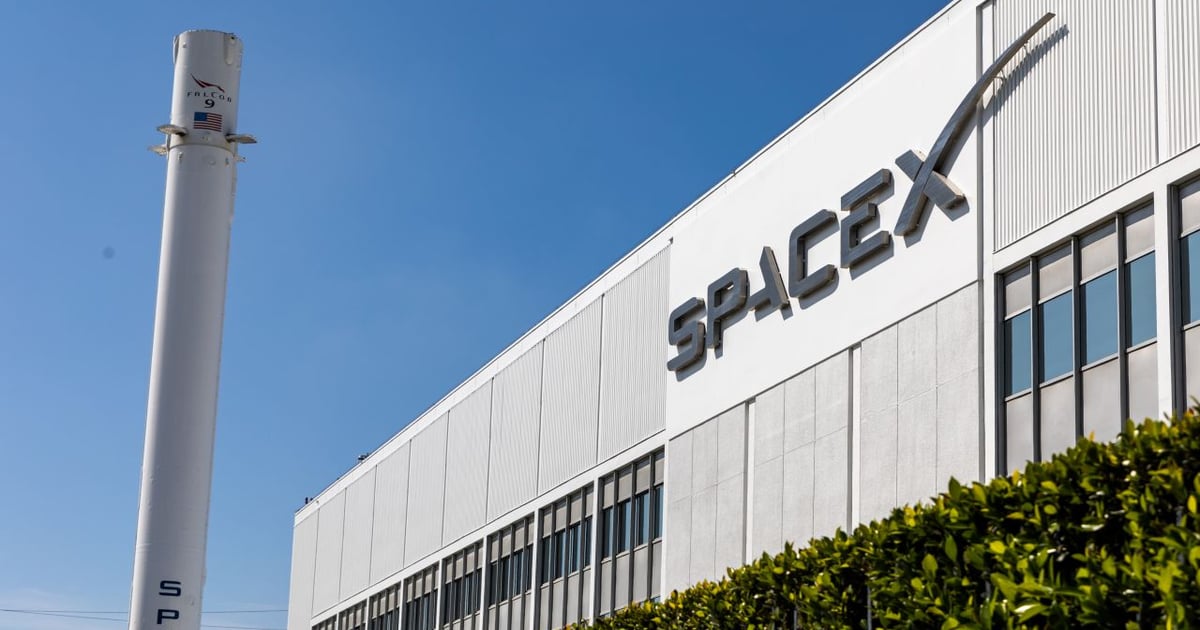
SpaceX agreed to a $6.3 billion computing deal with generative AI vendor Reflection, on Monday, as the Elon Musk-owned company transitions from its focus on space into a vendor that seeks to viably compete in the AI race and be a major AI infrastructure player.
The deal gives Reflection access to Nvidia GB300 chips inside SpaceX’s Colossus 2 data center. The open source vendor, which was founded by DeepMind researchers Misha Laskin and Ioannis Antonoglu, will pay SpaceX $150 million monthly starting on July 1 through the end of 2029.
The deal comes soon after SpaceX’s blockbuster IPO on June 12, in which prices were locked in at $135 per share, and the company raised a record-setting $75 billion, making Musk a trillionaire. While SpaceX is known for building and launching space rockets, its xAI division competes in the generative AI market — though it lags behind Anthropic, Google, OpenAI and DeepSeek — and infrastructure is an area where the vendor sees an opportunity.
The Opportunity
“I suspect, based on their own assessment of total addressable market, compute leasing is seen as one of the immediate growth areas for SpaceX through their xAI unit,” said William McKeon-White, an analyst at Forrester, referring to the handful of infrastructure deals SpaceX has made in the past few months.
For instance, in May, the company forged a $45 billion deal with Anthropic, in which the AI lab pays SpaceX about $1.25 billion per month. The arrangement gives Anthropic access to more than 220,000 Nvidia GPUs and more than 300 megawatts of dedicated power capacity. Also, SpaceX signed a $30 billion deal with Alphabet, Google’s parent company, on June 5. Google is leasing about 110,000 Nvidia GPUs.
“I suspect SpaceX also views these leasing agreements as easy proof-points to support their thesis,” McKeon-White said.
The Role of Compute
In addition to positioning SpaceX as a critical infrastructure provider, the deals show that compute plays a key role for frontier AI labs.
“Compute is still the biggest constraint and source of advantage in frontier AI, with leading labs securing long-term infrastructure rather than relying solely on public cloud,” said Arun Chandrasekaran, an analyst at Gartner. “The broader takeaway is that infrastructure access is still a critical lever, where access to compute will be a key differentiator for AI innovation.”
SpaceX’s deal with Reflection also shows that access to computing could boost open source.
“There is funding for open source, and this will have payoffs in the future, further providing some evidence for commonization of models,” McKeon-White said. “However, nothing actionable yet.”
Moreover, for Reflection specifically, the vendor still needs to prove that its Asimov model performs at a level comparable to those from the frontier model leaders. Currently, the model is not public, but a waitlist is open for those interested.
“Proof for the market ultimately comes from models and their demonstrated performance,” McKeon-White said.
[ad_2]
Source link
