

[ad_1]
Automotive giant Stellantis is teaming up with Accenture to advance the use of AI-driven digital twins as part of its ongoing effort to improve vehicle production.
The strategic initiative will see Nvidia tech used across Stellantis’ global manufacturing base.
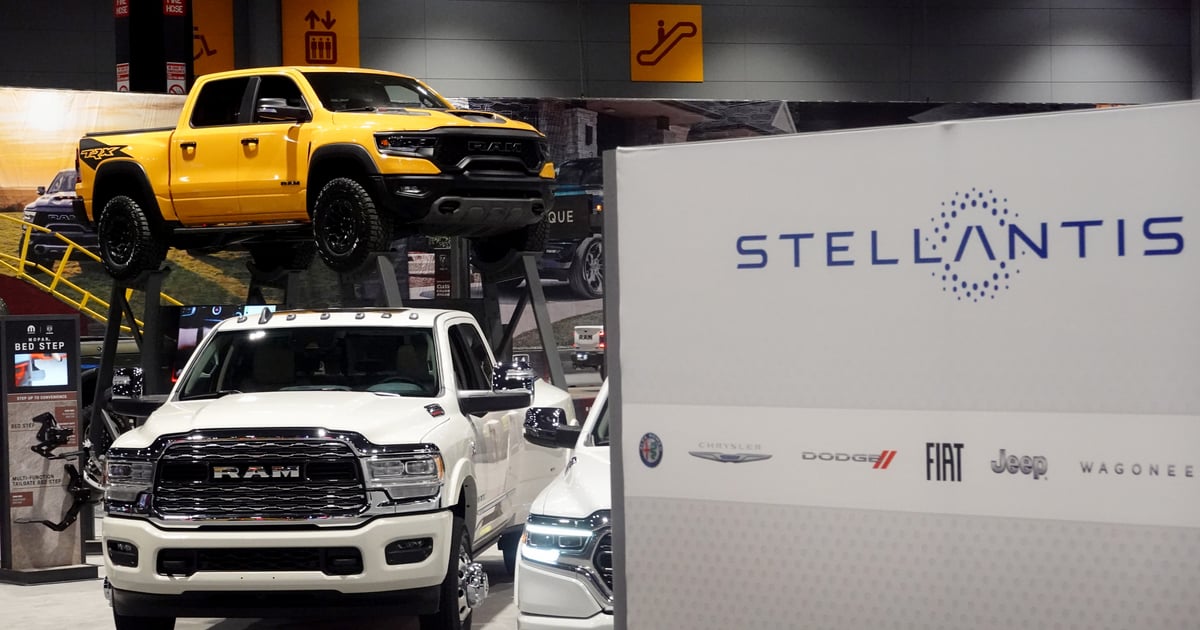
The carmaker is one of the biggest in the world, with familiar U.S. names such as Jeep, Chrysler, Dodge and Ram under its umbrella. It also owns a host of European brands, including Peugeot, Citroën, Alfa Romeo, Opel, Maserati, and Fiat, and was the fifth-largest automotive group seller globally in 2025.
By pairing its vast industrial know-how with Accenture’s physical AI and digital manufacturing capabilities and Nvidia’s accelerated computing and Omniverse libraries, Stellantis is aiming to make manufacturing significantly more efficient with the use of next-generation virtual environments.
While the use of digital twins is not new in vehicle production, the partnership intends to move things on by making them even more central to the process.
The partners plan to do that with increased integration of AI, to create a new manufacturing operating model — one that is driven by real-time data and simulation to be more predictive and autonomous and can easily scale its insights across the automaker’s global production facilities.
As such, Stellantis said its next generation of virtual plant replicas will bring a number of benefits, including the ability to validate processes before physical deployment; improved quality thanks to predictive monitoring; and reduced risk across all operations.
The tech will initially be deployed in a number of selected facilities, starting with pilots in North America this year. The company has 34 manufacturing centers in the U.S. but has not yet identified which ones will be used at the start of the project.
Beyond that, the viability of a global rollout will be studied, with all three companies keen to evaluate the effectiveness of closed-loop optimization — in which virtual and physical systems continuously inform and improve each other — as well as assess the role agentic AI can play.
[ad_2]
Source link
