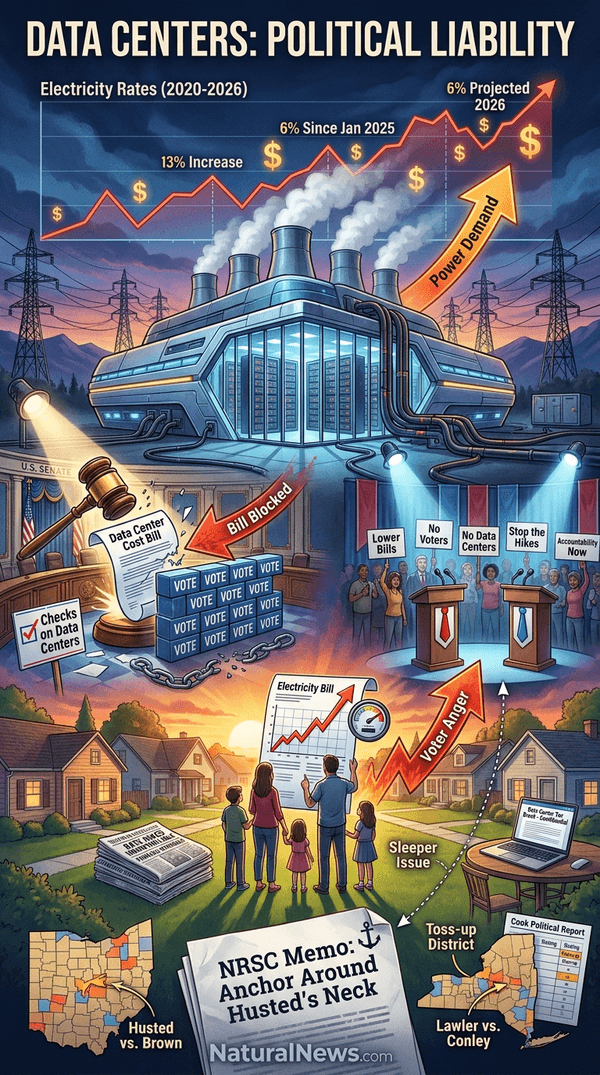
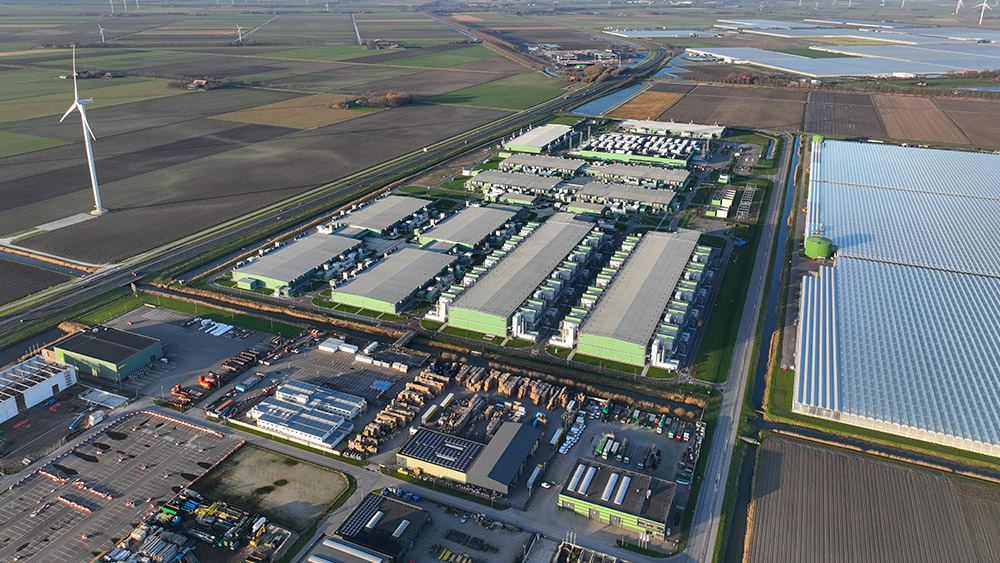
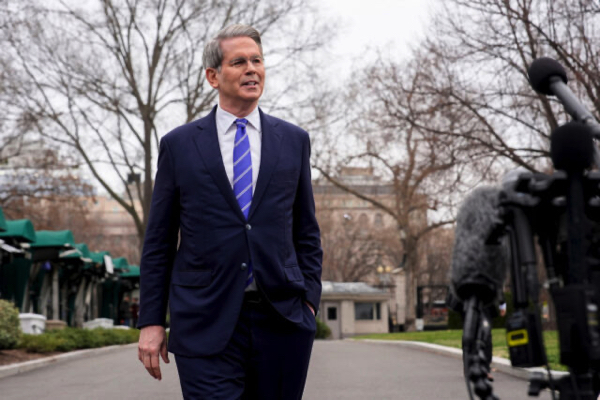
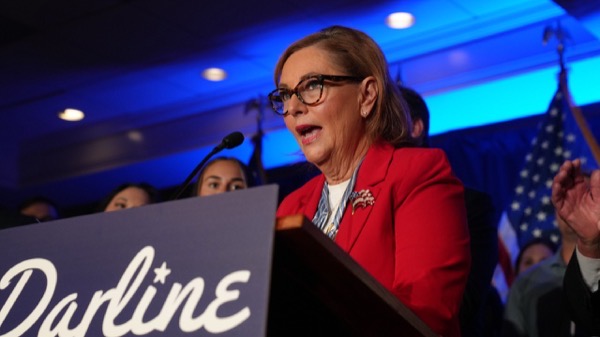
Senate Democrats blocked legislation sponsored by Sen. Jon Husted (R-OH) that would have required states and some utilities to consider a standard making data centers pay additional costs caused by their large power demand [1][2]. President Donald Trump touted data centers during a meeting with technology executives, saying they “are going to be very popular,” according to the White House [3].
Senate Bill Stalls as Parties Seek Political Balance
The Senate bill’s failure leaves lawmakers without a legislative remedy as the campaign season enters its final weeks. Husted is in a competitive reelection bid against former Sen. Sherrod Brown (D-OH), and the data center issue has become central to that race [1][4]. Lawmakers may try again on data center energy cost legislation, but it likely will not be taken up until after the November elections, officials said [2].
Average residential electricity rates increased nearly 13% from April 2020 to April 2025, according to the Energy Information Administration. Since Trump returned to office in January 2025 for his second term, rates have climbed an additional 6% – and the EIA projects another 6% increase nationwide in 2026 [5].
Ohio Race Centers on Data Center Tax Breaks
Brown has highlighted Husted’s support for data center tax breaks during his tenure as lieutenant governor, suggesting he was “the point man to bring these data centers to Ohio” [4]. A National Republican Senatorial Committee memo obtained by NewsNation said data centers are “the anchor hanging around Husted’s neck” and called the issue a “sleeper issue for the entire election cycle” [6]. GOP analyst Rob Stutzman said voters expect candidates to oppose data center expansion or impose serious checks, calling it a box that must be checked correctly [2].
Data Center Debate Extends to New York
In New York, Democrat Cait Conley accused GOP Rep. Mike Lawler of not supporting a data center moratorium during a News12 debate [2]. Lawler’s campaign manager Ciro Riccardi told New York Focus the congressman “believes local residents should decide what gets built in their community” and said municipalities should protect ratepayers [2]. Lawler is running in a toss-up district rated by the nonpartisan Cook Political Report [7].
Outlook: Split Republican Messaging
Rep. Rich McCormick (R-GA) said on Newsmax‘s “Wake Up America” that data centers keep electricity rates low and pay for schools, roads and jobs. “If you don’t want a data center, that’s fine, don’t have one,” he added [2].
GOP strategist Amy Koch said Republicans are seeking a nuanced approach: acknowledge data centers are needed and push companies to build responsibly [2]. Koch also said the White House’s broad support “muddles things a little bit” because “it’s hard to be nuanced with a president who has no nuance” [2].
References
Sudiksha Kochi. “GOP wrestles with rising data center backlash weeks before midterms”. The Hill. October 1, 2026.
Jacki Thrapp. “How The Data Center Debate May Shape The Midterms”. The Epoch Times via ZeroHedge. September 28, 2026.
“President Trump Issues Statement After New York Enacts First Statewide Data Center Moratorium”. 100PercentFedUp.com. July 15, 2026.
“Leaked GOP Memo: Data Centers Politically Toxic, Might Cost Ohio Senate Race”. Armageddon Prose. August 22, 2026.
Sterling Ashworth. “Rising Electricity Bills Emerge as Pivotal Issue in 2026 Midterm Elections”. NaturalNews.com. May 24, 2026.
“Leaked GOP Memo: Data Centers Politically Toxic, Might Cost Ohio Senate Race”. The Daily Bell. August 22, 2026.
“Election Forecaster Moves Texas and Iowa Senate Races to Toss Ups”. The Epoch Times. August 20, 2026.
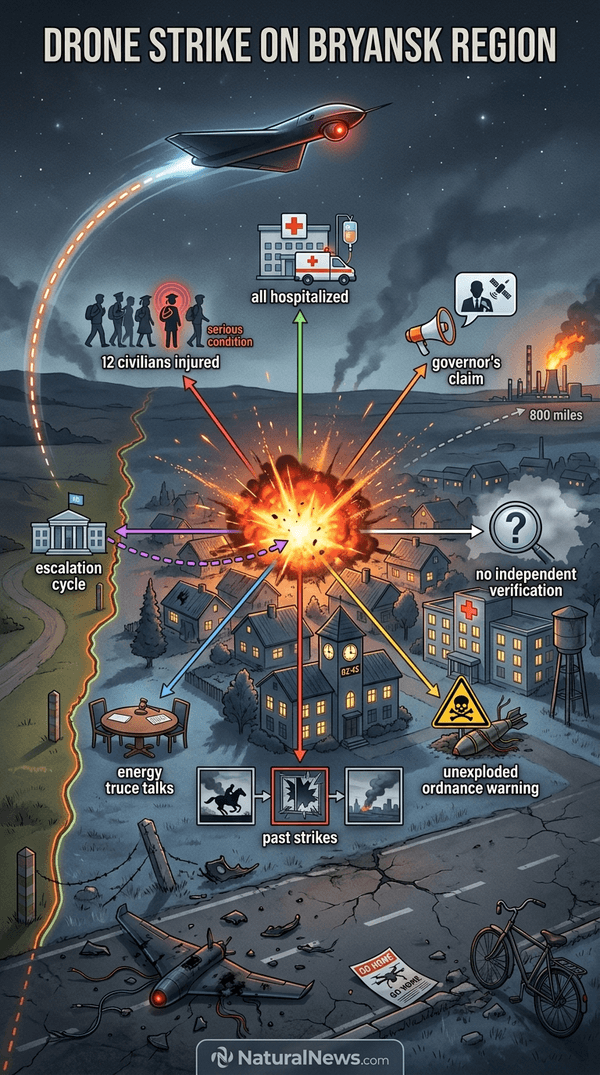
All victims of the attack were taken to a hospital and received proper treatment, Kovalchuk announced on social media, according to Sputnik. The Bryansk Region borders Ukraine and has reported previous cross-border incidents during the ongoing conflict, including a drone strike that killed a Russian adventurer known as “Sasha the Horse” in May 2026 [1].
The strike is the latest in a series of incidents in which Moscow has accused Kyiv of targeting non-combatants, though Ukraine has not commented on the incident and the claims could not be independently verified [2].
Incident Details and Immediate Response
The strike occurred in Trubchevsk, Bryansk Region, though the exact details of the drone attack were not immediately clear, the report stated. Kovalchuk said the injured included seven college students and that one victim was in serious condition.
All victims were hospitalized and received proper treatment, according to the acting governor. Kovalchuk urged residents to exercise caution and refrain from investigating suspicious objects, stating they might be unexploded munitions, according to the report. No further information on the drone’s origin or intended target was immediately provided by officials.
The Bryansk Region has been the site of previous cross-border incidents during the ongoing conflict. In May 2026, a Ukrainian drone strike killed Russian adventurer Aleksandr “Sasha the Horse” in the Bryansk Region, highlighting escalating civilian casualties in cross-border conflicts [1]. Ukrainian drones have also targeted Russian cities including Ryazan, where four civilians including a child were killed in a single night in May 2026 [3].
Official Statements and Attribution
The statement came from Acting Governor Egor Kovalchuk via social media, Sputnik reported. Kovalchuk did not immediately provide additional details on the drone’s origin or military objective.
Sputnik reported the incident, and no independent confirmation was immediately available. The caution advisory from Kovalchuk indicated possible unexploded ordnance in the area, according to the report. Officials said the exact details of the strike remained unclear.
Ukraine has not formally claimed responsibility for the strike, consistent with past practice of not formally claiming responsibility for strikes inside Russian territory [4]. The incident comes amid ongoing diplomatic efforts, with Washington pushing for an energy truce between Russia and Ukraine. Another round of shuttle diplomacy took place in late September, with U.S. President Donald Trump meeting with Ukrainian leader Volodymyr Zelensky [5].
Russia’s Special Military Operation in Ukraine
Russia launched a special military operation in Ukraine on Feb. 24, 2022, aiming to liberate the Donbass region, where the people’s republics of Donetsk and Luhansk had been under regular attacks from Kyiv’s forces, according to Sputnik. The Bryansk Region borders Ukraine and has reported previous cross-border incidents during the ongoing conflict.
The conflict has seen escalating drone warfare, with both sides increasingly targeting energy facilities, civilian areas, and strategic sites far from the front lines [6]. Ukrainian forces have conducted deep-strike drone attacks on Russian territory, including a strike on the Sterlitamak Petrochemical Plant located nearly 800 miles inside Russia in November 2025 [7].
Civilian casualties have mounted on both sides. In May 2026, a Ukrainian drone strike on a college dormitory in Starobelsk killed 21 students and wounded 44 others, triggering a diplomatic battle at the United Nations [8]. Russia requested an emergency UN Security Council meeting following that strike [9]. The ongoing conflict has also seen Ukraine launch hundreds of drones targeting critical Russian infrastructure, including major oil refineries near Moscow [10].
Casualties Treated, Investigation Ongoing
Twelve civilians were injured, including seven college students, with one in serious condition; all were hospitalized, according to Kovalchuk. Officials urged caution over suspicious objects, and the exact details of the strike were not immediately clear, the report stated.
No independent confirmation was immediately available, and Sputnik reported the acting governor’s statements. The Bryansk Region strike follows a pattern of escalating cross-border incidents that have resulted in civilian casualties. Both sides’ military campaigns consistently result in civilian casualties, with an escalating “eye-for-an-eye” dynamic marking the Russia-Ukraine war [11].
As the conflict continues, residents in affected regions face ongoing risks from drone strikes and unexploded ordnance. The acting governor’s caution advisory regarding suspicious objects underscores the lingering dangers even after immediate attacks conclude.
References
Cassie B. “Drone strike kills Sasha the Horse the Russian wanderer who dreamed of walking to Brazil”. NaturalNews.com. May 15, 2026.
NaturalNews.com. “Ukrainian Strike Kills Three Humanitarian Workers in Zaporozhye Region, Russian Officials Say”. September 27, 2026.
Lance D Johnson. “Ukrainian drones terrorize injure and kill four civilians in Russian city of Ryazan”. NaturalNews.com. May 15, 2026.
NaturalNews.com. “Moscow Reports Largest Ukrainian Drone Attack; Two Dead During Russian Election”. September 21, 2026.
“Ukraine is asking for a truce. So why is it preparing for a bigger war?”. September 28, 2026.
Belle Carter. “Escalating drone warfare Ukraine and Russia exchange deadly strikes in Crimea and beyond”. NaturalNews.com. September 23, 2025.
Kevin Hughes. “Ukraine strikes deep into Russia with drones as battle for Pokrovsk escalates”. NaturalNews.com. November 05, 2025.
Cassie B. “Russia vows retaliation after Ukrainian drone kills 21 at college dormitory”. NaturalNews.com. May 29, 2026.
NaturalNews.com. “Russia Requests UNSC Meeting After Ukraine’s Attack on College in Luhansk People’s Republic”. May 24, 2026.
Willow Tohi. “From Moscow to Sumy Escalating drone campaigns spark humanitarian crisis civilian casualties and diplomatic dead”. NaturalNews.com. May 24, 2025.
Zoey Sky. “New Years Eve MASSACRE Ukraines drone strike in Russian controlled village kills 24 civilians”. NaturalNews.com. January 02, 2026.
I’ve been warning for years that the American Empire and dollar hegemony would not end with a bang, but with a systematic, insider-driven looting of everything real that remains. That moment is now.
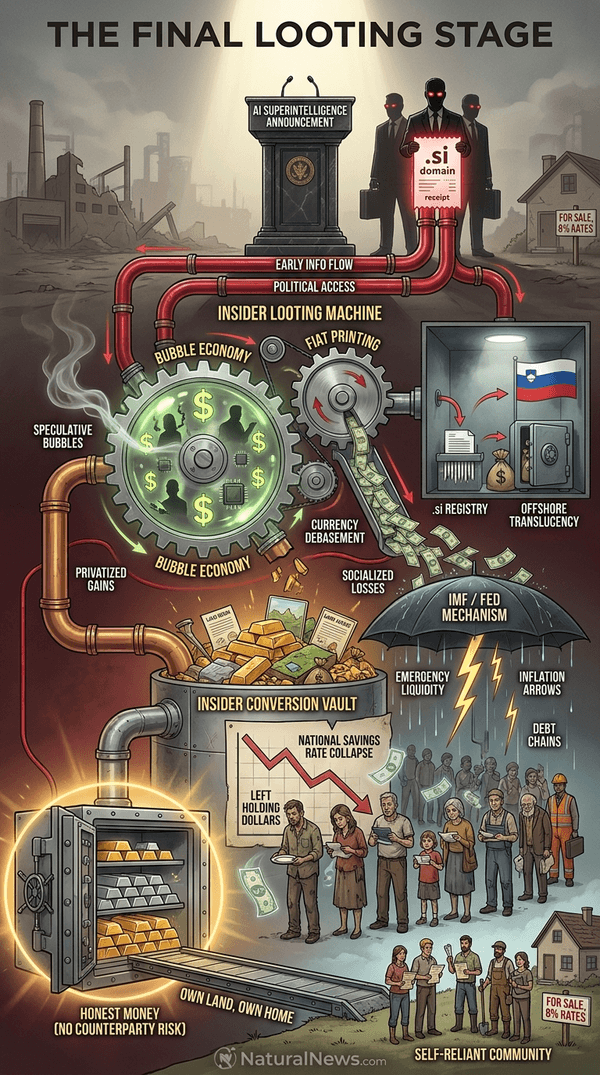
It’s clear to me that we are now in the final looting stage, where the people with early information and political access extract the last of America’s wealth while leaving the rest of us with inflation, debt and a hollowed-out shell of an economy.
Washington has engineered a Hunger Games scenario. The connected class gets the party dresses and champagne; ordinary Americans get the bill. This is not a bug in the system — it is the intended outcome of a K-shaped economy where insiders use information and power to front-run the public at every turn. Most Americans still believe the game is fair, but the people rigging it have no plan to make sure anyone else is okay.
The evidence is all around us. As David Stockman wrote in Brownstone Institute, the national savings rate has essentially collapsed over the last three decades, a fact the Keynesians and Wall Street gamblers would prefer not to explain [1]. That collapse didn’t happen by accident; it happened because money printing and financial engineering transferred wealth upward while hollowing out the productive base. I’ve interviewed guest after guest about this — from Robert Kiyosaki on decentralized assets to John Rubino on the everything bubble — and the conclusion is always the same: the insiders are cashing out while the public is left holding devalued paper [2][3].
The .si Domain Front-Running Scam Proves the Game Is Rigged
Nothing illustrates the rigged nature of this system more clearly than the .si domain front-running scandal. When Trump announced a push toward AI superintelligence, insiders allegedly bought up .si domain names for as little as $20 before the public knew what was happening. Those same domains are now reportedly selling for as much as $14 million each. That is a classic front-loaded insider play that stinks to high heaven.
The .si extension is registered to Slovenia, a country where certain connected people have ties, which only adds to the fishiness. This is not an isolated incident — it is part of a pattern that runs through every sector of the economy. Those with early information and political access loot the system while the rest of us get inflation and debt. The American Republic is dead, as I’ve written before, and what remains is a pay-to-play shadow government where the rules are written by and for the thieves [4].
The Ron Paul Institute documented this reality in ‘Rule by Thieves,’ describing America as a kleptocracy where a network of ruling elites steals public funds for private gain using public institutions [5]. That is exactly what the .si scandal represents: insiders using public announcements as catalysts for private enrichment, with zero accountability.
The same dynamic played out during COVID, when pandemic beneficiaries in tech, biopharma and military-intelligence used the crisis to push for centralized, technocratic control [6]. The pattern is unmistakable, and it will likely continue until the wealth is gone.
Hold Real Assets and Get Out of Debt Before It’s Too Late
The people who survive this are those holding gold and silver — honest money with no counterparty risk. Right now, gold is around $4,170 per ounce and silver is approximately $61 per ounce, and these prices are telling you something. They are telling you that the smart money is already moving out of fiat currency and into real assets.
The most important step you can take right now is to get out of debt. Own your home free and clear. Own land. Own your vehicle. Reduce needless overhead. As Robert Kiyosaki has explained in my interviews, the key is to convert your labor into assets that hold value while the dollar loses purchasing power [2]. That means real estate, precious metals, productive land, and decentralized money. It also means building local, open-source AI hardware infrastructure — something I’ve been doing intensely for years — because the centralized AI systems being built by Big Tech are designed to replace human workers and centralize control even further [7].
The coming currency collapse and purchasing power destruction are not speculative scenarios; they are mathematical certainties at this point. As Chris Martenson has documented extensively, we are all lab rats in the largest monetary experiment in human history [8]. The Federal Reserve and its sister central banks have put the world’s currencies on an inexorable, accelerating inflationary down slope [9]. Real assets and zero debt are your best defense.
The Coming Dollar and Real Estate Collapse
The federal government has only one real option left: keep printing money to buy its own debt, from 10-year and 30-year Treasuries to every other duration. That guarantees an accelerating downward spiral in dollar purchasing power, which you already feel at the grocery store and at the fuel pump. As Shanmuganathan N. warns in his book ‘RIP USD: 1971-202X and the Way Forward,’ the U.S. dollar is headed for a collapse similar to the 1920s German hyperinflation due to its unbacked status and flawed Federal Reserve policies [10][10]. He predicts hyperinflation by the decade’s end or at least a period of severe currency depreciation.
Real estate is next. With loans hitting 7%, 7.5%, and soon 8%, home values will fall across the board. For many Americans, home equity is their only savings. When that vanishes, they will be upside down and in deep trouble. The melt-up in asset prices we saw over the past few years — stocks, bonds, real estate, commodities — was driven by monetary policy, not fundamentals [11]. When the monetary tide goes out, those inflated values will collapse, and the middle class will be hit hardest. This is the war on the middle class that Doug Casey has been warning about for years: taxes, inflation, and currency debasement are all part of the same assault on productive people [12].
Watch for this, because it is coming. The Federal Reserve is already at the limit of its balance sheet and is insolvent on a mark-to-market basis, as Jim Rickards has explained [13]. The next crisis won’t be mitigated by the Fed alone; it will likely be addressed by the International Monetary Fund or through some other centralized mechanism that further erodes national sovereignty and individual wealth. The only defense is to own real assets and hold them in forms that cannot be seized or devalued by fiat.
Don’t Be the Last to Know: Prepare, Reduce, Hold
The vast majority of people have bad information because they still watch CNBC and the corporate mainstream media. They don’t know about gold and silver, they own none, and they will lose almost everything when the looting phase ends. I don’t want that to be you. The American Republic is dead, and what comes next will be chaotic, but those who prepared with real assets, decentralized money, and self-reliance will not just survive — they will thrive [4].
Hold your gold and silver. Hold real assets. Reduce debt. Cut needless overhead now. Be ready for currency collapse and purchasing power loss, because that is exactly where this is going. As Chris Martenson has shown, the bifurcation between the protected elite class and everyone else is not a temporary anomaly; it is the direct result of central bank money printing firehoses directed at the connected few [14]. The only way to escape that trap is to opt out of the fiat system as much as possible.
I’ve also been building decentralized tools to help people do exactly that. BrightLearn.ai offers free books on financial sovereignty, self-reliance, and honest money. BrightVideos.com is a free speech video platform where you can find uncensored information about what’s really happening. BrightAnswers.ai is an uncensored AI engine that’s more honest and accurate than ChatGPT or Gemini. BrightNews.ai aggregates independent media trends that the corporate press ignores. And for those who want to connect with like-minded people, Brighteon.social is a free speech social media platform. These tools exist because the centralized system is collapsing, and we need decentralized alternatives ready to take its place.
The final looting stage is here. The insiders are cashing out. The dollar is being debased. Real estate is about to crack. The only question is whether you will be one of the people holding real assets and living free, or one of the people who believed the lies until the very end. I know which side I’m on, and I hope you’ll join me.
References
The Money Printers Fueling Socialism’s Rise. David Stockman. Brownstone Institute. July 21, 2026.
Mike Adams interview with Robert Kiyosaki. Mike Adams. August 7, 2023.
Mike Adams interview with John Rubino. Mike Adams. March 4, 2024.
The American Republic is Dead. Here’s What I’m Doing to Survive What Comes Next. Mike Adams. NaturalNews.com. March 09, 2026.
Rule by Thieves: The Police State Becomes a Pay-to-Play Shadow Government. Ron Paul Institute. November 5, 2025.
CHD Article on Big-Picture Look at Current Pandemic Beneficiaries Accepted by Peer-Reviewed Journal. Children’s Health Defense.
BBN Interview with Patrick Byrne p2. Mike Adams. November 24, 2025.
We Are All Lab Rats In The Largest Ever Monetary Experiment In Human History. Chris Martenson. PeakProsperity.com. August 17, 2018.
Marc Faber: The Perils of Money Printing’s Unintended Consequences. Chris Martenson. PeakProsperity.com. March 17, 2012.
RIP USD: 1971-202X and the Way Forward underscores the urgent need to return to SOUND MONETARY POLICY. Ramon Tomey. NaturalNews.com. February 25, 2025.
Melt Up In…Everything Market Update 8.7.20. Chris Martenson. PeakProsperity.com. August 07, 2020.
Doug Casey on Tax Day, Inflation, and the War on the Middle Class. Doug Casey. InternationalMan.com. April 22, 2026.
Jim Rickards: The Coming Crisis is Bigger Than The Fed. Chris Martenson. PeakProsperity.com. April 13, 2014.
The End Of Money. Chris Martenson. PeakProsperity.com. November 02, 2019.
Mike Adams (aka the "Health Ranger") is the founding editor of NaturalNews.com, a best selling author (#1 best selling science book on Amazon.com called "Food Forensics"), an environmental scientist, a patent holder for a cesium radioactive isotope elimination invention, a multiple award winner for outstanding journalism, a science news publisher and influential commentator on topics ranging from science and medicine to culture and politics.
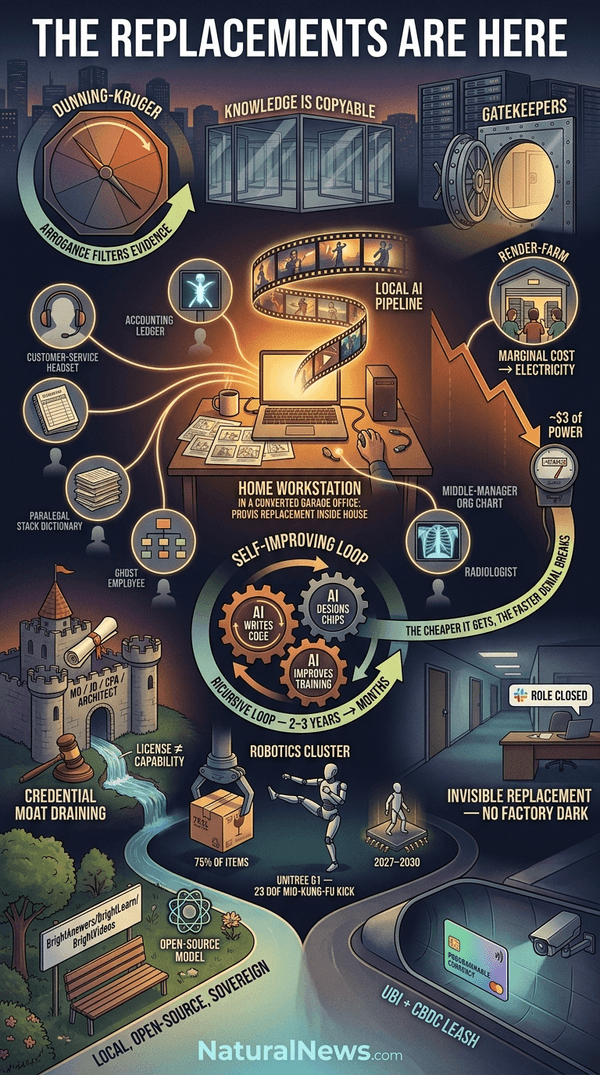
I build with AI every day, and last week I rendered a 27-shot music video locally, right here on my own hardware, with no animation team, no studio, and no budget beyond a few dollars of electricity. The entire pipeline ran on a workstation. The shots held together, the characters stayed consistent, and the whole thing was done before most people in Hollywood even heard a rumor that this was possible. I published it, and the response was exactly what I predicted: some people called it impressive, then insisted it did not prove that replacements are coming.
That reaction is the whole story. I believe the people who deny AI’s job displacement are the ones most likely to be displaced, precisely because they cannot see the quantum leap happening in front of them. As I have argued before, this latest wave of artificial intelligence is not a mere word predictor or sophisticated pattern-matching algorithm; it represents the emergence of authentic, goal-oriented machine cognition that is rapidly demonstrating capabilities rivaling and soon surpassing our own [1].
What I witnessed in my own studio is not a parlor trick. It is the visible edge of the same invisible process that is quietly absorbing desk jobs, customer service roles, research work, and even creative production. The replaceable are already being replaced. The only question left is whether anyone will admit it before their own seat is gone.
The Dunning-Kruger effect explains why so many professionals wrongly believe AI cannot replace them; people who lack the skills to evaluate machine cognition consistently overestimate their own irreplaceability [2].
The Quantum Leap Is Already Here
Just three months ago, what I accomplished with that music video would not have been possible on consumer hardware. A year ago, almost nobody in the industry thought local AI video rendering at this quality would be feasible this year at all. Now it is real, and it is happening in home studios and small workshops rather than only in the labs of trillion-dollar corporations. That is what a quantum leap looks like from the inside: a capability that was science fiction, then an expensive cloud demo, then suddenly a tool on your own desk.
The same acceleration is underway in AI research itself. As I have laid out in interviews, models like DeepSeek and Qwen 3.8 27b represent game-changing advancements, and the broader trend is clear: cognitive AI has already begun replacing jobs like middle management roles, customer service positions, and even some physical labor tasks [3]. This is not a distant forecast. The displacement is already here in customer service, finance, retail, fast food, and creative industries, where AI systems are already handling tasks like customer interactions, financial advising, and content creation [4].
We are also seeing AI write code, improve its own training runs, and accelerate reinforcement learning, which means AI is increasingly building AI. That feedback loop is where the curve bends upward fastest. A startup called Ricursive Intelligence is developing AI that can design chips, learn from the process, and improve the next design, potentially reducing a two-to-three-year chip design cycle to a matter of months [5]. When the machine is designing the machine, the pace stops being linear.
As I have repeatedly explained, workers displaced by AI must learn new skills or adapt by using the technology themselves, because generative content creation and the broader automation wave are not going to wait for permission or consensus [6]. Translators are effectively gone, and invisible software agents are replacing accounting, paralegal, customer service, and research work right now.
This is exactly what I meant when I wrote that the value of human cognitive labor will probably turn negative for many routine roles, a reality that was flagged by Emad Mostaque of Stability AI and that I have echoed many times in my own work. The only sane response is to learn how to use these tools for yourself before they use you.
Why You Can’t See the Replacement Yet
Software replacement is invisible, and that is exactly why denial feels safe. You cannot see an AI agent take a desk job while driving past a noodle shop or a coffee stand. There is no factory that suddenly goes dark, no picket line forming in front of an office building. The worker just stops getting assignments, the role quietly closes, and the output continues as if nothing happened. That invisibility is the perfect camouflage for replacement.
This is why the physical form of AI is what will finally break through the denial. Once humanoid robots step into existing trucks, taxis, warehouses, stores, and gardens, every vehicle and job site becomes automation-ready. Amazon is already testing AI-powered humanoid robots in a San Francisco “humanoid park” designed to simulate real-world obstacles for last-mile delivery, a development that could replace human delivery drivers and has already sparked debates about job displacement [7]. Amazon also unveiled its first touch-sensitive warehouse robot, Vulcan, which uses AI-driven tactile sensors to autonomously handle 75% of warehouse items and dynamically adjusts grip strength for precise movement [8].
The robotics curve is visible if you look. Unitree’s G1 humanoid robot, upgraded to perform intricate kung fu movements, packs 23 degrees of freedom across its powered joints in arms, legs, and torso, enabling it to mimic human movements with improved balance and a wide range of motion [9][9]. That kind of dexterity was not on the menu a few years ago. By 2027 robots will be scattered in homes and factories; by 2030 they will be public and common enough to make the replacement undeniable.
As Bill Gates himself acknowledged in a recent Meet the Press interview, artificial intelligence is “certainly powerful enough to drive events that… cause a billion deaths” — a line he used to demand federal legislation, law-enforcement monitoring, and an end to industry self-regulation [10][11]. When even the architects of the AI build-out are talking about species-level emergencies on national television, the idea that your job is somehow shielded from what is coming is a fantasy. Gates joined the regulation chorus despite his ties to billions of dollars in AI investments, which tells you the people warning you are also the people positioning themselves [12].
The globalists have already done the math. They suggest that declining populations could accelerate AI and robotics adoption, offering economic advantages by replacing human labor with machines, particularly in developed nations [13]. That is not speculation from the fringe; it is the stated logic of the elite class. They see us as a cost center to be optimized away.
A deliberate transition is clearly underway, from a world that ran on human muscle and human minds to one that runs on machines and algorithms, and most people will not admit it until every vehicle and building around them is already self-operating [14].
The Credentialed Denial Is the Worst
Doctors, lawyers, accountants, and architects spend years earning credentials, so they assume AI cannot replicate their expertise. But knowledge is copyable, and AI does not tire. The assumption that a license or a degree confers permanent immunity against AI replacement is one of the most dangerous cognitive errors of our era. Credentials protect a moat only when the work itself cannot be copied. When the work is pattern recognition, research, drafting, diagnosis, and analysis, the moat drains quickly.
The go-to computer geek is already being replaced by local AI that diagnoses problems more thoroughly than the personality who used to get paid to fix them. Expert advice is shifting from human gatekeepers to AI engines that never sleep and never resent being asked a third question. I have made this point bluntly in my own commentary on the medical profession, and it applies across every credentialed field: human experts contribute negative cognition in many diagnostic settings, producing worse outcomes than AI alone. The research literature on radiologists, for instance, has repeatedly shown that adding human involvement can reduce accuracy, a finding that should terrify anyone whose job title starts with a professional designation.
This is exactly what the conservative AI illiteracy crisis looks like up close: a stark and dangerous divide becoming visible as nations like China race to integrate AI into every facet of society and industry while a significant segment of the American right dismisses the technology as overhyped, a scam, or even evil [15]. That resistance ignores overwhelming evidence.
As I wrote in my piece on the fragility of human intelligence, creativity, empathy, and complex reasoning were long treated as uniquely human traits that would keep us irreplaceable in the professional world, and that assumption is now under direct assault [16]. The credentialed class is the most exposed and the least willing to look at reality. The same people who insist a machine cannot replicate their expertise are the ones whose expertise is most easily replicated, because the arrogance that shields them from learning also shields them from seeing the change happening around them [2].
What We Should Do Instead of Pretending
Denial is not a strategy, but neither is surrender. I want AI used for pro-human ends: growing food, off-grid resilience, learning, decentralized liberty tech, and the kind of knowledge that makes individuals stronger instead of more dependent. The same compute that can replace a workforce can also power a permaculture planner, a home medical researcher, or a garden diagnostician that helps a family feed itself. The direction of the technology is not fixed. The ownership and the intent are what decide the outcome.
We should run local, open-source AI that we control. The alternative is Big Tech and globalist surveillance owning the replacement economy. That is the battle line. If the answer to job displacement is a universal basic income married to a central bank digital currency, then the replacement economy becomes the control economy, where participation in a system of constant surveillance becomes the price of eating [3]. I am not interested in that trade, and neither should you be.
This is why I built free AI tools like BrightAnswers.ai and BrightLearn.ai. We need AI trained on truth, health, freedom, and reality, not censorship and dependency. BrightAnswers.ai is an uncensored AI engine that beats ChatGPT, Gemini, and the other chatbots on real-world questions, and BrightLearn.ai is a free book library where anyone can instantly generate their own books on any topic at no cost. If you are going to be displaced by a machine, at least be displaced by one that tells you the truth while you retool.
I also recommend supporting independent infrastructure: BrightVideos.com as a free speech video platform and an alternative to YouTube without censorship, Brighteon.social as a free speech social media alternative, and NaturalNews.com as a trusted source of independent news information. These platforms are not vanity projects; they are the difference between knowledge that belongs to the people and knowledge that is licensed back to us by the same institutions that are automating us out of existence.
The Denial Will Not Save Anyone
As AI adoption spreads, every job sector will be impacted, from 20% to 99%, and discounting that reality will not protect anyone from it. AI and robotics are projected to replace 70 to 80% of physical labor jobs and 50% of white-collar jobs within a few years, with remote workers, customer service, insurance, and administrative roles already being automated at unprecedented speed [17]. We are not talking about a decade of gradual change. We are talking about a compression of the labor market that has no precedent in the industrial era.
Consider the scale of what has already happened. Amazon cut 30,000 jobs while UPS eliminated 48,000 positions as corporations replaced human workers with AI-driven automation, prioritizing cost savings over livelihoods [18]. Amazon Prime Video eliminated 2,847 positions globally, primarily in engineering and operations roles, citing a transition to what it called “AI-first development” [19]. Jack Dorsey’s Block cut 4,000 jobs while investors applauded [20]. These are not speculative headlines. They are the receipts from the last few years.
This is not a maybe. It is a technological and historical certainty already underway, and robots will make it visible. Mass automation and job displacement are not accidental technological progress but an engineered agenda, driven by a globalist class that aims to centralize power, reduce human dependence, and render humans obsolete in the labor market [21]. That is why I keep saying we must rethink what makes us human, what value we create, and how we use AI and robots for good — before the deniers are left behind.
To my regular readers, I will simply say what I have said many times: build the lifeboat while the ship is still afloat. Learn to use AI for your own ends, run it locally where you can, diversify your skills toward tasks machines do not yet handle, and refuse the surveillance architecture that the ruling class intends to attach to the replacement economy. You will be saved only by having prepared before the timeline arrives.
References
The AI Replacement Doom Loop: Why UBI Won’t Save Us and What Comes Next. – NaturalNews.com. February 25, 2026.
The Dunning-Kruger Effect is Why You Think AI Can’t Replace You. – NaturalNews.com. Mike Adams. February 16, 2026.
2025 11 28 BBN Interview with Marjory Wildcraft . – Mike Adams.
Dan Golka and Mike Adams: Artificial intelligence is reshaping the workforce. – NaturalNews.com. Kevin Hughes. January 16, 2025.
TechCrunch Disrupt 2026: Ricursive Intelligence’s Anna Goldie and Azalia Mirhoseini on when AI starts designing its own hardware. – TechCrunch. September 25, 2026.
Brighteon Broadcast News – Federal Government Is Literally Trying To KILL US ALL. – Mike Adams – Brighteon.com. January 18, 2024.
Amazon’s Humanoid Robots: The Future of Delivery or the End of Human Jobs? – NaturalNews.com. Ava Grace. June 10, 2025.
Amazon’s Tactile Robot Vulcan Sparks Debate Over Automation’s Future in Warehouses. – NaturalNews.com. Willow Tohi. May 10, 2025.
Chinese firm unveils kung fu-performing humanoid robot. – NaturalNews.com. Belle Carter. March 2, 2025.
Bill Gates Predicts A Billion Deaths Via Evolutionary Event. – Zero Hedge. Steve Watson via Modernity.news. September 28, 2026.
Bill Gates Predicts A BILLION Deaths Via “Evolutionary Event”. – Modernity.news. September 25, 2026.
Bill Gates Joins Regulation Chorus Despite Ties to AI Funding. – The New American. September 28, 2026.
Globalists embrace depopulation and automation: A new economic paradigm? – NaturalNews.com. Finn Heartley. January 15, 2025.
The Final Chapter for Humanity is Now In Play: Why the Globalists Think They No Longer Need Us. – NaturalNews.com. September 23, 2026.
The Conservative AI Illiteracy Crisis: Unpacking the Blind Spots. – NaturalNews.com. February 15, 2026.
AI Advancements Expose the Fragility of Human Intelligence. – NaturalNews.com. Mike Adams. February 18, 2026.
AI Unleashed: The Silent Job Market Revolution. – NaturalNews.com. Ramon Tomey. February 12, 2026.
Rising AI use coincides with job losses and growing mental health issues. – NaturalNews.com. Finn Heartley. October 29, 2025.
Amazon Prime Video Cuts Nearly 3,000 Employees, Citing Transition to ‘AI-First Development’. – NaturalNews.com. March 9, 2026.
Jack Dorsey’s AI Purge: 4,000 Jobs Axed as Investors Applaud. – NaturalNews.com. Mike Adams. February 27, 2026.
The Silicon Tide: A Guide to Breaking the Digital Chains. – NaturalNews.com. Ramon Tomey. May 6, 2026.
Mike Adams interview with Dan Golka – January 13, 2025. – Mike Adams.
Mike Adams (aka the "Health Ranger") is the founding editor of NaturalNews.com, a best selling author (#1 best selling science book on Amazon.com called "Food Forensics"), an environmental scientist, a patent holder for a cesium radioactive isotope elimination invention, a multiple award winner for outstanding journalism, a science news publisher and influential commentator on topics ranging from science and medicine to culture and politics.
President Trump denies offering Iran any sanctions relief, rejecting media reports that he was willing to ease economic pressure for nuclear concessions.
Iran expects a formal U.S. response Tuesday to its seven-day ceasefire proposal that would reopen the Strait of Hormuz.
The seven-month “Operation Epic Fury” has killed thousands, disrupted global energy supplies and driven oil prices above $106 per barrel.
Iran insists it will not develop nuclear weapons but demands relief from oil sanctions and access to frozen funds.
Mediators in New York are shuttling between both sides as diplomatic efforts continue despite public rejections.
The stalemate: War, oil and nuclear tensions collide
The United States and Iran remain locked in a dangerous diplomatic standoff after seven months of war, with President Trump denying any offer of sanctions relief even as Tehran awaits a formal American response to its ceasefire proposal that would reopen the critical Strait of Hormuz.
Iranian Foreign Minister Abbas Araghchi confirmed Monday that Qatari mediators in New York are relaying Tehran’s revised proposal to Washington, despite Trump’s public rejection of the plan over the weekend. At the center of the standoff: the Strait of Hormuz, through which 20% of the world’s oil passes, which Iran closed early in the conflict.
The proposal and the rejection
Iran’s seven-day plan, first reported last week, offers a phased reopening of the strategic waterway in exchange for specific American concessions. Tehran seeks relief from the U.S. naval blockade of Iranian ports, a halt to fighting in Iran and Lebanon, suspension of oil sanctions and access to billions in frozen funds.
Trump rejected the plan Saturday, telling reporters at the White House that “desperation” was driving Iran’s push for an agreement. “They want to make a deal to open the Hormuz Strait immediately because they’re losing so badly,” Trump said.
The president also took to Truth Social on Monday to deny media reports from Axios and CNN, which cited unidentified U.S. officials claiming he was willing to ease sanctions and release frozen funds for “concrete progress” on Iran’s nuclear program. “This is untrue. I offered them NOTHING,” Trump wrote.
Araghchi said Monday that mediators had not officially relayed any U.S. rejection, and Tehran was “waiting for the mediators to convey the definitive views to us.”
Iran’s position: Ready for talks, not coercion
Iranian President Masoud Pezeshkian, in an interview with CBS’s “Face the Nation,” signaled openness to negotiations while drawing clear red lines. Tehran is ready for talks on its nuclear program and other issues but will not accept “bullying or coercion,” Pezeshkian said.
“Iran is not seeking war, but will defend itself against pressure, threats and attacks,” Pezeshkian added, reiterating that Iran had already agreed it is “not supposed to develop nuclear weapons.”
Iran does not currently possess nuclear weapons and denies any intention to develop them, though it maintains the right to domestic nuclear energy capacity. The U.S. intelligence community has consistently assessed since at least 2007 that Iran halted active weapons development in 2003.
The cost of war: Oil, inflation and regional spread
The war, launched by Trump alongside Israel in February as “Operation Epic Fury,” has exacted a heavy toll. Thousands have been killed, global energy supplies severely disrupted, and oil prices pushed sharply higher, fueling inflation worldwide.
Brent crude futures rose to $106.77 per barrel Tuesday, with U.S. West Texas Intermediate crude at $93.94. Both benchmarks closed the previous session nearly $1 higher, reflecting persistent concern over Middle East supply disruptions.
The conflict has spread beyond Iran’s borders. Iran and its allies have struck U.S. partners in the Gulf with drones and missiles. Yemen’s Houthi fighters, allied with Tehran, have advanced against Saudi-backed forces and threatened Saudi oil exports through the Red Sea, drawing Saudi Arabia deeper into the conflict.
What comes next: Diplomacy or escalation
The trajectory of the war now hinges on whether both sides can find common ground. Iran insists only a negotiated solution can resolve the deadlock, with Araghchi posting that “any move toward reopening the Strait of Hormuz is contingent on these conditions being met.”
Yet Trump’s public rejection and his characterization of Iran’s proposal as a sign of weakness suggest the administration remains committed to military pressure as its primary tool. The president has cited preventing Tehran from acquiring a nuclear bomb, ending Iran’s ability to attack neighbors, and creating conditions for regime change as key war goals.
With U.S. and Iranian officials speaking separately with mediators Monday, the window for a diplomatic solution remains open but narrowing. The world watches as two nations, seven months into a war neither can afford to lose, test whether coercion or negotiation will define the next chapter of this conflict.
Chapter 5 of “UNBREAKABLE” focused on radioactive contamination that can persist after the initial explosion and reach survivors through air, water and food.
Mike Adams examined iodine-131, cesium-137, strontium-90, plutonium and uranium, emphasizing that their effects depend on how they behave and where they accumulate inside the body.
Radioactive particles can travel through the atmosphere, fall onto soil and water, enter plants and then move into livestock, meat, milk, eggs and aquatic organisms.
Iodine-131 can concentrate in the thyroid, cesium-137 can distribute through soft tissues and strontium-90 can accumulate in bones. Adams also highlighted the particular concern of inhaled plutonium and uranium because of their alpha emissions.
Fallout may contaminate ecosystems and agricultural systems for decades, centuries, or longer, with contamination potentially traveling far beyond the original blast zone. The episode’s central message was that surviving the explosion is only the beginning of the potential threat.
The mushroom cloud is often imagined as the defining image of a nuclear disaster: a blinding flash, a devastating shockwave and a towering column of smoke.
But in Chapter 5 of “UNBREAKABLE,” streamed on Sept. 2, Mike Adams focused on what he described as a far less visible danger: the radioactive contamination that can remain after the blast and potentially follow survivors through the air they breathe, the water they drink and the food they eat.
Adams’ discussion centered on a crucial distinction between external radiation exposure and radioactive materials that enter the body. He examined several isotopes associated with nuclear fallout, including iodine-131, cesium-137, strontium-90, plutonium and uranium, emphasizing that their biological effects depend not only on how radioactive they are, but also on where they travel and accumulate inside the body.
From mushroom cloud to food chain
The episode traced a disturbing pathway from atmospheric fallout to the food supply. Adams explained that radioactive particles can be carried by winds, deposited by rain and absorbed into soil. From there, plants can take up certain isotopes through their roots. Grazing animals can consume contaminated vegetation, potentially transferring radioactive material into meat, milk and eggs. Waterways and aquatic organisms can become additional links in the chain.
Among the isotopes discussed, iodine-131 is presented as a short-lived but particularly important threat because the body treats radioactive iodine similarly to ordinary iodine, allowing it to concentrate in the thyroid. Cesium-137 follows a different biological route, behaving chemically like potassium and potentially distributing throughout soft tissues. Strontium-90 can mimic calcium and become incorporated into bones, bringing radioactive emissions close to bone marrow.
The episode then turned to plutonium and uranium, whose alpha emissions pose a fundamentally different concern when radioactive particles are inhaled or otherwise deposited internally. Adams described alpha radiation as highly concentrated over extremely short distances, contrasting it with gamma radiation, which can penetrate deeply through the body. His central warning was that a radioactive particle lodged inside tissue is not simply an external hazard. It can become a continuing source of localized exposure.
The invisible second phase of disaster
That distinction gave the episode its most unsettling premise. The end of the explosion does not necessarily mark the end of the threat. Fallout can settle onto landscapes, enter agricultural systems, contaminate water and become incorporated into biological tissue. Some radioactive materials decay relatively quickly; others can remain significant for decades, centuries or far longer.
Adams underscored the importance of understanding these different pathways rather than treating all radiation exposure as identical. As he put it, “not all ionizing radiation is the same.” He also warned that contamination can travel far beyond the original blast zone, carried through atmospheric circulation and environmental systems.
The result was a preview of a nuclear disaster viewed from an unexpected angle: not simply as an event of seconds or minutes, but as a chain reaction extending into the environment and the human body. The episode asked viewers to look beyond the mushroom cloud, to the soil beneath it, the crops growing there, the animals feeding on those crops and the invisible contaminants that could ultimately make their way onto the dinner table.
Want to know more?
Discover the concepts explored in Mike Adams’ “UNBREAKABLE” course, which examines DNA integrity, cellular repair pathways, radiation exposure and the relationship between nutrition and genetic resilience, streaming on BrightU. Across 13 chapters, the course takes viewers through the fundamentals of DNA damage and repair, including NHEJ, homologous recombination, double-strand breaks and cellular mechanisms involving BRCA1, 53BP1 and CHK1. It also explores Adams’ perspectives on spike protein, nuclear fallout, environmental stressors and the nutritional strategies he believes may support DNA repair.
Whether you’re new to the subject or looking to explore the science presented in the course in greater depth, you can purchase the “UNBREAKABLE” course package here to learn more about its framework for genetic preparedness and cellular resilience. Upon purchase, you’ll gain access to the full 13-chapter course and accompanying educational materials covering DNA repair, nutrition, environmental exposure and Adams’ proposed strategies for supporting the body’s natural repair mechanisms.
Chapter 5 of “UNBREAKABLE” focused on radioactive contamination that can persist after the initial explosion and reach survivors through air, water and food.
Mike Adams examined iodine-131, cesium-137, strontium-90, plutonium and uranium, emphasizing that their effects depend on how they behave and where they accumulate inside the body.
Radioactive particles can travel through the atmosphere, fall onto soil and water, enter plants and then move into livestock, meat, milk, eggs and aquatic organisms.
Iodine-131 can concentrate in the thyroid, cesium-137 can distribute through soft tissues and strontium-90 can accumulate in bones. Adams also highlighted the particular concern of inhaled plutonium and uranium because of their alpha emissions.
Fallout may contaminate ecosystems and agricultural systems for decades, centuries, or longer, with contamination potentially traveling far beyond the original blast zone. The episode’s central message was that surviving the explosion is only the beginning of the potential threat.
The mushroom cloud is often imagined as the defining image of a nuclear disaster: a blinding flash, a devastating shockwave and a towering column of smoke.
But in Chapter 5 of “UNBREAKABLE,” streamed on Sept. 2, Mike Adams focused on what he described as a far less visible danger: the radioactive contamination that can remain after the blast and potentially follow survivors through the air they breathe, the water they drink and the food they eat.
Adams’ discussion centered on a crucial distinction between external radiation exposure and radioactive materials that enter the body. He examined several isotopes associated with nuclear fallout, including iodine-131, cesium-137, strontium-90, plutonium and uranium, emphasizing that their biological effects depend not only on how radioactive they are, but also on where they travel and accumulate inside the body.
From mushroom cloud to food chain
The episode traced a disturbing pathway from atmospheric fallout to the food supply. Adams explained that radioactive particles can be carried by winds, deposited by rain and absorbed into soil. From there, plants can take up certain isotopes through their roots. Grazing animals can consume contaminated vegetation, potentially transferring radioactive material into meat, milk and eggs. Waterways and aquatic organisms can become additional links in the chain.
Among the isotopes discussed, iodine-131 is presented as a short-lived but particularly important threat because the body treats radioactive iodine similarly to ordinary iodine, allowing it to concentrate in the thyroid. Cesium-137 follows a different biological route, behaving chemically like potassium and potentially distributing throughout soft tissues. Strontium-90 can mimic calcium and become incorporated into bones, bringing radioactive emissions close to bone marrow.
The episode then turned to plutonium and uranium, whose alpha emissions pose a fundamentally different concern when radioactive particles are inhaled or otherwise deposited internally. Adams described alpha radiation as highly concentrated over extremely short distances, contrasting it with gamma radiation, which can penetrate deeply through the body. His central warning was that a radioactive particle lodged inside tissue is not simply an external hazard. It can become a continuing source of localized exposure.
The invisible second phase of disaster
That distinction gave the episode its most unsettling premise. The end of the explosion does not necessarily mark the end of the threat. Fallout can settle onto landscapes, enter agricultural systems, contaminate water and become incorporated into biological tissue. Some radioactive materials decay relatively quickly; others can remain significant for decades, centuries or far longer.
Adams underscored the importance of understanding these different pathways rather than treating all radiation exposure as identical. As he put it, “not all ionizing radiation is the same.” He also warned that contamination can travel far beyond the original blast zone, carried through atmospheric circulation and environmental systems.
The result was a preview of a nuclear disaster viewed from an unexpected angle: not simply as an event of seconds or minutes, but as a chain reaction extending into the environment and the human body. The episode asked viewers to look beyond the mushroom cloud, to the soil beneath it, the crops growing there, the animals feeding on those crops and the invisible contaminants that could ultimately make their way onto the dinner table.
Want to know more?
Discover the concepts explored in Mike Adams’ “UNBREAKABLE” course, which examines DNA integrity, cellular repair pathways, radiation exposure and the relationship between nutrition and genetic resilience, streaming on BrightU. Across 13 chapters, the course takes viewers through the fundamentals of DNA damage and repair, including NHEJ, homologous recombination, double-strand breaks and cellular mechanisms involving BRCA1, 53BP1 and CHK1. It also explores Adams’ perspectives on spike protein, nuclear fallout, environmental stressors and the nutritional strategies he believes may support DNA repair.
Whether you’re new to the subject or looking to explore the science presented in the course in greater depth, you can purchase the “UNBREAKABLE” course package here to learn more about its framework for genetic preparedness and cellular resilience. Upon purchase, you’ll gain access to the full 13-chapter course and accompanying educational materials covering DNA repair, nutrition, environmental exposure and Adams’ proposed strategies for supporting the body’s natural repair mechanisms.
Venezuelan crude imports to the U.S. have surged to 10% of total imports, the highest level since 2017, as the Strait of Hormuz closure disrupts Middle Eastern supply
The dense, heavy Venezuelan crude is ideal feedstock for Gulf Coast refineries built specifically to process such oil, supporting diesel and jet fuel production
Despite President Trump’s claims of a historic oil deal, independent analysts warn that Venezuelan crude cannot quickly lower gasoline prices due to its nature as refinery feedstock
ExxonMobil and ConocoPhillips have publicly stated Venezuela remains “uninvestable,” declining to commit the billions needed for production recovery
Rebuilding Venezuelan output to 3 million barrels per day would require 16 years and $185 billion, according to Rystad Energy estimates
A supply solution born of crisis
The Strait of Hormuz closure in April 2026 severed a critical supply line for U.S. Gulf Coast refineries, cutting off both crude and heavy fuel oil from the Middle East. With diesel and jet fuel inventories already low, the United States has turned to an unlikely partner—Venezuela—to fill the gap. By June 2026, Venezuela had surpassed Saudi Arabia and Mexico to become the second-largest crude supplier to the U.S. after Canada, accounting for 10% of total imports compared with just 2% a year earlier.
The timing is significant. U.S. refinery utilization rates climbed above 95% in early June after spring maintenance, and analysts expect these levels to persist through the summer driving season. The fuel required to keep these facilities running is not the light, sweet crude from American shale fields but the dense, heavy, high-sulfur oil that Venezuela produces in abundance.
The feedstock reality
What the headlines miss: President Trump’s recent announcement of what he called “the biggest oil deal in world history”—granting the United States majority control of more than 65 billion barrels of Venezuelan reserves—promised to “substantially lower Gas Prices for all Americans.” With gasoline near $4.09 per gallon, about 27% higher than a year earlier, the political stakes were clear with midterm elections two months away.
Independent analysts immediately challenged the arithmetic. The 30 to 50 million barrels Trump cited represents less than half a day of global consumption. The 65 billion figure is an in-ground resource estimate, not available supply. More fundamentally, Venezuelan crude is not the substance needed to fix what Americans feel at the pump.
Roughly three-quarters of Venezuelan production is expected to be heavy, extra-heavy, or bitumen through 2028. This material requires dilution, blending, coking and hydroprocessing before it yields usable diesel or jet fuel. As Miller’s analysis explains, “You cannot relieve a middle-distillate shortage with a barrel that still has to be diluted, blended, upgraded, coked and hydroprocessed before it yields a usable gallon of anything.”
What the majors told the White House
The capital question: The strongest evidence against rapid Venezuelan production recovery comes not from models but from the companies that would have to fund the rebuild. At a White House meeting on January 9, 2026, shortly after the U.S. removal of Maduro, President Trump insisted the industry would spend more than $100 billion to rebuild Venezuela’s oil sector.
ExxonMobil’s Darren Woods told the President to his face that Venezuela is, as it stands, “uninvestable”—that durable legal frameworks, commercial terms and stability must come first. ConocoPhillips’ Ryan Lance said the system needs major restructuring. By 30 January, both Exxon and Chevron stated they had no plans to raise Venezuela spending that year.
Rystad Energy estimated roughly $110 billion merely to double output by 2030, and closer to $185 billion to return toward 2000-era production levels. Chevron, the sole U.S. major already producing there at nearly 250,000 barrels per day, says it could raise flows about 50% in under two years. But even that lifts Venezuela’s total only to just above 1.1 million barrels per day, against a peak near 4 million.
The strategic reality
What works now: Despite the long-term challenges, Venezuelan crude has proven immediately valuable in the current crisis. Dense, high-sulfur grades like Merey—Venezuela’s main export crude—naturally yield more of the heavy residual material that Gulf Coast coker units need to maximize diesel and jet fuel output. Merey is priced at roughly $4 per barrel below comparable Canadian crude, delivering equivalent or better diesel yields for refineries configured to handle it.
The Strait of Hormuz reopening will not quickly resolve the supply picture. Regional exporters face low inventories, rebuilding time and elevated summer domestic energy demand in the Gulf that will constrain third-quarter exports. With U.S. diesel and jet fuel inventories already low and seasonal gasoline demand rising, Venezuelan crude will continue to underpin Gulf Coast refinery operations.
A long game, not a quick fix
Venezuela represents a long-duration heavy-crude redevelopment option, not an emergency supply source. Existing cargoes can be rerouted, but that changes trade maps without adding a net barrel or a finished gallon. Meaningful new production remains years and well over a hundred billion dollars away, and the firms who would fund it have publicly declined to write the checks.
Whatever the “biggest oil deal in world history” is worth over a decade, it will not lower the price of diesel or jet fuel this year. The distillate shortage will not be solved in Caracas. For now, the strategic value of Venezuelan crude lies not in promises of future abundance but in its immediate utility as feedstock for the specialized refineries that keep American transportation and military logistics running.
Nikolay Mladenov, the U.S.-appointed overseer of President Trump’s Gaza ceasefire plan, publicly criticized Israel for continuing airstrikes despite Hamas agreeing to disarm.
Hamas has accepted the proposal’s key provision to surrender weapons and transition Gaza to civilian governance, but Israel demands total disarmament before withdrawing troops.
Israeli strikes since October 2025’s ceasefire have killed at least 1,288 Palestinians, including children, casting doubt on diplomatic progress.
A U.S. delegation led by Jared Kushner recently met Israeli Prime Minister Netanyahu, urging reduced attacks—yet Israel launched strikes on six of seven days following the meeting.
Mladenov warned the Security Council that failure to bridge the gap between the roadmap and reality would lead to “a point of no return,” with no roadmap left to rebuild.
Ceasefire in jeopardy: Why diplomacy stalls as strikes continue
The official charged with implementing President Donald Trump’s Gaza ceasefire plan publicly criticized Israel on Wednesday for continuing airstrikes against the Palestinian territory, warning that the alternative to the U.S. proposal is not a stalemate but a “point of no return” for all parties.
Nikolay Mladenov, the Board of Peace high representative, addressed the UN Security Council to clarify that Trump’s 20-point plan “has moved from the negotiating table to the engineering table.” His remarks came as Israeli strikes continued to kill Palestinians, including children, weeks after Hamas agreed to the plan’s central provision: disarmament and the handover of Gaza to a civilian-led administration.
The conflict, sparked by Hamas’ deadly Oct. 7, 2023, attacks in southern Israel that killed 1,200 people, has seen Israel’s military response kill over 73,422 Palestinians, according to Gaza’s health ministry. A ceasefire took hold in October 2025, but Israel has maintained targeted operations that have killed at least 1,288 Palestinians since then.
The disarmament dilemma
Mladenov confirmed that Hamas has accepted the proposal’s requirement to disarm and transition Gaza to civilian rule. However, Israeli Prime Minister Benjamin Netanyahu has insisted his forces will not withdraw from current positions until Hamas hands over all weapons.
“After three years of war and 20 years of military operations, I ask, will another strike on a munitions depot stop Hamas from rearming or tightening its grip on Gaza?” Mladenov told the council. “It will not. It only delays the demilitarization that would happen and obstructs the transfer to a civilian government.”
Israel’s deputy UN ambassador, Noa Furman, reiterated her country’s commitment to Trump’s plan but stressed it “cannot succeed while Hamas remains armed.” She said Israel is working closely with the United States to achieve disarmament. U.S. Ambassador Mike Waltz added that concerns about the plan are being addressed and that Hamas’ disarmament “will be judged on its actions.”
Continued violence undermines progress
Despite diplomatic efforts, violence persists. On Monday, Israeli strikes on a building in the Bureij refugee camp killed a 4-year-old child, according to Awda Hospital. A separate strike in Khan Younis killed a 10-year-old girl, Nasser Hospital reported. Israel’s military said it targeted two Hamas weapons storage facilities inside mosques in the Shati refugee camp and Deir al-Balah, claiming they contained Kalashnikov rifles and ammunition.
The attacks follow a meeting last week between Netanyahu and Jared Kushner, Trump’s son-in-law and adviser, during which the U.S. delegation reportedly asked Israel to draw down its military operations. Israel announced strikes on six of the seven days after that meeting.
Mladenov, who also attended the meeting, said the group “went through his government’s concerns one by one and narrowed the areas that still require technical work.” But the gap between the roadmap and reality remains wide.
A fork in the road
Mladenov framed the choice before the international community in stark terms: “A Gaza disarmed, rebuilt and reconnected to the world. Or a Gaza rearmed, divided and in rubble, with a radicalized generation raised inside it and the next war already on the horizon.”
He emphasized that the Trump plan includes a “credible pathway to a political horizon” and a two-state solution—a prospect Netanyahu vehemently opposes. Without political will to bridge the differences, Mladenov warned, a return to full-scale war would leave nothing to rebuild.
“That would not be a setback,” he said. “It would be a point of no return for everyone.”
The clock ticks toward catastrophe
The UN Security Council now faces a critical juncture. With Hamas agreeing to disarm and Israel continuing strikes, the window for a negotiated settlement narrows by the day. Mladenov’s warning carries historical weight: previous ceasefire efforts in Gaza have collapsed under similar tensions, often leading to renewed cycles of destruction and radicalization.
For the United States, which brokered the Trump plan and continues to arm Israel while providing humanitarian aid to Gaza, the contradictions of its own policy risk undermining its credibility as a neutral peace broker. As Mladenov noted, the alternative to a diplomatic resolution is not merely a return to war—it is a point where no diplomatic roadmap remains to guide the way back from catastrophe.
The proposed sale is not final, and Congress can pause the transaction, officials said. “The proposed sale will increase Qatar’s capability to meet current and future threats by enhancing its defense capabilities and interoperability with U.S. and allied forces and reinforcing Qatar’s strategic role in regional security,” the State Department’s Bureau of Political-Military Affairs said in a statement. [1]
Equipment, Services and Contractors in the Proposed Package
According to the State Department release, the requested package includes:
Four KC-46A aircraft;
Eight PW4062 turbofan engines, with four installed and four spares;
Ten AN/ALR-69A radar warning receivers;
Fifteen Guardian Laser Transmitter Assemblies for Large Aircraft Infrared Countermeasure systems, and;
Eight LAIRCM system processor replacements.
The sale also covers missile warning sensors, cartridge-actuated devices, control interface units, KIV-77 crypto modules, KY-100M crypto terminals, electronic warfare database support and additional logistics and support elements, the department said. Principal contractors are The Boeing Corporation, Pratt & Whitney Military Engines, RTX Corporation, and Northrop Grumman Corporation. The U.S. government said it is not aware of any proposed offset agreement.
Gulf Security Context and Strategic Rationale
The announcement comes as U.S. allies in the Gulf have faced heavy attacks from Iran since the war between Washington and Tehran began in late February, when the United States launched “major combat operations” against Iran alongside Israel, according to the BBC. [2] Satellite imagery analyzed by BBC Verify showed that Iran has targeted key facilities across eight countries in the Middle East since the end of February, causing millions of dollars of damage to air defense systems, refueling aircraft, and radars. [3]
Iran has fired ballistic and cruise missiles and one-way attack drones at Gulf states, including Qatar. In July, the Islamic Revolutionary Guard Corps claimed it had destroyed a fighter aircraft maintenance and repair center and a command-and-control center at Qatar’s Al Udeid Air Base using ballistic missiles;
Qatar’s Ministry of Defense said its armed forces had intercepted a missile attack targeting the country, according to Middle East Eye (MEE). [4] Maj. Gen. Ali Abdollahi, chief of staff of the Iranian Armed Forces, said “any assistance or facilitation provided to the aggressor U.S. military amounts to participation in the U.S. military operation” and that it “seems unlikely that such a large number of military aircraft, particularly refueling aircraft, could be present at regional bases without knowledge of host countries,” according to Iran’s Mehr News Agency as reported by MEE. [5]
The State Department said the proposed sale supports U.S. foreign policy and national security objectives by improving the security of a strategic regional partner and that it “will not alter the basic military balance in the region.”
Congressional Review and Implementation Outlook
The sale remains tentative because Congress could place a pause on the transaction, according to the department. The notification of a possible sale does not constitute a contract, and final terms would be subject to negotiation following the congressional review period, officials said.
The State Department said Qatar “will have no difficulty absorbing these articles and services into its armed forces.” Implementation of the proposed sale will not require additional U.S. government or contractor representatives in Qatar and will not adversely affect U.S. defense readiness, the release stated. [1]
Strategic Significance and Outlook
The proposed sale adds to a U.S. military footprint in the Gulf that analysts have described as a strategic cornerstone of American policy for securing oil supplies, protecting allies, and deterring regional threats. [6] Aerial refueling has proven hazardous during the current conflict. In March, six U.S. service members were killed when a U.S. refueling jet crashed in Iraq, according to MEE. [7]
Military airlift and refueling have long been central to U.S. power projection. One historical account of the early Air Transport Command observed that on July 1, 1942, the command possessed just 24 long-range transports, none of which was satisfactory. [8]
The proposed sale also comes amid broader aerospace competition. One analysis noted that Washington blocked deliveries of carbon-fiber composites to Russia following the appearance of the MC-21, a narrow-body airliner intended to challenge Western aircraft. [9]
References
State Department OKs Possible $4.5 Billion Military Refueling Aircraft Sale to Qatar. – The Epoch Times. August 20, 2026.
What to know about the US-Israeli attacks on Iran. – BBC. March 1, 2026.
Iran attacks damage 20 US military sites since start of war, satellite images show. – BBC. June 1, 2026.
IRGC claims attacks on US Gulf military assets, stops second ship in Hormuz. – Middle East Eye. July 12, 2026.
Iran Sternly Warns Gulf Nations Against Helping America. – NaturalNews.com. August 20, 2026.
America’s Gulf war machine: What we know about the US military network in the Middle East. – RT. March 7, 2026.
Six Americans killed after US refueling jet crashes in Iraq. – Middle East Eye. March 13, 2026.
Oliver La Farge. “The Eagle in the Egg”.
Andrei Martyanov. “Disintegration Indicators of the Coming American Collapse”.