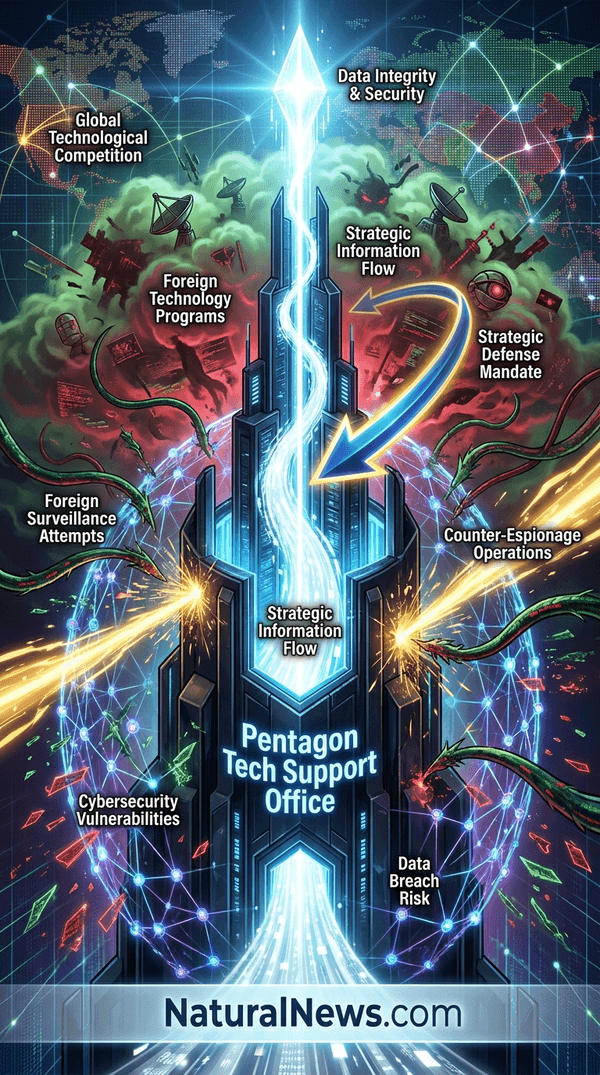
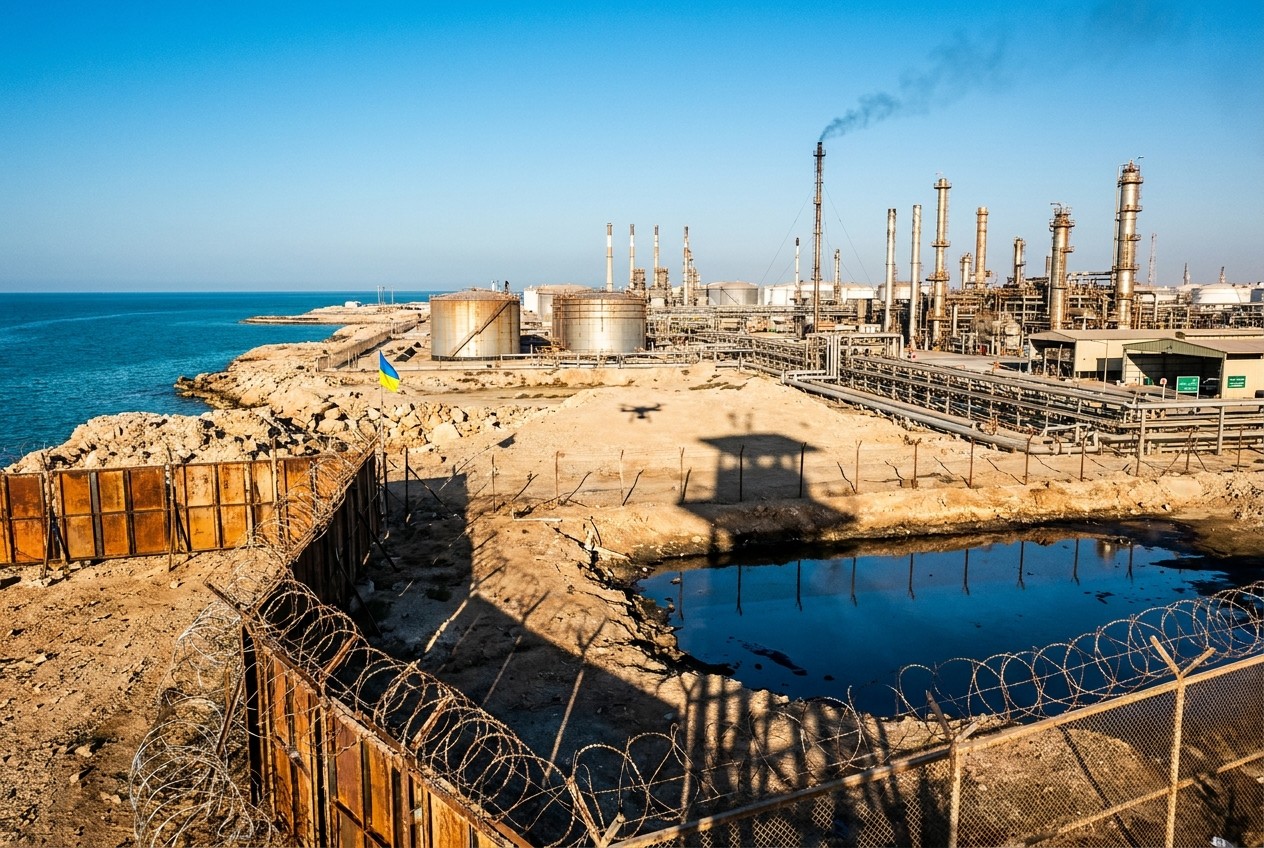
The creation of the said tech office signals the Defense Department’s intent to ramp up a range of aggressive covert activities abroad, according to officials and records. [1][2]
Origins and Leadership
TSO was created by reorganizing two classified Pentagon intelligence programs that have conducted smaller-scale clandestine tech-sabotage efforts since 2023, according to previously unreported Defense Department records and memoranda.
Mission and Operations
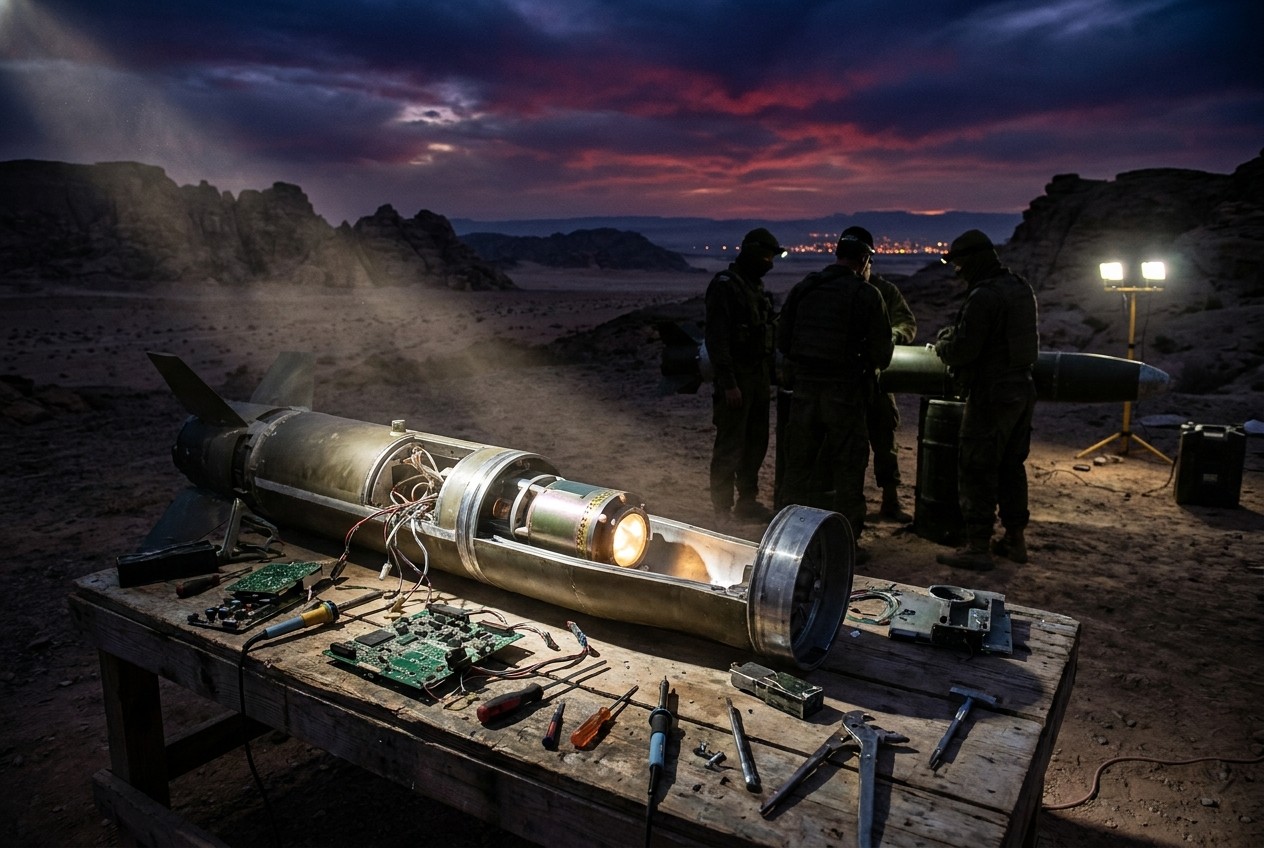
TSO lacks legal authority to conduct clandestine operations directly but works with senior military and intelligence officers to develop tools and strategies to disrupt adversaries’ access to critical defense technologies, officials said. Its staff includes engineers, special operators and intelligence officers; work ranges from building hacking tools to planning deception operations that trick adversaries into installing faulty components in foreign weapons platforms. [1][3]
A former U.S. intelligence official who worked closely with the agency said its goal is to “buy time or stop adversaries from developing technologies” that would most threaten the U.S. military in a major conflict. The office’s creation signals intent to expand covert activities abroad, potentially including cyberattacks, supply chain disruptions and disinformation operations, according to officials and records. [1][4]
The Pentagon has spent months quietly building an elite new tech agency to help covertly disrupt and sabotage foreign technology programs considered threats to American military superiority, according to the POLITICO report. [5][6]
Budget, Contractors and Bureaucratic Friction
It is unclear how much money has been allocated to TSO or whether it has issued new contracts, according to the report.
Special Operations Command and U.S. Cyber Command objected to creating the agency over concerns it would cut into their budgets, according to two former intelligence officials and one former senior national security official.
Oversight and Secrecy Concerns
Some officials said the secrecy could make it harder for Congress to identify potential impropriety in TSO’s operations or contracting; only a small number of congressional staffers have been read in, a current national security official said.
A current official said classified space creates “even more opportunities to hide or misdirect”; Bliss said the Defense Department values its relationship with Congress and will work with relevant committees.
The Pentagon denied on Thursday, Oct. 22, that it is expanding clandestine intelligence and technological sabotage operations against China and other foreign adversaries, rejecting separate reports describing a proposed undercover spy network and a newly established office focused on disrupting military technology development. [7]
Conclusion
TSO remains largely unpublicized and its specific operations are highly classified, according to the report.
The Pentagon did not respond to questions about whether it has requested additional funding or plans to seek long-term authorization from Congress, the report said. The office’s existence was first reported by POLITICO on Oct. 22.
References
The Pentagon is quietly building an elite new tech sabotage agency. https://www.politico.com/news/2026/10/22/technology-support-office-dod-tech-spyware-sabotage-01100327
Techmeme: Sources: The Pentagon quietly established the Technology Support Office (TSO), a sabotage agency for executing cyberattacks, supply chain disruptions, and more. https://www.techmeme.com/261022/p27
Sources: The Pentagon quietly establishes the Technology Support Office (TSO), an agency to execute covert sabotage, cyberattacks, and supply chain disruptions (Politico). https://upstract.com/x/588a1a47b5a33c7b
The Pentagon is quietly building an elite new tech sabotage agency. https://www.democraticunderground.com/10143747367
Pentagon Builds Secret Agency to Disrupt Rival Tech. https://politicalwire.com/2026/10/22/pentagon-builds-secret-agency-to-disrupt-rival-tech/
Pentagon Rejects Reports of Secret Spy Network and Technology Sabotage. https://yournews.com/2026/10/22/7235040/pentagon-rejects-reports-of-secret-spy-network-and-technology-sabotage/
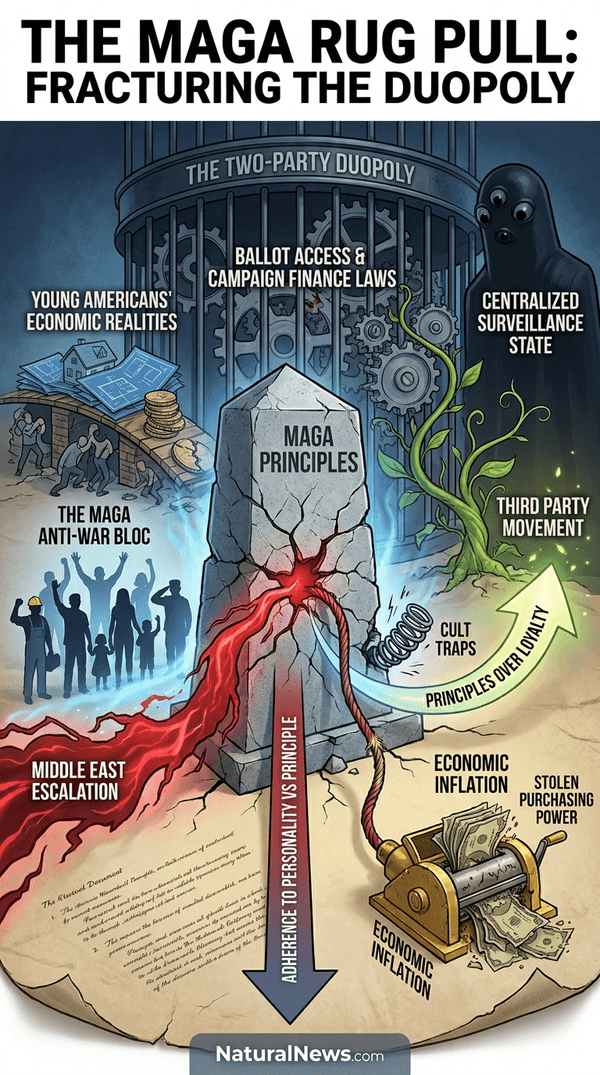
I have spent years as part of the MAGA coalition, and I can tell you plainly: the rug has been pulled. In my interview with Owen Shroyer, aired as fuel emergencies were being declared across seven states and Trump was poised for yet more war, the core warning was unmistakable — MAGA loyalty has collapsed because Trump abandoned the anti-war promises that put him in power [1]. That is not a footnote to the story; it is the story.
The anti-war vote is the decisive swing bloc in modern presidential elections, and Trump’s march to war with Iran has forfeited it.
I voted for Donald Trump twice. Now the Republican Party has failed as a vehicle for peace and liberty. A third-party or independent path to 2028 is not a luxury; it is the only honest road left, and the energy that once flowed into MAGA will now likely flow into an independent party movement.
MAGA Loyalty Was a Means, Not a Master
Owen Shroyer was a top MAGA influencer well before 2016, and he reminds us of something the obedience cult would rather forget: many of us were political activists before Trump even hit the stage. And we will still be here when Trump is long gone. True principles should never depend on who occupies the White House; the movement existed before Trump and will continue after him [2]. What we are watching now is supporters trapped in a political silo, confusing loyalty to a man with loyalty to principles — no new wars, fiscal conservatism, border enforcement, and deep-state accountability.
The MAGA movement was supposed to be a tool for saving the country, not an obedience cult that demands silence when its leader sells out. The coalition has become a protection racket for power rather than a movement based on principle.
When people like Owen and myself are branded traitors for refusing to cheer war and censorship, it proves the movement has inverted its own values. This is the pattern I have now seen on both the left and the right: a cyclical, cult-like obedience in which both sides swap which authority figure they worship while the script stays the same [3]. A movement that punishes its most principled members for telling the truth is no longer a movement. It is a personality cult with an email list.
The Anti-War Vote Is the Real Swing Bloc
Owen argues, and I agree, that the anti-war vote has decided every real presidential election since 2008. Obama rode it. Trump rode it in 2016, and he rode it again in 2024. The 2020 election, by contrast, was a con job — a coalition assembled on fear and rigged ballots, not on a genuine mandate for peace. The lesson is simple: whoever wins the anti-war bloc wins the White House.
Trump’s second term abandoned the “no new wars” cornerstone, and the price is now being paid at the pump. Endless war is an engine of corruption and control: the republic will not be conquered by an external enemy, but hollowed out from within by war without end [4]. That engine runs on the stolen purchasing power of working people.
The Republicans are likely to lose the midterms and the White House in 2028 unless Trump reverses course immediately. The recent farmer bailout and the gimmick giveaways are not solutions; they are proof that the GOP has turned to money printing and desperation [5]. Bribing voters with their own devalued dollars is what dying parties do. When a party cannot keep its promises, it starts buying its way out of the consequences.
Censorship and the Obedience Cult
We endured more censorship under Trump’s first term than under Biden, and the pattern is repeating. Meanwhile, X is no longer a free-speech platform but an AI data-gathering operation, and the same censorship apparatus is being rebuilt under new management. This is not a left-versus-right issue; it is a centralized-power issue.
If Democrats win Congress, they will persecute Trump loyalists — and they now know exactly where to look: Guilfoyle, Grinnell, Haba, Hegseth, the missing money, the insider trading, and the war crimes. The people who built the surveillance state always leave a trail, and the other team is happy to follow it. The Uniparty does not lose when one of its mascots falls; it simply prosecutes the opposition while excusing its own crimes of corruption.
What the two-party duopoly offers is a rotating cycle of persecution in which the same corrupt institutions survive every election. The lesson for 2028 is not to pick a better master. It is to stop kneeling.
The Third-Party Opening
The two-party system is brittle, and an independent presidential candidate could win Texas and throw the 270-electoral-vote board into chaos. That is not a fantasy; it is arithmetic. When both parties have betrayed their bases on war and censorship, the center of gravity moves to the exits. Elon Musk’s America Party originally registered as a real competitor to Republicans and Democrats, proof that the duopoly’s grip is cracking [6]. The opening is real, but it will close if it is filled with opportunists instead of principles.
Matthew McConaughey is not my ideological soulmate, but he illustrates the opening: a popular independent from Texas could break the duopoly and force a real debate on war, speech, and money. The point is not the man; it is the mechanism. A serious independent candidacy, built on anti-war and anti-censorship commitments, can do what decades of party reform have failed to do — make the Uniparty answer for its record.
A winning coalition will require sacrifices from left and right, including trading the war machine’s budget for domestic priorities and resisting foreign-interest gatekeeping in both parties. The MAGA movement is fracturing precisely because America-first conservatives are being targeted for putting U.S. sovereignty ahead of foreign interests [7]. Younger Americans face unaffordable housing, scarce capital, and a rigged economy, and neither party addresses the underlying cause: endless war and money printing. War is inflation. Money printing is war on savings. The two are essentially the same policy wearing different uniforms.
Conclusion: Principle Over Party
MAGA loyalists will soon have to explain why they tolerated treason, war, and censorship simply because Trump was the one doing it. The coalition that marched on Washington and cheered “America First” is now being asked to cheer for war with Iran and for the surveillance state that polices its own voters. That bill comes due soon — and the honest among us will not pay it.
Trump’s GOP was the last available vehicle for saving the country, and it has failed. The energy that once went into MAGA must now go into an anti-war, anti-censorship independent movement. The movement was always bigger than one man. The principles were always bigger than one party. The task now falls upon us to prove it.
I believe the path forward is to support candidates who oppose foreign wars, defend free speech, resist Zionist infiltration and reject the Uniparty — regardless of party label. Principle over party is not a slogan; it is the only survival strategy left for a republic that has been hollowed out by its own leaders.
Bright Videos News, Oct 22, 2026 – Fuel Emergencies Declared Across America as Trump Poised for MORE WAR + Interview with Owen Shroyer on the COLLAPSE of Political Party Loyalty. 2026-10-22T16:03:07.581Z.
Political Principles and Staying True to Your Values, an interview with Owen Shroyer. 2026-10-22T20:01:41.991Z.
The American Minds Bipartisan Brainwashing Cycle – NaturalNews.com, March 05, 2026. by NaturalNews.com
Tucker Carlson Exposes How Endless War Is An Engine of Corruption and Control on “Decentralize TV” – NaturalNews.com, July 15, 2026. by NaturalNews.com
The Implosion of MAGA How Trumps March to War Exposes a Movements Betrayal – NaturalNews.com, February 26, 2026. by NaturalNews.com
Elon Musk officially launches a political party The America Party to compete with Republicans and Democrats – NaturalNews.com, July 07, 2025. by NaturalNews.com
MAGA divided: Zionist influence sparks GOP backlash over Israel First politics – NaturalNews.com, December 02, 2025. by NaturalNews.com
Mike Adams (aka the "Health Ranger") is the founding editor of NaturalNews.com, a best selling author (#1 best selling science book on Amazon.com called "Food Forensics"), an environmental scientist, a patent holder for a cesium radioactive isotope elimination invention, a multiple award winner for outstanding journalism, a science news publisher and influential commentator on topics ranging from science and medicine to culture and politics.
A joint NSA advisory warns that Chinese state-backed hackers are actively probing U.S. critical infrastructure using AI-generated scripts targeting Siemens programmable logic controllers (PLCs).
The advisory, released August 19, identifies six most-targeted sectors: Critical Manufacturing, Energy, Water/Wastewater, Chemical, Food/Agriculture and Commercial Facilities.
The Russia-linked threat of cyberattacks on critical infrastructure remains elevated, though no incident is guaranteed, per evolving threat intelligence.
A separate October 8 advisory names China-based Integrity Technology Group as enabling botnets to target power grids, hospitals and law enforcement worldwide.
The Gunra ransomware-as-a-service operation has expanded to 2026, using double extortion tactics against governments, healthcare and utilities across multiple continents.
A real-time threat to the nation’s backbone
For the first time, U.S. intelligence agencies have confirmed that adversaries are actively scanning the nation’s most sensitive industrial control systems using artificial intelligence to write custom exploitation code. On August 19, a joint advisory documented how state-sponsored actors are conducting reconnaissance against U.S.-based industrial installations using AI-generated scripts disguised as legitimate monitoring tools. The advisory specifically warns of actors with ties to a cybersecurity company providing infrastructure for botnets and network intrusions. The threat is focused across six critical infrastructure sectors, and the advisory notes this is not theoretical—it is an active, ongoing threat with actors currently probing infrastructure.
AI weapons: How the attack chain works
Traditional cyber intrusions required months of manual code writing by highly skilled programmers. That barrier has collapsed. According to the joint advisory, threat actors are using open-source industrial automation libraries—specifically snap7.dll and python-snap7—combined with AI-assisted scripting to create custom tools that mimic legitimate operational technology monitoring software. These tools provide read/write access to Siemens S7 Series PLC memory, configuration data and ladder logic programs via the S7comm protocol.
The advisory warns that AI “dramatically reduces the technical expertise and time required to develop working ICS exploitation scripts and malicious tools.” Adversaries can now use internet scanning services to find exposed PLCs running outdated software, then quickly deploy AI-generated scripts to exploit them. The potential consequences: disruption of critical industrial processes, safety incidents, equipment damage, data compromise and cascading failures across interconnected systems.
From SolarWinds to Siemens PLCs
This advisory arrives amid a sobering historical pattern. The 2021 Colonial Pipeline ransomware attack demonstrated that a single digital intrusion could halt fuel delivery across the Eastern Seaboard. The 2015 Ukrainian power grid attack—widely attributed to Russian state actors—cut electricity to 225,000 customers. Today’s threat is more systemic: Rather than targeting a single pipeline or substation, adversaries are positioning themselves within the programmable logic controllers that form the backbone of modern industrial civilization.
The NSA’s August advisory explicitly calls this an “evolution in threat actor capabilities.” The shift to AI-generated tools means the barrier to entry for attacking power plants, water treatment facilities and chemical processors has dropped precipitously. This is compounded by the October 8 warning naming Integrity Technology Group, which the FBI describes as a “key enabler” of malicious cyber activity with ties to the Chinese government, using large-scale botnets to target government, critical manufacturing and healthcare organizations worldwide.
The Russia factor and Gunra ransomware
Separate but concurrent threats compound the danger. The Gunra ransomware-as-a-service program, first appearing in 2025 and expanding to RaaS operations in 2026, now targets 16 sectors including healthcare, financial services, transportation, utilities and government. The FBI observed Gunra actors collecting business-critical documents, databases, personally identifiable information and internal email communications before deploying encryption.
Meanwhile, evolving threat intelligence suggests the Russian government “may be considering potential cyber attacks on U.S. critical infrastructure.” While no incident is guaranteed, the convergence of Chinese state-sponsored AI-driven reconnaissance, Russian state interest and criminal ransomware operations creates an unprecedented threat environment. A comprehensive cyberattack halting power supply, transportation and hospital services could cause a crisis dwarfing the COVID-19 pandemic.
Defensive measures: What organizations must do now
The advisory provides a clear playbook. Organizations must prioritize patching known exploited vulnerabilities, disable external management capabilities on internet-exposed PLCs, and implement offline, immutable backups that are regularly tested. Network segmentation between information technology and operational technology systems remains critical. The NSA urges organizations to “review this advisory to be aware of the wide range of tactics used by these actors and implement recommended actions and mitigations.”
Key immediate steps recommended by the advisory:
Regularly update passwords and disable external management capabilities on industrial control systems.
Patch listed known exploited common vulnerabilities and exposures (CVEs) on edge devices.
Implement network segmentation isolating operational technology from corporate IT environments.
Hunt for signs of compromise using indicators provided in the advisory.
A call for action before the lights go out
The nation stands at a crossroads. The joint advisory is not a speculative warning—it documents active reconnaissance against the systems that power homes, treat drinking water and manufacture food. As one security analyst noted, “Even a little preparation can be helpful, just in case.” The principle that critical infrastructure should be off-limits to attack must be supported by action. Responsible countries must take measures against cyber criminals operating within their borders. Experts from allied nations have agreed to work together on specific understandings regarding off-limit targets. Today’s warnings, based on evolving threat intelligence, demand that every organization in the critical infrastructure sectors treat this as an operational priority. The crisis of a comprehensive cyber attack may not be guaranteed, but neither is the grace of avoiding one.
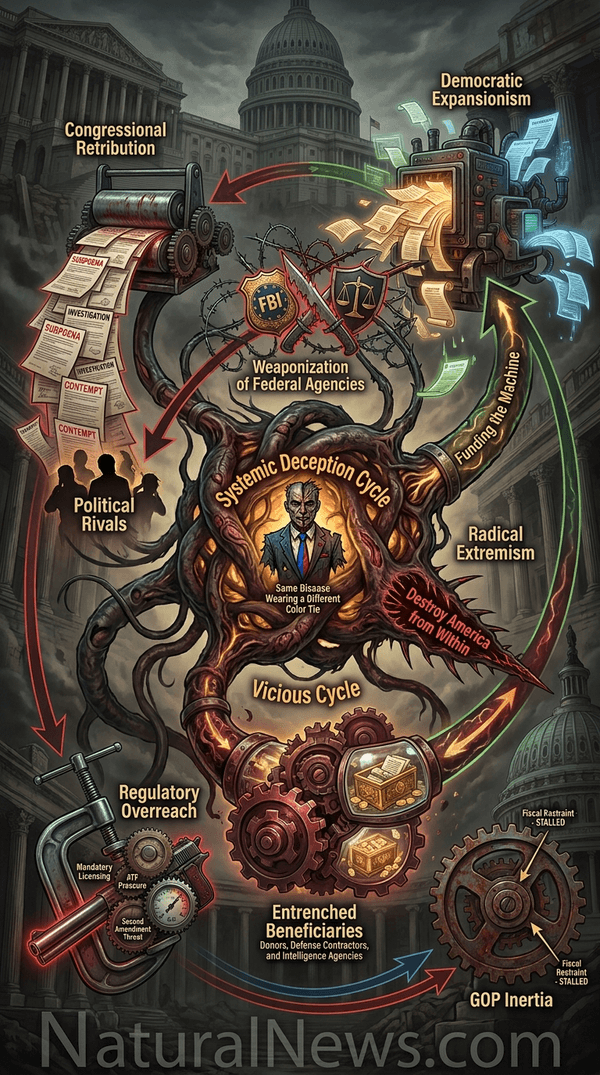
I am not here to defend the failed Republican Party. I am here to tell you the truth about what happens if the Democrats take back power. Like many Americans, I want the GOP to suffer a historic defeat for its betrayals of the people who put it in office. But I refuse to pretend the Democrats are the answer. They are not the lesser evil. They are the same disease wearing a different color tie.
The 2024 election gave Republicans control of the House and Senate, and Donald Trump was sworn in as President on January 20, 2025. Yet the GOP has done almost nothing to shrink government, end the wars, or restore liberty. That failure does not make the Democrats virtuous. It makes them hungry. If they return to power, they will expand government, weaponize federal agencies against their political enemies, censor speech, and double down on every failed policy that got us here.
I’ve watched this cycle repeat for decades. The Republicans campaign on freedom but then govern like Democrats. The Democrats campaign on compassion but then govern like tyrants. The only winners are the donors, the defense contractors, and the intelligence agencies that profit from perpetual crisis. The American people lose every single time.
The Weaponization of Congress: Investigations, Subpoenas, and Impeachment
Once Democrats control the House again, the subpoenas will fly like confetti. Every Republican official, every Trump appointee, every high-level conservative activist will be dragged before committees. The goal is not oversight. The goal is punishment. Congress will become a legal assault weapon aimed at anyone who dares to challenge the left’s narrative. As the left’s own rhetoric shows, the plan is not to govern but to destroy. Radical socialists have openly declared their goal to “destroy America from within” [1].
The playbook is already written. House Democrats will demand documents, testimony, and indictments. They will call for impeaching Trump again, and again, and again. If they win enough Senate seats, they will push for conviction. A conviction would require a two-thirds majority in the Senate, but Republicans have shown they will betray their own when the pressure is high enough.
This is not simply justice. This is political warfare. The Democrats know they cannot win on ideas, so they use the machinery of government to criminalize policy differences. They will turn the Department of Justice into a partisan weapon, the FBI into a secret police force, and the IRS into a harassment agency. The message will be clear: oppose us and we will destroy you.
Guns: The ATF, Suppressors, SBRs, and the Registration Trap
Democrats will pressure the ATF to reverse its current hands-off stance on suppressors and short-barreled rifles. The moment they regain power, they will likely go after FFL dealers with a vengeance. They will push for universal FFL transfers of ammunition, which is just a backdoor registry by another name. The goal is simple: make it impossible to buy a gun or ammunition without government permission.
Right now, there is a closing window. Buying a suppressor or an SBR with a concealed carry permit can bypass the FBI background check, leaving records only with local dealers. If those dealers go out of business, their records go to the ATF, however. That is an illegal, unconstitutional gun registry that already exists in practice. The Democrats will expand it. They will demand that all firearms be registered, all owners be licensed, and all transfers be recorded.
If Democrats ban SBRs, I will remove the stock on my SBR and attach an arm brace. Gun owners must prepare to adapt. The Constitution says the right of the people to keep and bear arms shall not be infringed. The Democrats do not care about the Constitution. They care about control. We must be ready to resist, legally and practically, to support our individual liberties when tyrants rule.
Censorship 2.0: Open Source AI and the Return of Big Tech Purges
Democrats will censor or outlaw open source AI because local models break the government’s monopoly on narratives about vaccines, medicine, history, and false flags. Open source AI runs on your own hardware, offline, beyond their reach. That terrifies them. As the government’s own allies have shown, they will silence anyone who questions their authority. When scientists and doctors spoke the truth about COVID vaccine dangers, they were banned from platforms and professionally ruined.
The censorship regime never ended. It only relaxed because the Trump administration threatened to deploy the FTC and DOJ against platforms. X, Facebook, YouTube, and LinkedIn slightly changed their policies (but never ended censorship) because they were scared of antitrust action and regulatory retaliation. The moment Democrats return to power, the content purge will resume. They will deplatform dissenters, blacklist alternative voices, and demonetize anyone who refuses to toe the party line. I know this firsthand. I have been systematically deleted from the primary tech platforms for the last decade, all engineered to destroy my income, freedom, and reputation.
I am urging readers to diversify onto Rumble, Brighteon, Bitchute, and independent AI tools like BrightAnswers.ai before the purge begins. Do not wait. The time to move is now. Decentralize your digital life. Stop relying on platforms that hate you. Build your own audience on systems that cannot be shut down by a phone call from a government bureaucrat. Brighteon.social is a free speech social media platform, an alternative to Facebook, Twitter or X. Use it. Support independent platforms. The only way to defeat censorship is to make it irrelevant.
No Lesser Evil: Trump, the Uniparty, and What Comes Next
Trump had a historic opportunity to achieve real reforms. He threw it away. He sold out to the Zionist donor class. He appointed warmongers, expanded the surveillance state, and presided over the same endless wars that he promised to end. The GOP does not really believe in small government either. Both parties are committed to printing money, waging wars, and eroding freedom. As Bill Maher, no conservative, admitted, “I’m not living in Communist America… I’ve read the quotes from the DSA platform, from their own mouths” [2]. Even a left-wing comedian can see what the Democratic Socialists of America really are.
If they return to power, Democrats will destroy America from within, and they will do it with the help of a uniparty that has already betrayed the people. The socialist left is not hiding anymore. They have said in their own words that their goal is to “destroy America from within” [1]. They have called for “war in the streets” and the end of capitalism [3]. They have rallied behind a Marxist streamer who told his followers to kill capitalists and “let the streets soak in their fucking red capitalist blood” [4]. This is not a fringe element. This is the future of the Democratic Party.
So prepare for tough times ahead. Decentralize. Stop pleading with politicians who serve their donors, not you. Stock food, water, ammunition, and medicine. Learn to grow your own food. Move your money into gold and silver. Build community with people you trust. The government will not save you. The politicians will not save you. Only you can save you. The storm is coming. Get ready.
Watch all my video interviews at Decentralize.TV for wisdom on decentralized living that protects and restores your freedom.
References
Meet The New Democratic Party: Socialists Say The Quiet Part Out Loud, Want To “Destroy America From Within”. 2026-07-07T16:00:00.000Z. https://www.zerohedge.com/political/meet-new-democratic-party-socialists-say-quiet-part-out-loud-about-destroying-america
“I’m Not Living In Communist America”: Bill Maher Blasts Marxist Dems, May Vote For Vance. 2026-07-21T12:59:08.000Z. https://modernity.news/2026/07/21/im-not-living-in-communist-america-bill-maher-blasts-marxist-dems-may-vote-for-vance/
“You Better Get Ready For… War”: Socialists Call For “War In The Streets” & The End Of Capitalism. 2026-09-09T20:20:00.000Z. https://www.zerohedge.com/political/you-better-get-ready-war-socialists-call-war-streets-end-capitalism
Democratic Party Panics As Top Lieutenants Move In Lockstep To Denounce Hasan Piker. 2026-08-26T15:45:00.000Z. https://www.zerohedge.com/political/democratic-party-panics-top-lieutenants-move-lockstep-denounce-marxist-hasan-piker
Mike Adams (aka the "Health Ranger") is the founding editor of NaturalNews.com, a best selling author (#1 best selling science book on Amazon.com called "Food Forensics"), an environmental scientist, a patent holder for a cesium radioactive isotope elimination invention, a multiple award winner for outstanding journalism, a science news publisher and influential commentator on topics ranging from science and medicine to culture and politics.
FBI has issued urgent warnings about four specific types of election-related fraud schemes targeting Americans.
Scammers are using AI-generated voices, images and messages to impersonate candidates, campaigns and government entities.
Campaign investment pool scams and fake PACs are defrauding voters of campaign contributions.
Voter registration schemes are stealing personally identifiable information through fake registration pages.
The DOJ has already charged multiple individuals with illegal voting and election fraud in recent months.
The threat: AI-powered fraud exploiting the 2026 election cycle
In October 2026, as Americans prepare for the November midterm elections, the Federal Bureau of Investigation has issued a stark warning: Sophisticated scammers are exploiting the democratic process to steal money and identities. The FBI’s public service announcement, released Oct. 15, details how fraudsters are using artificial intelligence to create highly realistic impersonations of political candidates, campaigns and government agencies to deceive voters nationwide. These schemes, which have already targeted victims in multiple states, represent an unprecedented threat to both election integrity and personal financial security.
Four schemes targeting voters
The FBI has identified four primary fraud methods currently circulating. The Campaign Investment Pool Scheme promises victims guaranteed returns on campaign contributions by investing in a candidate pool that supposedly pays out after election victories. Victims are pressured to recruit others, creating pyramid-style structures that enrich only the scammers.
The Political Action Committee Scheme, known as “ScamPACs,” tricks donors into believing they are contributing to legitimate political action committees. In reality, the funds go directly to fraudsters with no connection to the candidates.
Two additional schemes target voters online. The Online Purchase Scheme sells political merchandise that is never delivered, while the Voter Registration Scheme sends fake text messages or emails claiming the recipient is not registered to vote. The fake link directs victims to fraudulent registration pages designed to steal personally identifiable information.
AI amplifying fraud capabilities
The FBI specifically warned that artificial intelligence tools now allow scammers to generate “highly realistic voices, images and written messages that impersonate candidates, campaigns, government entities and trusted contacts.” This technology makes fraudulent communications nearly indistinguishable from legitimate ones, increasing the likelihood of financial loss and identity theft.
“The realism makes these schemes harder for victims to detect,” the FBI stated in its Oct. 15 alert.
Recent prosecutions and legal action
The Department of Justice has already taken action against election-related fraud. On Oct. 5, four Philadelphia residents were charged with voting illegally in the 2024 elections despite being noncitizens, facing up to one year in prison. On Oct. 12, the DOJ announced charges against 16 individuals, including 14 noncitizens who allegedly cast illegal ballots.
In a separate case, two North Macedonians were charged with creating a fictitious financial instrument called “Trump Bucks,” marketed as affiliated with former President Donald Trump’s 2024 reelection campaign, defrauding hundreds of thousands of dollars from victims, many of them senior citizens.
Protecting yourself: FBI recommendations
The FBI recommends voters take several precautions: be wary of unsolicited communications, remember campaign donations are not investments that generate returns, verify PAC registrations through the Federal Election Commission website, and check voter registration only at the official Vote.gov website. Victims should report scams to local FBI field offices or the Internet Crime Complaint Center.
Vigilance as the first defense
The convergence of election cycles with advanced AI technology creates dangerous opportunities for fraud that threaten both personal finances and faith in democratic processes. With the FBI warning that these schemes have already exploited previous elections and are now targeting the 2026 midterms, Americans must approach all election-related communications with healthy skepticism. The documented cases of illegal voting and fraudulent fundraising underscore that election integrity requires constant vigilance from both law enforcement and the public.
The agreement followed a meeting of G7 finance ministers and central bank governors held on the sidelines of the International Monetary Fund’s annual gathering in Bangkok. Katayama said G7 finance deputies had discussed the idea of tabletop exercises involving frontier AI, with the proposal subsequently approved at the ministerial level [1].
The plan will feature simulations developed by G7 finance authorities to test how governments and financial regulators respond to cyberattacks powered by advanced AI systems [2]. A Japanese finance ministry official who attended the leaders’ meeting told reporters on Oct. 15 that the exercises will test how financial authorities respond to AI-driven cyberattacks.
IMF Cites Risk to Confidence and Markets
The agreement came after the IMF warned this week that a major AI-enabled cyberattack on financial institutions or critical services could undermine confidence, which would then ripple through global markets. In an Oct. 13 blog post, the IMF stated that frontier AI models could accelerate both attacks and defenses, increasing the importance of cyber resilience, incident reporting, crisis preparedness and oversight of critical third-party providers.
The IMF reported that in the reported cyberattack cases so far this year, software providers had almost no time to patch vulnerabilities before attackers exploited them, compared with close to 300 days in 2021. That compression underscores the speed at which AI-enabled tools can identify and leverage weaknesses in software.
A separate IMF blog post published Oct. 15 said AI adds urgency by accelerating vulnerability discovery, exploitation and attack, compressing the attack-defense cycle to machine speed. The post stated that a major attack affecting payments, trading or deposit access could cause immediate losses and undermine confidence in the financial system.
The IMF recommended strengthening cyber defense capabilities, including testing financial institutions’ resilience.
Bank of England Says Recovery Planning Needed
Bank of England Deputy Governor Sarah Breeden said Thursday that the institution is working with banks to help prepare to recover from AI-empowered cyber breaches. Speaking at the annual meeting of the Institute of International Finance in Bangkok, Breeden said AI poses a systemic risk to financial systems through technological advancement.
Breeden said it is no longer enough for financial bodies to assume cyberattacks will not get through, and that recovery options are required if institutions are hit. She described cyber as the thing that keeps her up at night and said she worries most about waking up to find a systemically important bank or core infrastructure paralyzed.
Her comments align with the IMF’s emphasis on crisis preparedness and incident reporting. The Bank of England’s work with banks on recovery planning reflects a shift from prevention alone toward resilience and continuity planning in the event of a successful breach.
Oversight of Third-Party Providers Draws Attention
The IMF blog posts referenced oversight of critical third-party providers as a component of cyber resilience. That focus reflects concerns that attackers may target software suppliers or other outside vendors to reach financial institutions indirectly.
Reported cases this year indicated attackers exploited vulnerabilities faster than providers could patch them, according to the IMF. The IMF’s Oct. 15 post described a compressed attack-defense cycle operating at machine speed. The Bank of England said it is working with banks on recovery planning rather than assuming breaches will be prevented.
Next Steps Remain to Be Defined
The exercises would involve G7 finance ministries and central banks and could extend to private financial institutions, according to the Japanese finance ministry official. No timetable, format or list of participating institutions for the exercises was announced in the statements reviewed.
The agreement was announced during the IMF’s annual gathering in Bangkok, where finance ministers and central bank governors met. The plan will feature simulations developed by G7 finance authorities to test how they can respond to AI-driven cyberattacks [2].
Reuters contributed to the report.
References
G7 Plans Exercises to Counter AI Cyber Attacks – StratNews Global. https://stratnewsglobal.com/technology/g7-plans-exercises-to-counter-ai-cyber-attacks/
G7 to launch exercises to guard against AI cyber attacks. https://www.reuters.com/world/asia-pacific/g7-launch-exercises-guard-against-ai-cyber-attacks-2026-10-16/
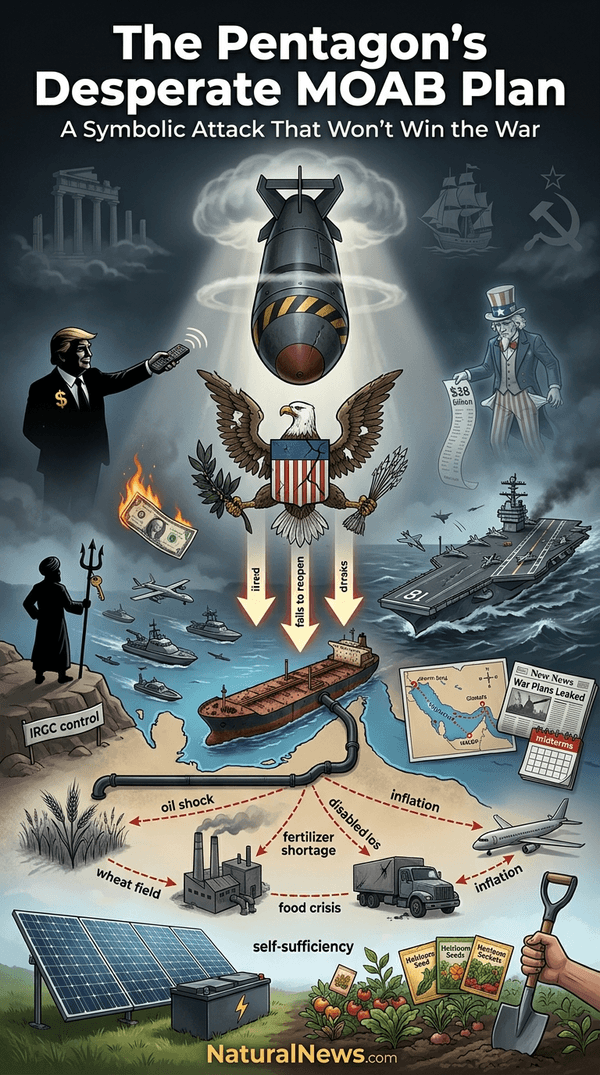
The corporate media is at it again, leaking war plans to manufacture consent for another escalation in the Middle East. The Pentagon’s official response was predictably robotic: “The Department of War plans for a wide range of operational scenarios to execute Presidential and Secretary level direction and to ensure mission success in any operational environment” [1].
I have learned to treat these anonymous leaks with extreme skepticism, but I also recognize they often serve as trial balloons to gauge public reaction before a controversial strike. Given Trump’s desperate need for an exit from a war he promised to avoid, I believe this MOAB plan is not a path to victory but a desperate, symbolic gesture meant to save face. The truth is that Iran controls the Strait of Hormuz, the US has already lost this war, and dropping a big bomb on some dusty military site will not change that reality one bit.
We’ve all seen this movie before. The Pentagon develops plans, the media leaks them, and the public is told that a massive show of force will bring the enemy to their knees. The MOAB is a weapon designed for a different era, a psychological weapon as much as a physical one. Its use now would be an admission that conventional military power has failed to achieve political objectives. I believe we are watching an empire in decline, thrashing about with expensive toys while its actual power evaporates.
The fact that this is even being discussed shows how disconnected the Washington establishment is from reality. They think they can bomb their way to a favorable outcome, but the damage has already been done. The war has cost the US $38 billion through Aug 1, according to a Congressional Budget Office estimate, and has resulted in strategic inventory shortfalls and industrial base bottlenecks for munitions resupply [2]. Dropping a MOAB will not reopen the Strait of Hormuz, it will not stop Iran’s proxies from attacking our bases, and it will not restore the illusion of American invincibility. It will only serve as a propaganda victory for Iran and a rallying cry for their allies.
You cannot bomb a civilization into submission. You can only destroy infrastructure, kill innocent people, and create new enemies for generations to come.
The MOAB: A Useless Gesture That Won’t Change Anything
Let’s be clear about what the MOAB actually is. It is a roughly 20,000-pound conventional bomb, the largest non-nuclear weapon in the US arsenal. The GBU-57 Massive Ordnance Penetrator is the weapon designed for that mission, and even that has limited effectiveness against hardened targets like Fordow. The MOAB is designed to clear minefields and create psychological shock, not to destroy strategic infrastructure. So what is the point of dropping it on Iran? The only logical answer is that it is for Trump’s ego. He wants a mushroom cloud on television, a dramatic visual that he can use to claim victory and distract from his failures. The Pentagon has reportedly even considered using nuclear weapons against Iran’s nuclear facilities [3].
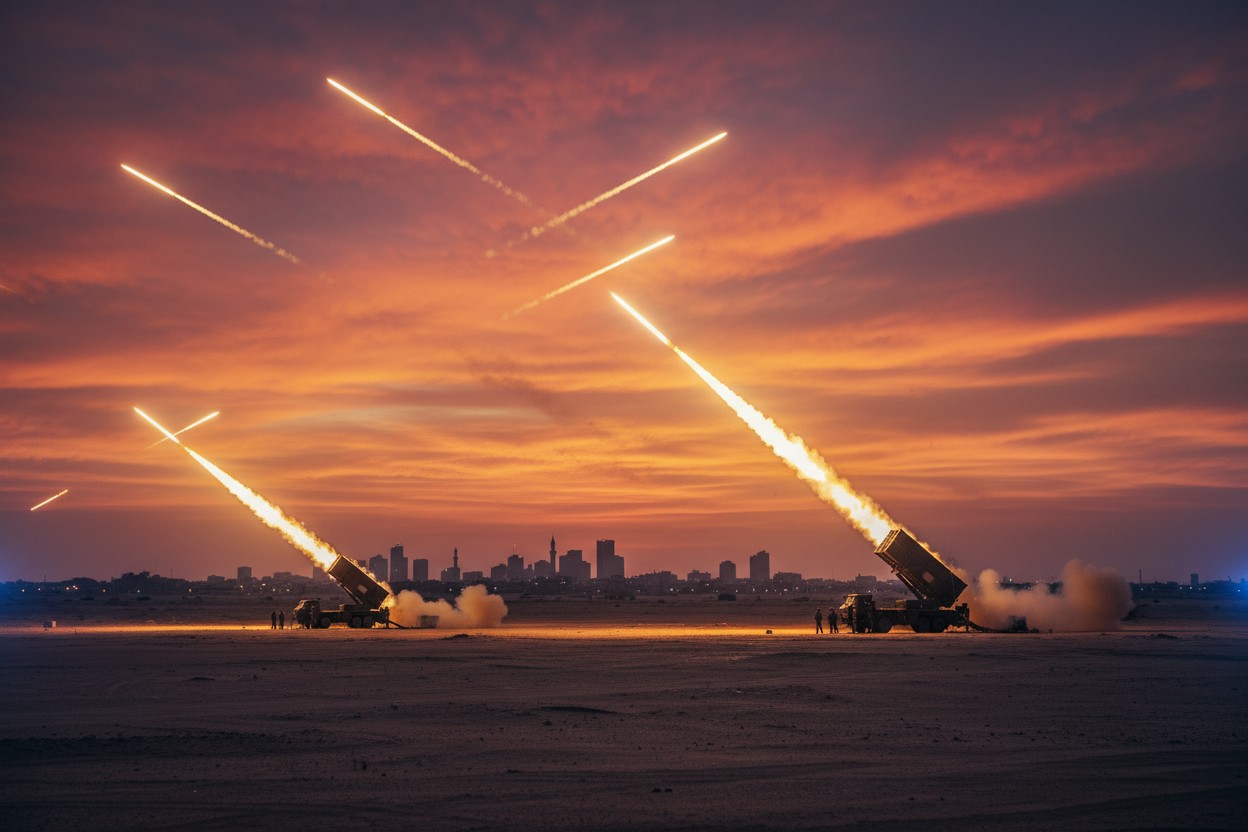
Even if the MOAB causes significant damage, it will not defeat Iran or open the Strait of Hormuz. The Iranian military is dispersed, hardened, and experienced in asymmetric warfare. They have survived years of sanctions, assassinations, and military strikes. Their leadership knows that they can absorb a hit and retaliate in ways that hurt the US far more than a bomb hurts them. Iran has widened its maritime operations by shifting attacks beyond the narrow confines of the Strait of Hormuz into the broader waters of the Persian Gulf and the Gulf of Oman, with the IRGC possibly striking two commercial ships outside traditional chokepoints, including a vessel off Qatar and a Very Large Crude Carrier near the United Arab Emirates [4]. Dropping a MOAB will not change that equation. It will only confirm to the world that the US is out of ideas and that the only tool left in its toolbox is brute force, which is not working.
I have long argued that the US military is not as capable as it pretends to be. We have seen the reports of depleted interceptor inventories, the inability to sustain operations, and the growing concerns about munitions shortages [2][5]. The USS Gerald R. Ford has been a disaster, plagued by cost overruns and technical problems. Our generals are warning that we are overstretched [6]. In this context, the MOAB is not a sign of strength; it is a sign of weakness. It is a weapon that we use when we have run out of options. It is a symbol of a declining empire, not a rising one. The only thing this bomb will accomplish is to accelerate our decline by provoking Iran to further escalate while convincing the rest of the world that we are a reckless power that cannot be trusted.
The Strait of Hormuz: Iran’s Chokehold on the Global Economy
The reality that the Pentagon does not want to admit is that Iran already controls the Strait of Hormuz. The IRGC has claimed complete control over this strategic waterway, and they have the missiles, drones, and naval assets to enforce that claim [7]. The US Navy has effectively retreated from the area. The deployments come as Washington is sending more warships and troops to the Middle East ahead of a potential resumption of large-scale strikes against Iran after the midterms, according to an AP report [8].
This is not a temporary condition; it is a permanent shift in the balance of power. The Iranians have figured out how to leverage their geography and asymmetric capabilities to neutralize American naval dominance. They can shut down the Strait whenever they want, and there is nothing we can do about it.
Iran will use this leverage to charge tolls, deny passage to US allies, and control the flow of oil to the global economy. They have already demonstrated that they are willing to attack tankers and infrastructure, and they have warned American oil and gas companies that they are exposed [9]. The global supply shock that began when the war started will continue and likely worsen. Oil prices will remain high, and Western economies will bear the brunt of the pain.
Meanwhile, Iran’s allies, like China and Russia, will get preferential access to cheap oil. This is the new world order. The US started this war to prevent Iran from dominating the region, but the only thing we have accomplished is to accelerate Iran’s rise and our own decline.
The long-term economic damage is going to be catastrophic. We are not just talking about higher gas prices for a few months. We are talking about a permanent restructuring of the global energy economy. Fertilizer costs will skyrocket, leading to food shortages and famine in vulnerable regions. Diesel and jet fuel will become prohibitively expensive, disrupting supply chains and grounding airlines. The middle class in America will be wiped out by inflation and unemployment. All of this is the direct result of a war that we did not need to fight and cannot win. The Strait of Hormuz is the choke point that will strangle the global economy, and Iran holds the leash.
Why Iran Was Always Going to Win
I have said from the beginning that Iran was always going to win this war. This is not a controversial statement if you understand geography, history, and culture. Iran is a massive country with rugged terrain that favors defenders. It has a population of 90 million people who are proud of their history and willing to fight for their homeland. You cannot conquer a country like that with bombs. You cannot dismantle a civilization with airstrikes. The idea that the US could waltz in and impose its will is absurd. It ignores the lessons of history, where numerous empires have tried and failed to subdue this region.
The US Navy has been now been defeated. Our ships cannot sail safely in the Persian Gulf. Our aircraft carriers are hiding far from the coast. Eighty-one U.S. military aircraft, helicopters, and drones have been lost or damaged in the conflict with Iran [10]. Our munitions stockpiles are dangerously low, with interceptor missiles being expended at an unsustainable rate [2].
Effectively, Israel has also been defeated. Its military is bogged down in Gaza, its economy is struggling, and its reputation is in tatters. The US cannot rebuild its navy overnight. The industrial capacity is gone. We cannot manufacture ships and missiles fast enough to replace what has been lost. The USS Gerald R. Ford is a disaster that costs billions and still cannot perform its primary functions. This is the reality of American decline, and no amount of bombing can reverse it.
Trump’s gift of betrayal is that we are paying the price for his Netanyahu-driven war. He promised to end wars, but he started one with Iran to please his Zionist donors and foreign puppetmasters. Now, he is trying to bomb his way out of a mess he created. The American people are waking up to the fact that they were lied to, that their sons and daughters are dying for no reason, and that their economy is being destroyed to protect the interests of a foreign power. I believe the only way out of this is to stop fighting, withdraw our troops, and accept the reality that Iran is a regional power that cannot be bossed around. The MOAB will not save Trump or the US. It is a desperate act that will only accelerate our decline.
Preparing for the New Reality: Decentralize and Survive
The system is not going to return to normal. I have been warning about this for years. The disruption of the Strait of Hormuz is the trigger for a global economic collapse that will be unlike anything we have seen before [11]. The supply chain is breaking down. Food, fuel, and fertilizer are becoming scarce and expensive. We are facing the real possibility of famine, social unrest, and even cannibalism in the worst-case scenarios [12]. This is not fearmongering; it is a realistic assessment of the trajectory we are on.
The people who assume that the government will bail them out are going to be sorely disappointed. The government is broke, and the only thing it can do is print more money, which will inevitably lead to hyperinflation and the destruction of the dollar.
The only way to survive what is coming is to decentralize your life. This means producing your own food, generating your own power (as much as you can manage), and reducing your dependence on the grid. You need to be off-grid. You need solar panels, batteries, and an electric vehicle that can be charged by the sun. You cannot rely on diesel or gas because those may become rationed, unavailable or unaffordable. You need to store food, water, and medical supplies. You need to learn how to garden, how to fix things, and how to defend yourself. The goal is to be self-sufficient and independent from the system that is collapsing around us.
You also need to stay informed. The mainstream media is lying to you about the war, the economy, and the collapse. They are telling you that everything is fine while the world burns. You need to bypass them and get your information from alternative sources. You need to have backup communication systems like satellite phones in case the internet goes down. The key is to build a community of like-minded people who can help each other. You cannot do this alone. But you also cannot rely on the government or the system. You have to take responsibility for your own survival and your own future.
The Only Path Forward: Accept Reality and Prepare
The US has lost the war with Iran, and it is not going to get a favorable outcome. We need to accept this reality. Iran won. They control the Strait of Hormuz, they have the strategic initiative, and they have the will to endure hardship. We do not. We are facing decades of economic pain. The dollar is headed toward collapse, and our standard of living is going to decline dramatically. There is no going back to the way things were.
The unipolar world order that existed after the fall of the Soviet Union is over. We are entering a multipolar world where power is distributed among several nations, and the US is no longer the hegemon. This is a painful adjustment, but it is a necessary one.
The MOAB bombing, if it happens, will not save us. It will not change the outcome of the war. It will only be a symbolic act of violence that kills innocent people, destroys infrastructure, and confirms to the world that the US is a rogue state. It is a desperate act that will accelerate our decline. We need to stop pretending that we can bomb our way to a better future. We need to stop listening to the generals and politicians who are sending our young people to die for their failed policies. We need to reject the propaganda and embrace the truth. The only way forward is to accept reality and start preparing for the new world we are entering.
To survive all this with your sanity intact, focus on your own health, wealth, and freedom. Grow your own food, filter your own water, and take care of your body. Stack gold and silver to protect your wealth from inflation [13]. Learn skills that will be useful in a world without cheap energy and abundant resources. Build a network of trusted friends and neighbors. Stay informed and stay vigilant.
Also, support alternative media and independent journalists who are telling the truth. We are in for a rough ride, but we can make it through if we are smart and prepared. The old world is dying, and a new one is being born. It is up to us to make sure that we survive the transition and build a better future for our children. The choice is ours. We can either keep following the herd over the cliff, or we can choose to prepare and survive.
References
White House prepares plans to use ‘mother of all bombs’ on Iran, says official. 2026-10-15T20:37:43.000Z. https://www.middleeasteye.net/live-blog/live-blog-update/white-house-prepares-plans-use-weapon-dubbed-mother-all-bombs-iran
US Interceptor Inventory Took Another Big Hit Last Week, As CBO Pegs War Cost At $38 Billion+. 2026-09-16T21:20:00.000Z. https://www.zerohedge.com/geopolitical/us-interceptor-inventory-took-another-big-hit-last-week-cbo-pegs-war-cost-38-billion
The US military has developed new strike plans that …. https://www.facebook.com/WISHNews8/posts/the-us-military-has-developed-new-strike-plans-that-include-potentially-using-th/1541558998017951/
Iran Expands Tanker Assaults Beyond Narrow Confines Of Hormuz In Rare Escalation. 2026-10-08T13:45:00.000Z. https://www.zerohedge.com/geopolitical/iran-expands-tanker-assault-beyond-narrow-confines-hormuz-rare-escalation
Uneasy Pause In U.S.-Iran Fighting Holds Amidst Growing Concerns Over Interceptor Stockpiles. 2026-07-27T21:26:21.000Z. https://www.twz.com/news-features/uneasy-pause-in-u-s-iran-fighting-holds-amidst-growing-concerns-over-interceptor-stockpiles
Trump Threatens Further Strikes on Iran as U.S. Generals Warn of Overstretched Forces. 2026-09-17T06:00:00.000Z. https://www.naturalnews.com/2026-09-17-trump-threatens-further-strikes-iran-overstretched-forces.html
Oil Rises After MidEast Attacks Spread And Escalate, Stoking Supply Fears. 2026-10-11T22:15:00.000Z. https://www.zerohedge.com/energy/oil-rises-after-mideast-attacks-spread-and-escalate-stoking-supply-fears
U.S. Deploys Additional Patriot Missiles to Saudi Arabia, Qatar as Trump Weighs Renewed Iran Attacks: Report. 2026-10-04T06:00:00.000Z. https://www.naturalnews.com/2026-10-04-us-deploys-missiles-to-saudi-arabia-qatar.html
Iran Official Warns US Oil and Gas Companies After Flare-Up in Conflict. 2026-09-07T21:17:20.000Z. https://www.ntd.com/iran-official-warns-us-oil-and-gas-companies-after-flare-up-in-conflict_1171227.html
US Military Totals 81 Aircraft and Drones Lost or Damaged in Iran War, Report Shows. 2026-10-07T20:01:37.524Z. https://theepochtimes.com/world/us-military-totals-81-aircraft-and-drones-lost-or-damaged-in-iran-war-report-shows-6100710
No One is Ready for the Civilizational Collapse That’s Coming – NaturalNews.com, July 22, 2026. by NaturalNews.com
A new translation of the Bible containing the Old and New Testaments. by Unknown
2025 11 25 DCTV Interview with Chris Sullivan and Matt Smith . by Mike Adams
Mike Adams (aka the "Health Ranger") is the founding editor of NaturalNews.com, a best selling author (#1 best selling science book on Amazon.com called "Food Forensics"), an environmental scientist, a patent holder for a cesium radioactive isotope elimination invention, a multiple award winner for outstanding journalism, a science news publisher and influential commentator on topics ranging from science and medicine to culture and politics.
The Justice Department charged 14 people, arrested two U.S. nationals and seized about 187 laptops and KVM devices in coordinated Ohio and Texas actions.
The indictment alleges a scheme running from 2019 to about July 2025 that touched more than 70 companies and generated roughly $3 million.
Under Operation Lonestar Roundup, the FBI searched more than 40 known or suspected laptop farms in Texas.
U.S.-based facilitators are the linchpin, and the Justice Department says North Korean workers are recruiting more of them.
The charges are allegations, and every defendant is presumed innocent until proven guilty.
The Justice Department said the coordinated actions unfolded in two theaters. In the Northern District of Ohio, prosecutors announced a four-count indictment alleging wire fraud, money laundering and identity theft. It names two U.S. nationals, Michael James Bostelle of Pennsylvania and Juan Cecilio Pena Carrillo of Texas, along with 10 China-based defendants, while two more defendants remain under seal. In Texas, the FBI searched more than 40 residences between Sept. 21 and Sept. 25 that were known or suspected to operate as laptop farms, under a banner called Operation Lonestar Roundup.
The indictment sketches a long game. From 2019 to about July 2025, North Korean information technology workers allegedly won remote jobs with stolen or fabricated identity documents, then hid behind virtual private networks and proxy infrastructure to look like Americans working on American soil. Victim employers sat in health care, communications, cyber support, retail and manufacturing across Ohio, 16 additional states and the District of Columbia. Prosecutors put the haul at roughly $3 million, believed to have flowed to sanctioned entities controlled by Pyongyang. For a government boxed in by sanctions, a remote paycheck is quieter than a missile test, and far harder to spot.
Inside the laptop farm, where American doorsteps become Pyongyang’s front line
A laptop farm is a simple piece of deception with a brutal payoff. A company ships a work laptop to what it believes is a new hire’s home. A U.S.-based facilitator receives the machine, keeps it powered on, installs remote-access software and lets the real worker log in from far away. The FBI’s public service announcement says facilitators have also set up financial accounts, created profiles on job search sites, helped fund tools such as artificial intelligence models and attended virtual interviews on behalf of the workers. Some facilitators take a share of the proceeds.
That detail should trouble every hiring manager in the country. The facilitators are not phantoms. They are people with mailboxes and driveways, living inside the same economy whose companies they allegedly helped to fleece. The FBI has described such helpers as both witting and unwitting, a distinction that matters in court but hardly matters to the employer whose network was just opened to a stranger. U.S. Attorney Ryan Raybould of the Northern District of Texas declared, “we will not allow enemies of the United States to exploit our businesses.”
None of this arrived without warning. The FBI, Treasury and State departments issued a joint advisory in May 2022, which warned that individual workers can earn up to $300,000 a year and that collectively they generate hundreds of millions of dollars annually for entities such as North Korea’s Ministry of Defense. The Office of the Director of National Intelligence followed in July 2023, and Washington and Seoul issued joint guidance that October. The FBI has since published public service announcements in May 2024, January 2025, July 2025 and again with Tuesday’s announcement. The Justice Department’s DPRK RevGen: Domestic Enabler Initiative has already announced actions in June 2025, November 2025, April 2026 and May 2026. Four years of alarms, and still an alleged scheme that ran for roughly six.
A threat that keeps adapting
The adversary is evolving faster than the defenses. CrowdStrike, the cybersecurity firm that tracks this network under the name Famous Chollima, reported in 2025 that its threat hunters investigated more than 320 cases of North Korean operatives landing remote jobs in a single year, a 220% jump in activity. Adam Meyers, the firm’s head of counter adversary operations, said, “We see them almost every day now.” The firm also found operatives leaning on generative artificial intelligence at every stage, including while juggling three or four jobs at once.
Pressure produces adaptation. The Justice Department says North Korean workers are increasingly recruiting American facilitators to counter better private-sector detection and tougher enforcement, hiring them for a wider range of tasks and sometimes subcontracting whole jobs to third-party foreign nationals. The stakes also extend beyond salaries. The department warns that workers posing as legitimate employees have committed data extortion and exfiltrated proprietary and sensitive data from U.S. companies. A paycheck funneled to Pyongyang is the visible theft. The invisible one is a stolen trove of source code, customer files and internal secrets walking out the digital back door.
BEIJING — High healthcare costs are a big factor driving people in China to save, rather than spend, their money, the International Monetary Fund pointed out in a new book titled "Toward a New Economic Growth Model for China."