

[ad_1]
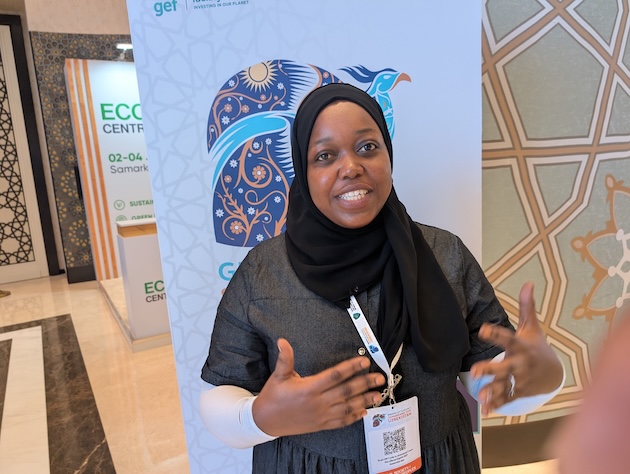
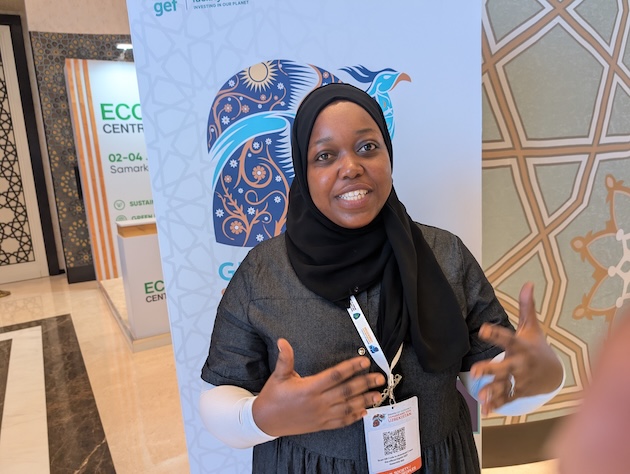
SAMARKAND, Uzbekistan, June 5 (IPS) – In the opulent conference halls of Samarkand, far from the drought-hit fields of East Africa, Tanzanian delegates have warned that unless global climate finance is directed to rural communities, environmental destruction will only accelerate, deepening the vulnerability of those least responsible for the crisis.
For generations, farmers and pastoralists across Tanzania have relied on predictable rainfall patterns to decide when to plant, graze or harvest water. Today, that certainty is slipping away.
Rains come too late or fall violently. Rivers that once flowed year-round are running dry. Pastures wither before cattle can graze, while trees vanish into charcoal kilns.
Climate change and environmental destruction have become a daily reality, measured in failed harvests, shrinking forests and increasingly hard choices for survival.
Against this backdrop, Tanzania is calling for stronger international support under the Global Environment Facility (GEF) to cushion vulnerable communities from climate shocks.
Meeting in Samarkand for the GEF-9 replenishment discussions, Tanzanian civil society experts are urging a shift in global climate finance – from high-level pledges to practical investments that directly benefit rural communities.
They argue that without faster and more direct support, countries like Tanzania – where livelihoods depend heavily on forests, land and water – will struggle to withstand recurring droughts, deforestation and food insecurity.
In Tanzania alone, nearly 400,000 hectares of forest are lost each year, and experts say ecosystem survival is now closely tied to whether international funding can effectively reach the communities managing those landscapes.
Africa hosts some of the world’s richest biodiversity, but it is also facing mounting environmental pressures driven by climate change and land degradation.
In Tanzania, where livelihoods remain heavily dependent on natural resources, the challenge is not only environmental but economic – how to sustain food production, energy access and rural incomes under increasing climate stress.
Through three decades of engagement, the Global Environment Facility (GEF) has supported countries, including Tanzania, in addressing climate threats and shaping more sustainable development pathways.
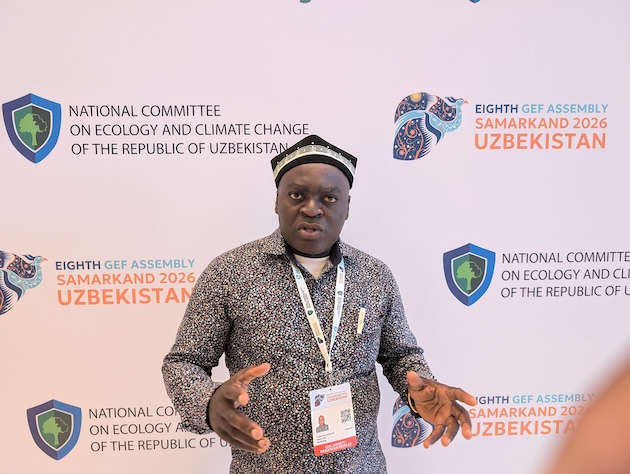
Speaking on the sidelines of the Assembly, Tumaini Charles Marijani, Regional Focal Point for the GEF Civil Society Organisation Network, said climate policy must be grounded in livelihoods.
“Climate change is affecting ordinary people who use firewood and charcoal to survive more than rich people in the western world,” Marijani told IPS.
He said environmental programmes often fail because they overlook daily survival needs, especially food and energy.
“We have been advocating for global partners and environmental donors to reconnect environmental conservation programmes with food production and food security,” he said.
Marijani said one of the most urgent interventions is expanding access to affordable clean cooking energy, including liquefied petroleum gas, solar power and biogas.
“We advise developing-country governments to consider subsidies for liquefied petroleum gas (LPG) used in cooking,” he said.
He added that decentralised energy systems could transform rural livelihoods.
“So the good thing is we have this issue of solar energy and biogas,” he said.
“Governments must consider putting more subsidies on renewable energy so that rural communities can access solar power and biogas.”
He pointed to pastoralist communities as potential beneficiaries of biogas technology.
“They own thousands of cattle and have access to plenty of cow dung, but there are no affordable technologies or training available to help them convert it into biogas,” he said.
Beyond energy, he proposed linking conservation to income generation.
“Smallholder farmers will be less likely to cut down trees if they know the trees will bear fruit they can harvest, sell, and rely on for income.”
He warned that tree-planting campaigns fail when communities do not benefit directly.
“If we don’t tell them to plant fruit trees, they will definitely destroy forests,”
He also highlighted adaptation measures such as rainwater harvesting, irrigation and livestock feed storage.
He envisioned community-managed systems:
“I imagine villages with communal reservoirs managed by women and youth groups to sustain dry-season vegetable production.”
For livestock keepers, he added, “Teach them to harvest grasses. Teach them to harvest water.”
“If farmers use small amounts of water to grow maize, it helps reduce unnecessary water use.”
Across Africa, land degradation is accelerating, with more than 45 percent of the world’s degraded land found on the continent.
Desertification is expanding across the Sahel, drought is intensifying in the Horn of Africa, and degraded landscapes continue to undermine food security and rural livelihoods.
In Tanzania, Marijani warned that ecological systems are approaching dangerous thresholds.
“We are in a really big trouble as a country because very few people have seen the red alarm”
He said environmental protection must become a national priority rather than a technical discussion.
Marijani also pointed to community-led conservation models as evidence that local stewardship systems remain effective.
At the Mkumbawana Pari Museum in Mwanga District, Kilimanjaro Region, he said communities have preserved forests and water sources through traditional governance systems.
For him, such examples show that environmental governance cannot rely solely on external frameworks.
“We should also bank on the local experience.”
The climate crisis is not confined to land. It is also reshaping East Africa’s marine ecosystems.
Jamila Said Hassan, a marine researcher with the Wildlife Conservation Society of Tanzania, said warming seas, coral bleaching and mangrove loss are accelerating ecological disruption along the coast.
“These changes are affecting marine biodiversity by altering the distribution, abundance, and reproductive patterns of many marine species…”
She said coastal communities across Tanzania and Kenya are already feeling the effects of declining fish stocks, falling incomes, and rising food insecurity.
“These impacts highlight the urgent need for marine conservation, ecosystem restoration, and climate adaptation measures…”
As discussions continue on global environmental financing, Marijani said too little funding reaches local organisations directly.
He said current financing channels are too complex and costly.
“Because the current situation where you have multiple agencies… we find it is too expensive.”
He proposed a shift in allocation under GEF-9.
“The idea is to have about 20 percent of the total GEF funding going directly to CSO, the civil society.”
He said direct financing would strengthen impact at the community level, particularly among youth and women.
“That will increase the way we see the impact directed to youth and women.”
As the GEF enters its ninth funding cycle, delegates in Samarkand say the challenge is no longer whether climate and environmental crises are interconnected.
The question is whether climate finance can move quickly enough to match a crisis already unfolding in rural villages across East Africa.
For communities facing shrinking harvests, disappearing forests and increasingly erratic seasons, the test of global promises will be whether they translate into timely and tangible resilience on the ground.
Note: The Eighth Global Environment Facility Assembly is underway until June 6, 2026, in Samarkand, Uzbekistan.
This feature is published with the support of the GEF. IPS is solely responsible for the editorial content, and it does not necessarily reflect the views of the GEF.
IPS UN Bureau Report
© Inter Press Service (20260605041508) — All Rights Reserved. Original source: Inter Press Service
[ad_2]
Source link
