

[ad_1]
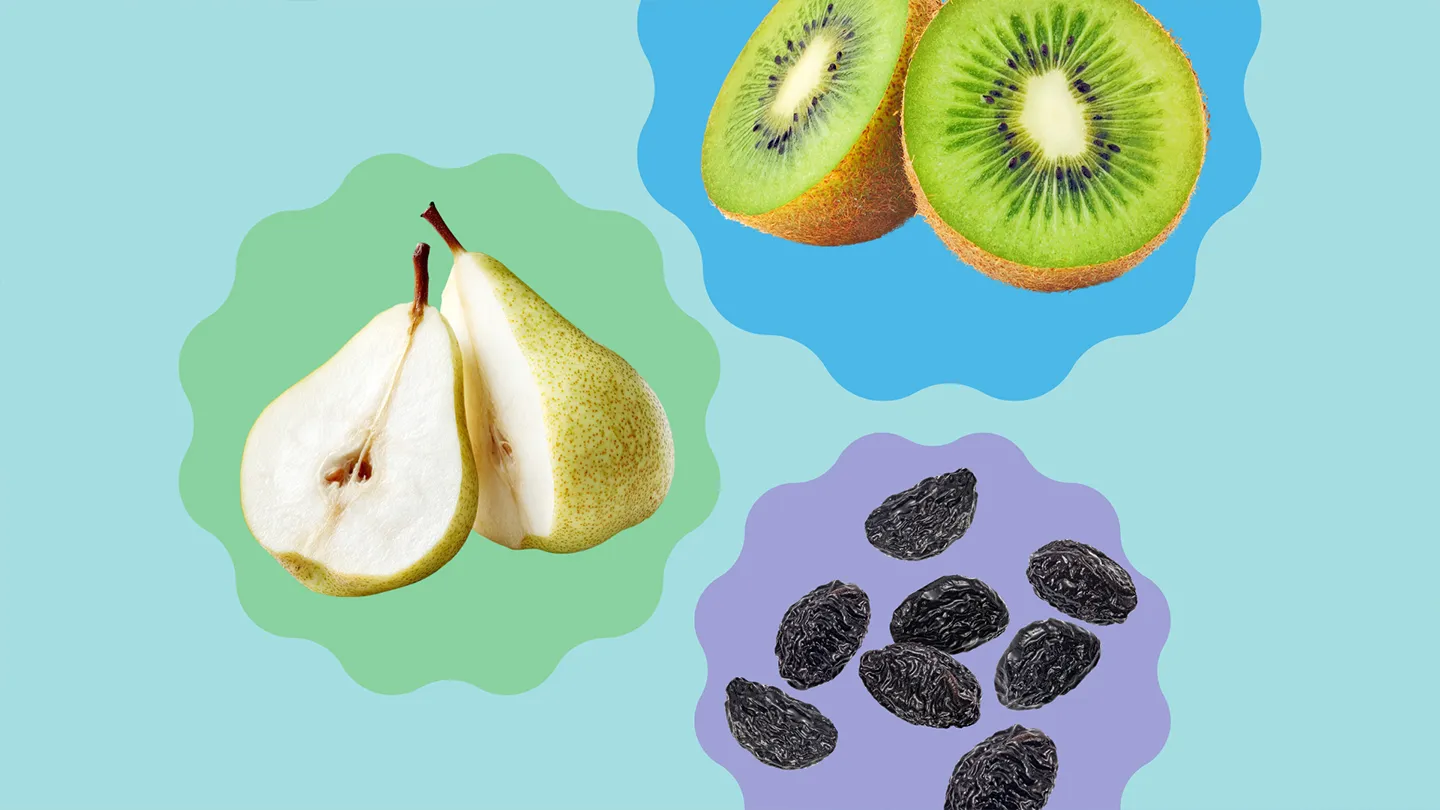
1. Pears
“Pears, especially with the skin on them, are a great source of fiber, both soluble and insoluble,” Ali says. Pear flesh is full of soluble fiber, while the skin is largely insoluble. Eating a pear with the skin on can “add bulk to your stool, helping keep you regular,” Ali says.
In addition to their high fiber content, pears are excellent sources of both fructose and sorbitol. Because fructose and sorbitol don’t get absorbed well in the small intestine, they accumulate in the colon, where they draw water via osmosis.
More water in the colon means softer and bulkier stools that are easier to pass. Young pears primarily contain sorbitol, but as they ripen, they accumulate more fructose.
Similar Fruits
Ali recommends apples or berries if you’re not a fan of pears.
2. Kiwi
Fiber: 2g per medium kiwi
These fuzzy fruits contain an enzyme called actinidin, which helps break down proteins to support digestion.
“Protein can be slow to digest, and in some people, adding kiwifruit to the diet can speed that up and help prevent constipation. These little fruits are also a good source of fiber and fluid, which help relieve constipation,” Ali says.
Small studies have even suggested that kiwi may help increase spontaneous bowel movements compared with placebo or psyllium husk (a common fiber supplement), though larger studies are needed.
In addition, kiwifruit aids in water retention in the small bowel and ascending colon, which helps with more frequent bowel movements and softer stools. This suggests they can be used as a dietary alternative to laxatives for mild constipation.
Similar Fruits
If you suspect protein as a culprit in your digestive woes, pineapple is a great alternative to kiwi. Pineapple contains a different enzyme called bromelain, which also helps break down protein, Ali says.
3. Prunes
Fiber: About 3g per 5 pitted prunes
Prunes (or dried plums) are rich in both sorbitol and fructose, Ali says, helping draw water into the colon so stool passes more easily. A serving of five or six prunes provides about 6 grams of sorbitol, which can help with pooping. They also contain both insoluble and soluble fiber to help bulk up and soften stool.
Ali recommends eating four to five prunes in one serving. “They are sweet and can be added to cereal or yogurt, salads, grain bowls, or baked goods,” she adds.
Similar Fruits
Ali suggests figs or avocados if you don’t like prunes.
[ad_2]
Source link
