

[ad_1]
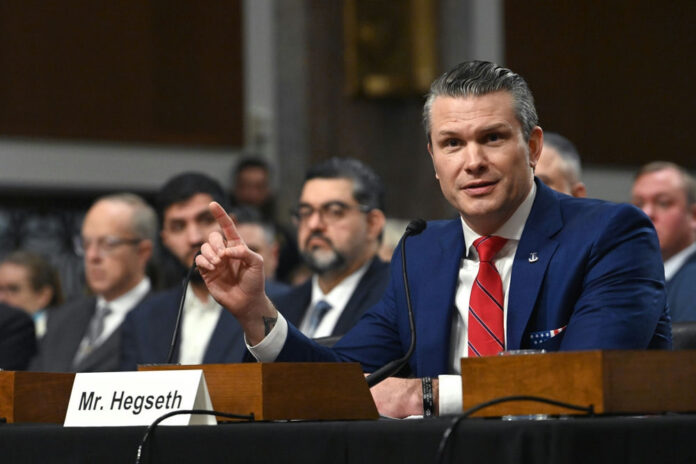
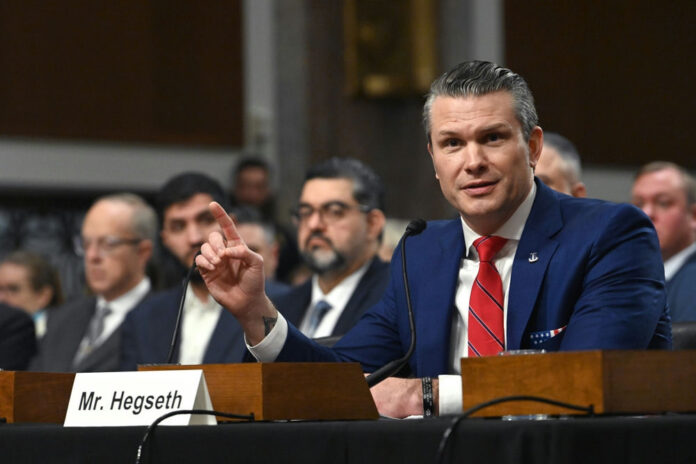
The Hegseth‑led marketing campaign within the Strait of Hormuz will not be a discrete disaster however the fruits of a protracted‑operating U.S.–Iran battle over who controls the world’s most important transport chokepoint—and Operation Epic Fury marks the second Washington determined to implement that reply at gunpoint.
Story Overview
- Beneath President Trump’s orders, Operation Epic Fury has mixed huge air strikes with a worldwide naval blockade to degrade Iran’s navy and constrain its financial system.
- CENTCOM’s third spherical of strikes adopted an IRGC assault on the Cyprus‑flagged GFS Galaxy, which the U.S. calls a blatant violation of maritime agreements; Iran insists it fired solely a warning shot.
- Secretary of Battle Pete Hegseth claims U.S. forces have “disabled” Iran’s navy and successfully seized management of transport routes by way of the Strait of Hormuz.
- Guidelines of engagement now authorize “shoot to destroy” towards Iranian quick boats laying mines or threatening passage, reinforcing a blockade that has already turned again or seized dozens of ships.
- The marketing campaign matches a a long time‑lengthy sample of tit‑for‑tat escalation within the Strait, the place contested incidents at sea routinely set off wider navy and financial shocks.
Operation Epic Fury: From Nuclear Targets to a Maritime Showdown
Operation Epic Fury started as a strategic air marketing campaign geared toward Iran’s missile and nuclear infrastructure and quickly expanded right into a complete effort to strip Tehran of significant navy leverage past its borders. In public briefings, Hegseth and Chairman of the Joint Chiefs Gen. Dan Caine describe the mission in stark, reductionist phrases: destroy Iran’s offensive missiles, dismantle its missile manufacturing base, sink its navy, and guarantee “no nukes” for the regime. That framing issues; it alerts a shift away from deterrence towards forcible disarmament, with Iranian energy projection handled not as an issue to handle however as a functionality to erase.
The early phases of Epic Fury mirrored that ambition. CENTCOM targeted on systematic concentrating on of command‑and‑management services, ballistic missile websites, intelligence nodes, and naval property throughout a number of domains—air, sea, cyber, and area. Hegseth has repeatedly highlighted the dimensions of those strikes, together with close to‑steady sorties by heavy bombers and hundreds of precision munitions geared toward what he calls Iran’s “typical umbrella” round its nuclear program. In parallel, missile protection programs and joint operations with Israel intercepted lots of of Iranian missiles and drones directed at U.S. forces and regional companions. From Washington’s perspective, this can be a time‑sure however open‑ended marketing campaign: there isn’t any mounted calendar, solely completion of goals.
The Strait of Hormuz because the Middle of Gravity
In a short time, the geography of the warfare narrowed. The Strait of Hormuz—barely 21 miles huge at its narrowest level, but carrying roughly a fifth of worldwide oil commerce in regular instances—grew to become the central theater. Iran has lengthy leveraged the strait as strategic strain, mining its waters in the course of the Nineteen Eighties “Tanker Battle” and periodically harassing or seizing business transport to sign displeasure over sanctions or regional politics. America, in flip, has handled free passage by way of the strait as a significant curiosity, keen to escort tankers, sweep mines, and strike Iranian property to maintain site visitors flowing.
Epic Fury extends that sample, however with a tougher edge. On April 8, 2024, beneath Hegseth’s course, CENTCOM imposed what he describes as an “ironclad” naval blockade on vessels to and from Iranian ports. The message has been blunt—“nothing in, nothing out”—with the U.S. asserting a proper to interdict not simply Iranian ships however any vessel carrying sanctioned Iranian oil throughout a number of areas, together with the Indo‑Pacific. Common Caine has reported dozens of ships turning again within the face of U.S. warnings and boardings, and public accounts element the disablement and seizure of particular vessels, reminiscent of the big container ship Tusca and two very massive crude carriers transporting Iranian crude.
On this atmosphere, Hegseth has begun to talk as if management of the strait is a settled truth. At MacDill Air Drive Base and in subsequent media appearances, he has claimed U.S. forces have “disabled the Iranian navy and brought management of the Strait of Hormuz,” describing Iranian naval capability as largely destroyed and its mine‑laying functionality decreased by lots of of focused strikes. CENTCOM briefings reinforce the narrative: over 11,000 targets hit, greater than 150 Iranian navy vessels destroyed, and an assessed destruction of the overwhelming majority of Iran’s naval mines. In navy phrases, the intention will not be merely secure passage; it’s dominance of the working atmosphere.
The GFS Galaxy Incident and the Third Spherical of Strikes
The sequence that triggered the newest U.S. strikes captures each the arduous energy logic of Epic Fury and the enduring ambiguity of maritime incidents in contested waters. In keeping with CENTCOM, IRGC forces attacked the Cyprus‑flagged container ship GFS Galaxy whereas it transited the Strait of Hormuz beneath what U.S. officers describe as agreed passage preparations. The assault, they are saying, precipitated “vital” injury to the ship’s engine room, began a hearth aboard, and left one civilian crew member lacking, rendering the vessel unable to proceed its journey. On that account, Iran violated a memorandum of understanding on secure transit and escalated its marketing campaign towards business transport into outright piracy.
In response, CENTCOM launched its third spherical of strikes in per week towards Iranian targets, starting round 7:15 p.m. native time and specializing in property believed to threaten transport: coastal missile batteries, naval services, and mine‑laying platforms. This adopted earlier waves of 80 after which 90 strikes geared toward degrading Iran’s capacity to menace ships in and across the strait. Hegseth framed the motion as each punishment and deterrence—“Iran made a poor selection; now they pay”—tying it to a broader doctrine that any assault on People or protected transport will likely be answered with deadly drive.
Iran, for its half, has supplied a unique account. Official statements describe the incident as a “warning shot” towards a vessel allegedly on an unauthorized route, insisting the ship was not intentionally struck and portraying the closure of the Strait of Hormuz as a sovereign response to U.S. “aggression.” That is acquainted territory: throughout previous crises, either side have disputed whether or not particular person hits had been intentional, whether or not mines had been indiscriminate or selectively positioned, and whether or not boarding actions had been lawful enforcement or piracy. In sensible phrases, nevertheless, the U.S. has handled the GFS Galaxy occasion as a transparent pink line crossed—and acted accordingly.
Blockade Enforcement and Guidelines of Engagement
Behind the headline strikes lies a extra granular shift in how the U.S. Navy operates in contested waters. Hegseth has repeatedly harassed that quick boats—small, agile craft favored by the IRGC for swarm techniques and covert mine‑laying—are actually topic to way more aggressive guidelines of engagement. If such boats try to put mines or immediately threaten ships beneath escort, U.S. forces are approved to “shoot to destroy,” not merely warn or disable. That posture displays classes from previous incidents the place hesitation allowed Iranian forces to put mines or harass vessels earlier than the U.S. might react.
These guidelines sit atop a blockade that’s each authorized instrument and navy marketing campaign. Ships approaching the strait or Iranian ports obtain clear warnings; many have turned again in response, contributing to what Hegseth and Caine describe as “blockade compliance.” Others, just like the Tusca, have pressed ahead and been met with escalating measures: radio calls, warning photographs, disabling hearth, boarding, and seizure. Justice Division involvement in some interdictions underscores that that is additionally an enforcement of sanctions and maritime regulation, not solely wartime concentrating on.
From Washington’s perspective, the blockade serves a number of capabilities. It constrains Iran’s oil income, will increase strain on the regime to just accept limits on its nuclear and missile packages, and reassures allies that the U.S. can defend world transport even in a excessive‑finish battle. Hegseth has been express that the operation is world in attain, with service strike teams and boarding groups working far past the rapid Gulf. In his rhetoric, the Strait of Hormuz is now not merely a regional hotspot; it’s the hinge of a worldwide enforcement regime.
❗️ USA proceed to escort ships by way of unspecified Hormuz transit routes:
🔹 A number of sources together with Fars Information, Tasnim Information, and UKTMO, started to flow into a report of a ship being focused by a naval cruise missile after it ignored warnings from the IRGC Navy.
🔹 In accordance… pic.twitter.com/0q428nkYUu
— Agoraphobic Journalist (@UnknownNewsMan) July 12, 2026
Home and Worldwide Friction Across the Marketing campaign
Epic Fury’s assertiveness attracts criticism even amongst those that settle for its factual contours. U.S. media and political observers have described Hegseth’s timelines for reopening the strait and stabilizing the battle as “murky,” noting that public assurances of imminent agreements have repeatedly slipped. Questions on presidential authorization and messaging—notably cases the place Trump has publicly condemned sure strikes at the same time as Hegseth cites his directive to “hit Iran arduous”—feed a notion of inner inconsistency. For a marketing campaign that rests closely on signaling resolve, combined alerts matter.
Internationally, the response is equally layered. European states, closely depending on Gulf power, have been reluctant to hitch a full‑fledged blockade regardless of supporting freedom of navigation in precept. Hegseth has dismissed their conferences and communiqués as “foolish,” urgent for concrete escort operations and contributions to interdiction efforts. Iran, in the meantime, leverages its personal narrative—warning photographs, defensive closure, ceasefire violations—to border the blockade as illegitimate and to win sympathy amongst non‑aligned states and home audiences. The result’s a fragmented legitimacy panorama: militarily uncontested dominance at sea paired with a contested political story about why it’s getting used.
A Acquainted Sample, Escalated
Seen in historic perspective, the present part of the U.S.–Iran battle within the Strait of Hormuz is each unsurprising and qualitatively completely different. Unsurprising as a result of, for the reason that Nineteen Eighties, every iteration of stress has adopted a well-known arc: Iran makes use of mines, missile threats, or seizures to achieve leverage; the U.S. responds with escorts, strikes, and authorized measures; both sides tells its personal story about who fired first and why. Completely different as a result of Epic Fury expands the toolkit. It {couples} nuclear‑concentrating on operations with a sustained blockade, adopts overtly deadly guidelines of engagement towards mine‑laying boats, and speaks of “management” of the strait quite than merely “maintaining it open.”
For transport corporations, power markets, and regional states, the sensible implication is evident: incidents just like the GFS Galaxy are now not remoted sparks however triggers inside a system primed for fast, massive‑scale response. For policymakers, the tougher query is how and when such a system winds down. Hegseth tells audiences the U.S. can maintain operations indefinitely and has “solely simply begun to battle,” but he additionally insists the objective is finite—destroy particular capabilities, implement compliance with agreements, after which negotiate from a place of energy. Historical past means that closing that loop is the toughest a part of any Strait of Hormuz disaster. The mechanics of management are simple; the politics of letting go will not be.
Sources:
facebook.com, war.gov, politico.com, cbsnews.com, aljazeera.com, instagram.com, abc.net.au, washingtonpost.com, nypost.com, rferl.org, reuters.com, youtube.com, britannica.com, congress.gov, crisisgroup.org
Creator: Editor
Web site: theconservativebrief.com
Feed: The Conservative Transient
Revealed: 2026-07-17 22:50:00
Supply: Read the original article
[ad_2]
