

[ad_1]
MSc IR student Zoe Roberts reflects on her pivot from fifteen years as a professional ballet dancer to a student of IR Theory, and finds similarities in the disciplines.

As a former artist turned critical theory enthusiast, it just clicked – critical theory is the artist of academia.
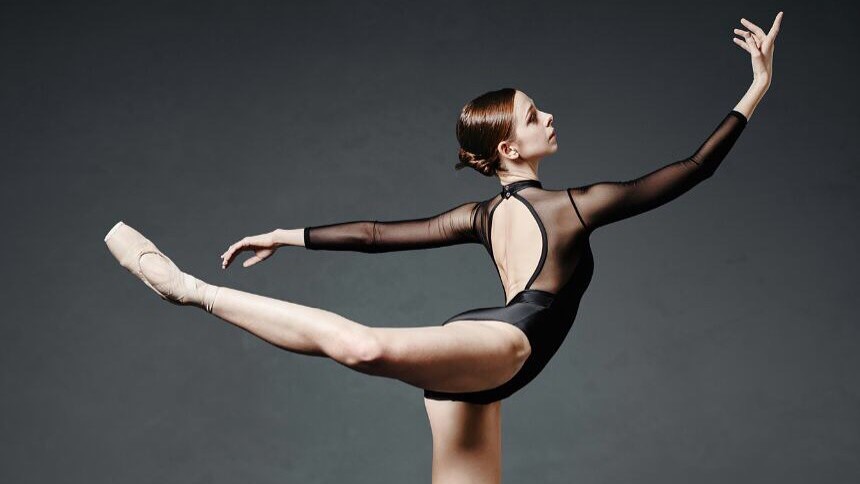
I recently retired from a 15-year career in classical ballet that spanned six countries and more genres than I could possibly have imagined. Think Swan Lake at the Royal Opera House London, modern dance that involved constantly falling over at the National Ballet of Portugal and aerial acrobatics as a showgirl at the biggest revue theatre in the world. I’m still digesting my dance career – the good, the bad and the ugly, and, to be sure, I experienced all three in good measure. In the meantime, I’m back in the classroom for the first time since I left school at fifteen years of age, to tackle my master’s degree. I love academia – the curiosity, the discipline and best of all I don’t have crippling pain in my feet! My transition from tutus, pointe shoes and diamantes to sweaters, blue-light glasses and Zotero is far from over. But the grey area is an interesting place to be.
Since arriving at LSE, I’ve been repeatedly faced with the deceivingly simple yet loaded question ‘what are you interested in?’. In early seminars I was intimidated by my accomplished peers, who were so sure of what they liked. Their assuredness unsettled me because I was interested in everything, but at the same time nothing enough to specialise in. In my wholly unsatisfying answer, I would try to clarify that I have a lot of ‘disparate interests’ to frame my confusion as legitimate intellectual inquiry. Slowly the dust of a new academic year has settled and although I don’t have a dissertation topic yet, I believe I have found my academic home. I was so focused on figuring out my ‘new’ identity that I overlooked who I had been as an artist, and as an artist I feel comfortable in the world of critical theory. Perhaps not intellectually yet, but ontologically (see – I’m learning). Critical theory embraces a way of being in the world that, unbeknown to me, I’ve always been – useless. Please grant me this small provocation, I’ll elaborate.
Art escapes easy definition, much in the same way as politics, pornography and terrorism. Does ‘I know it when I see it’ ring any bells? Critical theory is similarly elusive and amorphous. To the point where the formative essay question in the postgraduate critical theory class at LSE was ‘what is a critical approach to international relations?’. Any definition that warrants a postgraduate essay is no simple matter. Robert Cox argues that critical theory stands apart from the given order and asks how it came about. Beate Jahn insists that critical theory must return to its theoretical roots, to resist being useful in society and assess how knowledge has constituted the status quo. Something clicked. Mainstream theory problem solves, critical theory resists. What else resists usefulness in society? What else seeks to make the observer stop and reflect on their humanity? Art, of course.
Mainstream theory problem solves, critical theory resists. What else resists usefulness in society? What else seeks to make the observer stop and reflect on their humanity? Art, of course.
Or at least this is what I believe art should do in society. In reality, it is far from this ideal type. I suppose, again like critical theory, it sometimes problem solves. Art pays the bills, sells us things we don’t need and solves the problem of what to do with the days between Christmas and new year – off to the theatre! Critical theory suffers from the problem-solving pathology too. It has failed to emancipate society from Patriarchy (at least by the time of writing), yet it has succeeded in making war safer for women (shoutout Women Peace and Security Agenda!).
As an artist, I learned what I believe in the hard way. I fell into a depression when I worked at a theatre where art was a commodity. We sold art six nights a week to the highest bidder. The show was targeted at relevant stakeholders and efficiency was enhanced to maximise profits. Granted it brought joy to audiences, but the art-entertainment-advertising nexus just didn’t sit well with me.
Before this, I worked in opera houses for a decade that survived on state funding and would never make a profit. In a capitalist society it is easy to see how this kind of art is considered superfluous. Indeed, in many places that I worked, governments substantially cut arts funding based on what I can only assume is perceived uselessness to society. It’s true, useless art serves few explicit capitalist purposes, but it may prompt audiences to reflect on their shared humanity. Or at least bring a highly niche type of beauty into people’s lives.
Reflexivity is something I found lacking in the art industry. I can only speak to my experience in dance, and do not wish to generalise. I think reflective practice is the place where art and critical theory diverge. One of the reasons I became disillusioned with ballet was not the art form itself, but the industry’s unwillingness to meaningfully engage with its pervasive -isms. As I’ve said, ballet, like critical theory does not adapt to the status quo. It got me thinking, is all useless art made equal? The stubbornness of ‘tradition’ can be insidious. Ballet organisations need to look in the mirror, take a leaf out of critical theory’s book and ask themselves some hard questions. Uselessness is not in and of itself a virtue, critical theory taught me that without reflexivity, art’s power is empty.
The best art I’ve experienced made me uncomfortable. Discomfort is what draws me to critical theory. Discomfort is the catalyst for reflection.
The best art I’ve experienced made me uncomfortable. Discomfort is what draws me to critical theory. Discomfort is the catalyst for reflection. In art, it provokes me to consider the nature of existence or relationships in a way that transcends the mundane habits of everyday life. This is what I mean by useless. When we have busy lives, is it useful to transcend the mundane? Honestly no, it sounds like an inconvenience and takes up time that is more efficiently spent cleaning the apartment. But if we never think outside the framework of our busy lives, get off the proverbial hamster wheel or stop putting out metaphorical fires, is it a life worth living? I know these are big questions, but I’m excited because I’ve spent fifteen years in the arts and now I finally have theoretical tools!
I wonder why it took me so long to realise why I resonated with this pocket of International Relations (IR). It’s not that I am an artist and therefore I like critical theory. Rather, that art and critical theory serve a similar purpose for humanity and that purpose resonates deeply with me.
So, in this bizarre metaphor of IR Theory as professions, we have our policemen, engineers and architects in neorealism, institutionalism and structural constructivism. All vital to a well-functioning society. Juxtaposing this is critical theory, the artist – sometimes frustrating, often provocative and useless in the most essential way. Perhaps in a time of chaos and proliferating global conflict, humanity needs to sit down and reflect on some useless art.
[ad_2]
Source link
