


[ad_1]
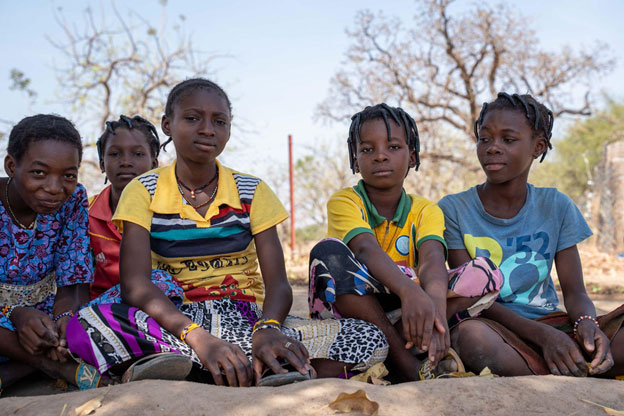
UNITED NATIONS, June 16 (IPS) – A new report from the United Nations Children’s Fund (UNICEF) highlights the vast, overlapping climate threats affecting children worldwide, which is leaving them increasingly vulnerable to escalating risks across health, security, and education.
The report, Children’s Climate Risk Report, emphasizes that while these risks are most pronounced in heavily vulnerable regions in the Global South—such as South Asia and sub-Saharan Africa—nearly half of the world’s children are exposed to at least three climate hazards, with some exposed to as many as six at once.
“Across the globe, millions of children are now facing multiple climate threats without the necessary services to cope,” said UNICEF Executive Director Catherine Russell. “They are experiencing extreme heat that causes heatstroke and dehydration. Their homes and schools are being destroyed by storms and floods. Devastating droughts are limiting their access to food and water. And in many cases, the intensity of these hazards is increasing with each passing year.”
“We must invest more in adapting essential services to the impact of climate change,” Russell added. “Through political will, partnerships, and collaboration with young people, the case studies in this report prove that progress is possible. But the scale and ambition of action must be rapidly accelerated to ensure that every child is protected from climate impacts.”
According to UNICEF’s findings, nearly every child globally is now affected by air pollution. Additionally, over 296 million children live in areas that are exposed to a dangerous combination of prolonged drought, extreme heat, and heatwaves, while another 115 million simultaneously face droughts, extreme heat, and tropical storms.
The agency stresses that these risks often overlap across multiple regions, noting that riverine and coastal floods, fires, and sand and dust storms have caused widespread displacement, disruptions to livelihoods and schooling, the spread of infectious diseases, or various forms of health and food insecurity.
Nowhere are the consequences of these overlapping threats more evident than in sub-Saharan Africa and South Asia, which have been described by climate experts as the two most climate-vulnerable regions in the world. These regions are at a heightened risk primarily due to high environmental exposure and a limited capacity to respond. The resulting shocks overwhelm local health systems, cripple fragile infrastructure, and leave entire communities deprived of basic, lifesaving services.
The report notes that over 4 million children in the Sahel region are exposed to heatwaves, extreme heat, and sand and dust storms. Meanwhile, South Asian countries like Bangladesh, Myanmar and Pakistan, face more hazards at once and at higher intensities than anywhere else in the world.
“While some countries may face a single devastating event, such as a tropical storm that can wipe out an entire island, many countries in Asia are dealing with a combination of threats, from floods and storms to extreme heat,” Rohini Sampoornam Swaminathan, UNICEF Statistics and Monitoring Manager, tells Inter Press Service. “Children may cope with one or two shocks, but after three, four or five, families’ ability to respond becomes severely strained. Moreover, risk is not only about exposure to hazards, but it is also about the availability and accessibility of essential services. For children without reliable access to health care, nutrition, or water and sanitation, even a moderate flood or heatwave can become life‑threatening.”
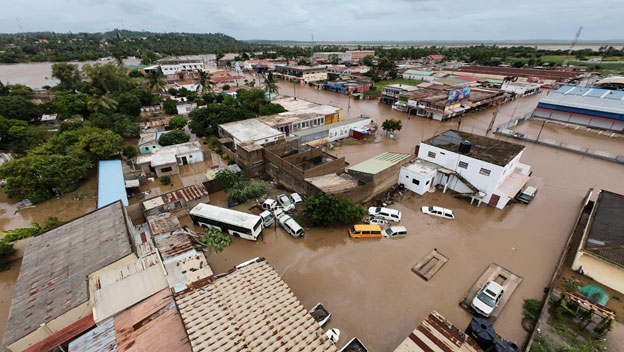
According to the report, in 2024, approximately 634 million children lacked access to safe drinking water, over 1 billion lacked access to sanitation services, and 489 million lacked access to basic hygiene services. Currently, nearly 160 million children live in areas where water systems are severely strained, and droughts are extremely pronounced, while another 270 million children live in flood-prone zones where less than half of the population has access to adequate sanitation.
As a result, the World Health Organization (WHO) projects that there could be over 250,000 additional yearly deaths by the 2030s from malaria, diarrhoea, heat stress, and undernutrition. These consequences are dire for children, particularly those living in fragile contexts where health systems and local infrastructures are strained.
In Pakistan, children face extreme vulnerability due to glacial melt and erratic rainfall patterns, which frequently trigger large-scale flooding. The historic 2022 floods affected over 33 million people—roughly half of whom were children—and stripped more than 5.4 million people of access to clean water, leaving them at a heightened risk of contracting infectious diseases and waterborne illnesses. This has been compounded by frequent heatwaves and prolonged droughts, with temperatures routinely exceeding 48 degrees Celsius, or 118.4 degrees Fahrenheit, which have caused high rates of severe dehydration and acute malnutrition, as a result of decimated crop yields.
Without urgent intervention, UNICEF projects that an additional 28 million children globally could experience acute malnutrition and stunted growth by 2050. In sub-Saharan Africa alone, approximately 10 million more children are expected to suffer from stunted growth by 2050. Over the last few years, increasingly frequent and destructive climate shocks have devastated food systems around the world, leaving roughly 66 percent of children under five—approximately 440 million—to live in severe food poverty.
Additionally, climate shocks are increasingly stripping children of their education, with UNICEF recording nearly 242 million students across 85 countries and territories who have their education disrupted by climate-induced hazards in 2024 alone. The agency has also recorded rising rates of school closures, absenteeism, and worsened school performance. Swaminathan noted that when classrooms become too hot, children struggle to concentrate, learn and stay engaged.
“Heat increases dehydration, fatigue and absenteeism, especially in schools without cooling, shade or reliable water,” she added. “As temperatures rise, schools are also closing more often. While closures protect children’s health, they expose how unprepared many education systems are for a hotter world. When children lose learning, societies lose potential. Repeated disruptions affect education outcomes, future earnings and economic growth, while deepening inequalities.”
It is estimated that disrupted education across low- and middle-income countries could yield future economic losses of up to USD 11 trillion in lifetime earnings. The report further notes that establishing climate-resilient education systems is crucial in preventing these losses and protecting children from facing adverse mental health impacts and deepened social and economic inequalities.
Furthermore, volatile climate shocks around the world continue to displace entire communities and push millions of children into insecurity. Between 2016 and 2023, UNICEF recorded over 62 million internal displacements of children as a result of climate-induced hazards—or roughly 21,000 child displacements per day.
“When families are forced to move because of climate shocks, children face heightened risks of violence, exploitation and family separation, both during the journey and in temporary settlements. These risks increase when displacement is sudden, support networks collapse, and protection systems are overwhelmed,” said Swaminathan. “Climate-related displacement acts as a threat multiplier. It weakens livelihoods, strains fragile services and deepens existing tensions.”
Child protection services around the world have been pushed to the brink of collapse as a result of the vast scale of needs triggered by climate-induced displacement. This strain has been linked to a significant rise in violence, exploitation, abuse, and childhood trauma, with many families resorting to negative coping mechanisms such as child labour and child marriage.
According to UNICEF estimates, rates of child labour have surged in recent years, particularly in areas with agriculture-dependent economies, where roughly 70 percent of this exploitation can be found. Additionally, communities frequently turn to child marriage to secure short-term financial stability following severe climate shocks. The consequences are particularly dire for girls who are married before the age of 18, who face a significantly higher risk of domestic violence, alongside severely compromised health and economic outcomes compared to those who marry later in life.
To accelerate climate action and protect millions of children from these escalating risks, UNICEF is urging global leaders and the private sector to prioritize investments in renewable energy, underscoring that this is a critical first step in reducing the intensity of climate shocks. Additionally, the agency stresses the importance of integrating climate-resilient schools, water systems, and healthcare facilities into national emergency plans and expanding climate education to ensure that the next generation has a voice in decisions that affect their lives.
“UNICEF’s message is clear: invest in children’s resilience, especially the most vulnerable. Invest in the communities they live in and the social services they depend on, and ensure these services continue to function during and after climate shocks,” said Swaminathan. “The climate crisis is a child rights crisis. We know where children are at risk and what they face. Now we must act.”
IPS UN Bureau Report
© Inter Press Service (20260616121357) — All Rights Reserved. Original source: Inter Press Service
[ad_2]
Source link
